Geomoji!! Can You Get These Places Right?
Play a geography game decoding emoji puzzles to identify countries, cities, and landmarks; research clues, make guesses, and explain your answers aloud.


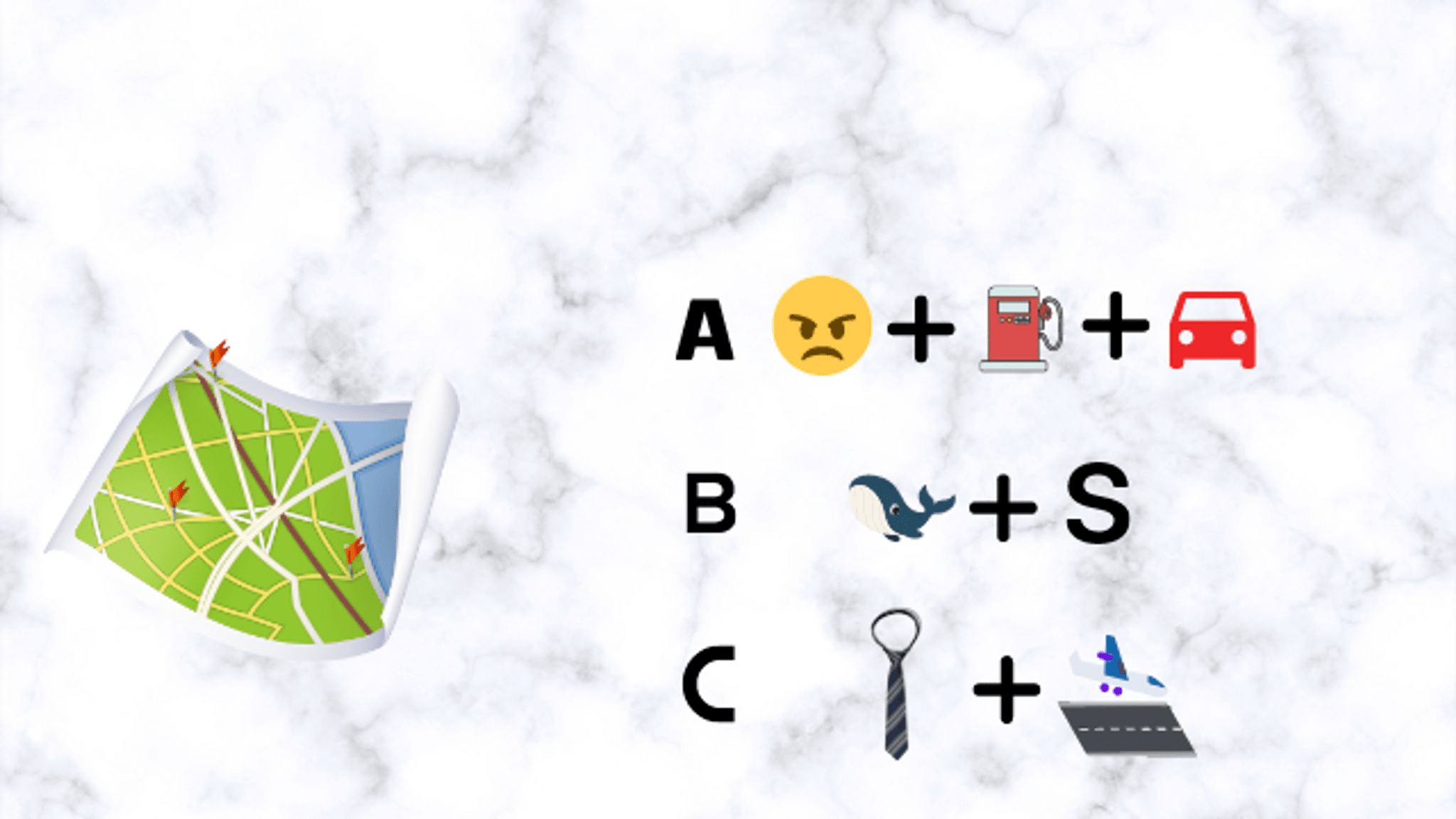

Step-by-step guide to play Geomoji!! Can You Get These Places Right?
Latitude and Longitude | Time Zones | Video for Kids
Step 1
Gather all the materials from the list and bring them to a table or floor space.
Step 2
Lay your emoji puzzle list and your map or globe where you can see both easily.
Step 3
Pick the first emoji puzzle from your list.
Step 4
Look carefully at each emoji in the puzzle and say aloud one idea for what each emoji could represent.
Step 5
Make an initial guess about the place and write that guess in your notebook.
Step 6
Use the map or globe to search for places that match your guess and the emoji clues.
Step 7
If the map does not help, ask an adult or check a book to find more information about the clues.
Step 8
Decide which place fits the emojis best and make that your final answer in your head.
Step 9
Write your final answer in your notebook.
Step 10
Mark your final answer clearly by writing the word "Final" next to it.
Step 11
Explain aloud two reasons why your final answer matches the emojis.
Step 12
Put a sticker or token next to the puzzle if you got it right and repeat Steps 3 to 11 for at least four more puzzles.
Step 13
Share your finished Geomoji guesses and explanations on DIY.org
Help!?
If we don't have a globe or printed map and other materials, what can we use instead?
If you don't have a globe, emoji puzzle list, notebook, or stickers, use a tablet or smartphone map app placed where you can see it as in Step 2, print or hand‑draw the emoji puzzles, use any notebook or loose paper for answers, and substitute small coins or paper stars for stickers/tokens.
What should we do if an emoji puzzle feels too vague and we can't find a matching place on the map?
Go back to Step 4 and say aloud one idea for each emoji, then follow Step 6 to ask an adult or check a book and use keywords from your ideas to search the map or internet to narrow down possible places.
How can this activity be adjusted for younger children or older kids?
For younger kids, use puzzles with only one or two emojis and give multiple‑choice guesses and immediate stickers (Step 3 and Step 11), while older kids can be asked to write two factual reasons, find coordinates on the map, and complete at least the four additional puzzles in the 'repeat Steps 3 to 11' instruction.
How can we extend or personalize the Geomoji activity after finishing the basic puzzles?
Make your own emoji puzzles, glue your notebook pages into a booklet with stickers as a scorecard, turn it into a timed challenge to see how many puzzles you solve in 10 minutes, and then share your finished Geomoji guesses and explanations on DIY.org as the final step requests.
Watch videos on how to play Geomoji!! Can You Get These Places Right?
How to read Maps - Grid References (Geography Skills)
4 Videos

How to read Maps - Grid References (Geography Skills)
Geographical Features for Kids - The Relief of the Earth's Surface
Using contours to identify landforms
55 Geographical Terms You Must Know - Let's Talk Geography on the Learning Videos Channel
Facts about geography for kids
🗺️ There are 195 countries in the world (193 UN members + 2 observers).
😄 Unicode includes over 3,000 emoji and new emoji are added almost every year.
🧩 Rebus puzzles—using pictures to stand for words or parts of words—date back to ancient times like Egyptian hieroglyphs.
🗼 The Eiffel Tower was completed in 1889 and needs roughly 60 tons of paint to protect it each repainting cycle.
🗽 The Statue of Liberty, officially 'Liberty Enlightening the World,' was a gift from France to the United States.
How do you play Geomoji!! Can You Get These Places Right?
What materials do I need for Geomoji puzzles?
What ages is Geomoji suitable for?
What are the benefits of playing Geomoji?
