Explore acoustics
Build simple instruments like a paper cup telephone and a rubber band guitar to test pitch, volume, and how shape and tension change sound.


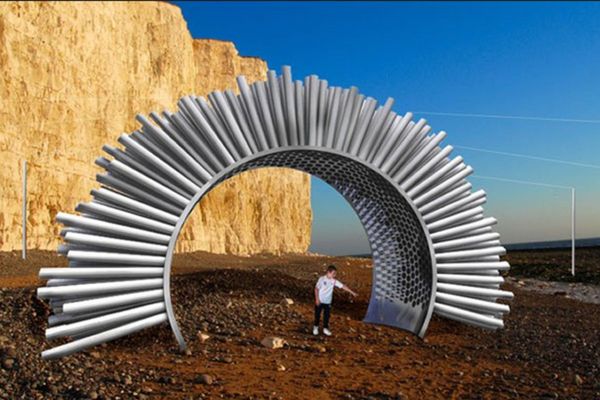

Step-by-step guide to explore acoustics with simple instruments
What Is Sound? for Kids
Step 1
Gather all materials on a table so you can reach everything easily.
Step 2
Use scissors to make a small hole in the bottom center of each paper cup.
Step 3
Cut a piece of string about 3 meters long so you have enough length to test different distances.
Step 4
Attach the string to both cups by threading each end through a hole and tying a knot inside each cup so the string cannot pull out.
Step 5
Hold one cup to your mouth and the other cup to a friend’s ear and walk apart until the string is taut.
Step 6
Have one person speak into their cup while the other listens so you can hear how sound travels.
Step 7
Shorten the string to half the length and repeat the speaking test to compare the pitch and volume.
Step 8
Let the string sag and repeat the speaking test to hear how a loose string changes the sound.
Step 9
Stretch several rubber bands of different thicknesses across the open side of the shoebox so they act like guitar strings.
Step 10
Slide a pencil under the rubber bands to act as a bridge and lift the bands a little off the box surface.
Step 11
Pluck each rubber band one at a time and listen carefully to the pitch and volume of each band.
Step 12
Change a band’s tension by moving the pencil closer to an end or by gently twisting the band and pluck again to hear the pitch change.
Step 13
Swap a rubber band for a thicker or thinner one and pluck it to compare how thickness affects pitch.
Step 14
Take a photo or note your favorite sounds and share your finished instruments and discoveries on DIY.org
Help!?
What can I use if I don't have paper cups, a 3-meter string, or a shoebox?
Use plastic cups or empty toilet-paper rolls for the cup pieces, swap the 3-meter string for yarn, twine, or fishing line when you cut the string, and replace the shoebox with a tissue box or cereal box for stretching rubber bands.
The sound is faint or doesn't travel through the cup-and-string phone — what should I check?
Check that each hole is small, the knot is tied inside each cup so the string can't pull out, the string is held taut and not rubbing on anything, and retie or replace any frayed string before repeating the speaking test.
How can I change the activity for younger kids or make it more challenging for older kids?
For younger children pre-cut a shorter string (about 1 m), pre-punch holes and supervise the tying step, and for older kids use the full 3 m, precisely shorten the string to half and measure pitch/volume differences or record frequencies with a phone.
What are some ways to extend or personalize the instruments we make?
Decorate the cups and shoebox, build a tuned scale by stretching rubber bands of graded thickness and adjusting the pencil bridge to change tension, try different box sizes for resonance, and take photos or notes to share on DIY.org as the instructions suggest.
Watch videos on how to build simple instruments to explore acoustics
SOUND for Kids 🔊📣 Loundness, Pitch and Timbre 🎵🎧 Science for Kids
4 Videos

SOUND for Kids 🔊📣 Loundness, Pitch and Timbre 🎵🎧 Science for Kids

2. What is Sound?

What is Acoustics? | Audio Fundamentals | DSP concepts |
AUDIO BASICS (Part 1): How Sound Works
Facts about acoustics and sound
🎵 Sound travels through air at about 343 meters per second at 20°C — it moves faster when the air is warmer!
👂 Human hearing ranges roughly from 20 Hz to 20,000 Hz; kids often hear higher pitches better than adults.
📣 Loudness is measured in decibels: a normal conversation is ~60 dB while a rock concert can exceed 110 dB.
🎸 Tightening a string raises its pitch, and thicker (heavier) strings vibrate slower to produce lower notes.
🥤 A paper cup acts as a resonating chamber — larger cavities usually boost lower-frequency sounds.
How do I set up an Explore Acoustics activity to build a paper cup telephone and a rubber band guitar?
What materials do I need to build a paper cup telephone and a rubber band guitar for an acoustics experiment?
What ages is this Explore Acoustics instrument-building activity suitable for?
What are the benefits, safety tips, and fun variations for exploring acoustics with homemade instruments?
