Experiment with pizza flours
Make small pizzas using different flours (all-purpose, bread, whole wheat, 00) to compare dough texture, rise, and flavor with adult supervision.


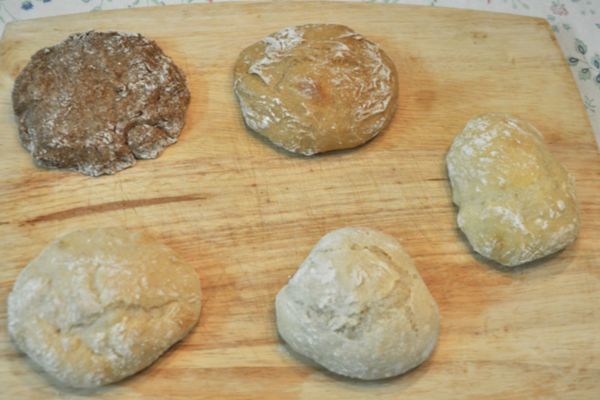

Step-by-step guide to make small pizzas using different flours
Pro Chefs Transform Pizza Dough Into 6 New Dishes | Test Kitchen Talks | Bon Appétit
Step 1
Label four bowls with the names All-purpose Bread Whole wheat and 00 so each flour has its own bowl.
Step 2
Measure 1 cup (about 120 g) of each flour into its labeled bowl.
Step 3
Add 1 teaspoon active dry yeast 1/2 teaspoon salt and 1/4 teaspoon sugar to each bowl.
Step 4
Pour 1/3 cup warm water and 1 teaspoon olive oil into each bowl and stir until a sticky dough forms.
Step 5
Knead each dough one at a time for 5 minutes until the dough is smooth and elastic.
Step 6
Shape each dough into a small ball and place the balls on a parchment-lined baking sheet.
Step 7
Cover the balls with a clean towel and let them rise in a warm spot for 60 minutes.
Step 8
Press or roll each ball into a small pizza base about 6 inches across.
Step 9
Spoon the same amount of tomato sauce onto each pizza.
Step 10
Sprinkle the same amount of shredded cheese onto each pizza.
Step 11
Ask an adult to preheat the oven to 450°F (230°C).
Step 12
Have an adult place the baking sheet in the oven and bake the pizzas for 8 to 12 minutes until the crusts are golden.
Step 13
Let the pizzas cool for 3 minutes.
Step 14
Taste each pizza one at a time and write short notes in your notebook about the dough texture rise and flavor for each flour.
Step 15
Share your finished creation and what you learned on DIY.org.
Help!?
What can we use if we can't find 00 flour or active dry yeast?
If you can't find 00 flour, use extra-fine all-purpose or mix 3/4 cup all-purpose with 1/4 cup pastry flour for the labeled '00' bowl, and if you only have instant yeast use the same 1 teaspoon sprinkled into the dry ingredients instead of dissolving it in the warm water.
What should we do if a dough doesn't come together or doesn't rise during the 60-minute step?
If a bowl's mixture stays crumbly after adding the 1/3 cup warm water, add up to 1 tablespoon more water or a sprinkle of flour while kneading and if it doesn't rise check that the 1 teaspoon active dry yeast was fresh and that the dough balls were kept in a warm spot for the full 60 minutes.
How can we adapt the activity for younger children or older kids who want more challenge?
For younger children, have an adult pre-measure the flours into the labeled bowls and handle kneading and the 450°F oven while the child presses the dough into 6-inch bases and adds sauce and cheese, and for older kids let them time and record each 5-minute knead, the 60-minute rise, and the 8–12 minute bake themselves.
How can we extend or personalize the pizza flour experiment after baking?
To extend the experiment, top each 6-inch base with the same tomato sauce and cheese plus a different herb or topping, bake as directed at 450°F for 8–12 minutes, then compare crust texture, rise, and flavor in your notebook and share photos on DIY.org.
Watch videos on how to make small pizzas using different flours
How to make pizza at home with a baking tin by Salvatore Lioniello
4 Videos

How to make pizza at home with a baking tin by Salvatore Lioniello

How To Draw Pizza - Preschool

Pizza dough: direct method by Vincenzo Iannucci

How to make flatbread pizza!
Facts about pizza dough and flour types
🍕 Neapolitan-style pizza often uses 00 flour and is baked at very high temperatures for just a couple of minutes to get a puffy, charred crust.
🌾 Whole wheat flour uses the whole grain (bran, germ, endosperm), so it has more fiber and a nuttier flavor than refined flours.
🥖 Bread flour has higher protein (gluten) — usually around 12–14% — which helps make dough stretchier and crusts chewier.
🔬 All-purpose flour is a middle-ground blend designed to work in lots of recipes, so mixing it with other flours is an easy way to change dough texture.
⏱️ Slow, cold fermentation in the fridge for 24–72 hours makes pizza dough tastier because yeast and enzymes build more flavor over time.
How do I run a pizza flour experiment with kids to compare dough texture, rise, and flavor?
What materials and ingredients do I need to try different flours for small pizzas?
What ages is a pizza flour comparison activity suitable for?
What safety tips should I follow when doing a pizza flour experiment with kids?
