Doodle a Fishy Sea
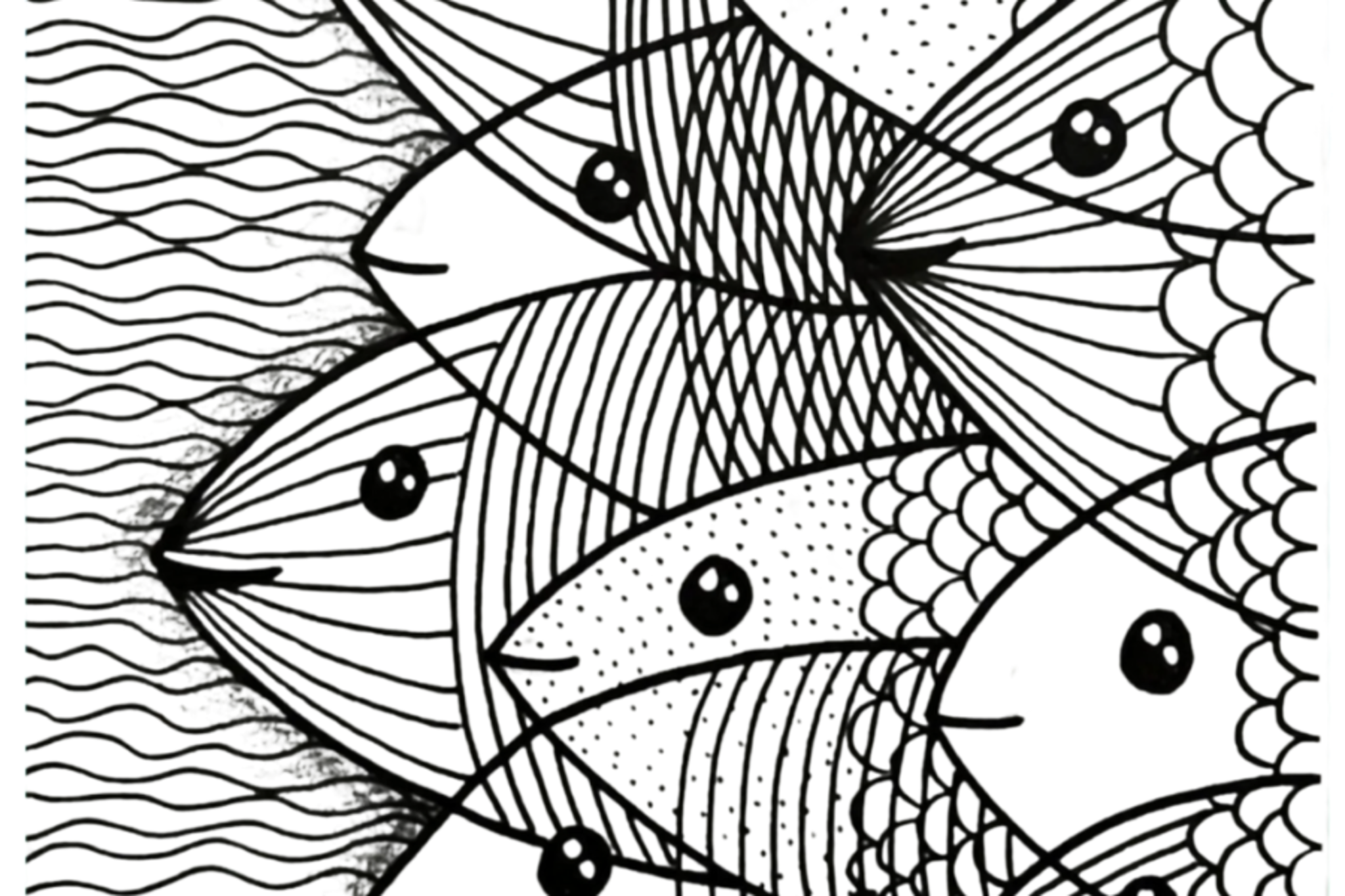
Draw and color a lively fishy sea scene, creating different fish shapes, sea plants, and waves while practicing patterns, texture, and color mixing.


Drawing Apps
Step-by-step guide to Doodle a Fishy Sea
Simple Fish Drawing Tutorial | Easy for Kids & Beginners
Step 1
Find a flat workspace and lay out your paper and all your materials so everything is easy to reach.
Step 2
Lightly draw a water surface line near the top of the page and a curved sea floor near the bottom to plan your scene.
Step 3
Sketch several fish shapes of different sizes and positions across the page using simple ovals and triangles for fins.
Step 4
Draw sea plants corals and rocks around the fish to make a busy underwater neighborhood.
Step 5
Add wavy motion lines at the water surface and draw bubbles near some fish to show movement.
Step 6
Draw patterns like scales stripes and dots on each fish and add short texture lines on the plants.
Step 7
Carefully trace over your pencil lines with a black marker or fine liner to make the drawing pop.
Step 8
Wait until the marker ink is completely dry before touching the page.
Step 9
Gently erase any leftover pencil marks so only your inked drawing remains.
Step 10
Test color mixes on a scrap paper or plate until you find shades you love.
Step 11
Color your fish plants and background using your mixed colors and fill the big shapes first.
Step 12
Add shading and highlights with darker and lighter tones to give your fish and plants depth and texture.
Step 13
Take a photo of your finished Doodle a Fishy Sea and share it on DIY.org.
Help!?
What can we use if we don’t have a black marker or fine liner?
Trace your pencil lines with a dark ballpoint or gel pen or a fine-tip permanent marker and then wait until the ink is completely dry before erasing pencil marks.
My marker smudged before I could erase the pencil—how can I fix or avoid this?
Avoid smudges by letting the marker ink dry fully as the instructions say, and if it already smudged gently blot with a clean scrap paper and wait longer before erasing pencil lines.
How can we change the activity for younger or older kids?
For younger kids keep step 3 simple with big single fish outlines to color and skip detailed scales and shading, while older kids can follow the shading/highlights step and test complex color mixes on the scrap paper or plate.
How can we extend or personalize the Doodle a Fishy Sea project?
Personalize it by naming each fish or adding a story caption, experiment with mixed colors on your scrap paper or plate to create unique patterns, and photograph the finished drawing to share on DIY.org as instructed.
Watch videos on how to Doodle a Fishy Sea
How to draw a simple fish: Drawing Lesson for Kids
4 Videos
How to draw a simple fish: Drawing Lesson for Kids
Fish Drawing for Kids - How to Draw a Fish Step by Step 🐟 🦈🐟🐠🐡
How to draw a fish easy step by step | Fish drawing and coloring tutorials for beginners@Izamnaart1
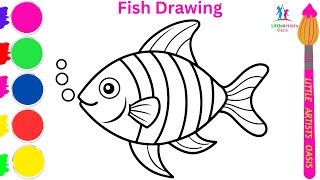
Learn to Draw Beautiful Fish Step by Step | Easy Fish Drawing Tutorial for beginners
Facts about drawing ocean life
🐟 There are over 34,000 known species of fish — that's plenty of doodle ideas!
🎨 Mix blue and yellow paint to make green — perfect for seaweed and kelp in your scene.
🐠 Many fish have unique scale patterns like fingerprints, great for practicing texture and repeating patterns.
🪸 Coral reefs are underwater cities that support about 25% of all marine species, full of colorful inspiration.
🌊 Light bends in water, so things underwater look shifted — drawing wavy lines helps show that effect.
How do I do a 'Doodle a Fishy Sea' drawing activity with my child?
What materials do I need to doodle a fishy sea?
What ages is the doodle a fishy sea activity suitable for?
What are the benefits of the doodle a fishy sea activity and simple variations?
