Create stained glass flowers using oil pastels
Make stained glass flowers by outlining petals with oil pastels or black crayon, then painting translucent watercolor washes over the paper.


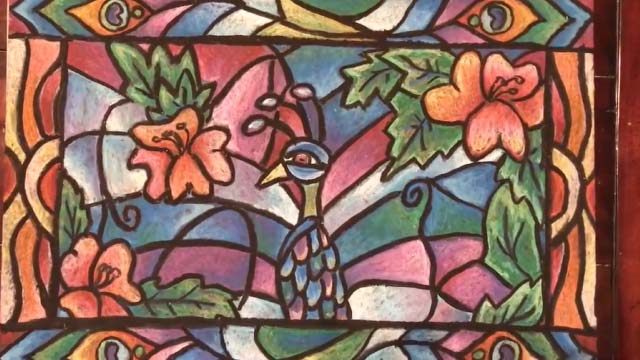

Step-by-step guide to create stained glass flowers using oil pastels
Step 1
Gather all Materials Needed and put them on a clean table.
Step 2
Tape your paper to the table with small pieces of masking tape to keep it from moving.
Step 3
Lightly draw a simple flower shape on the paper with your pencil.
Step 4
Outline the petals and stem using oil pastels or the black crayon pressing firmly so the lines are thick.
Step 5
Choose two to four watercolor colors you want for the petals.
Step 6
Dip your paintbrush into the cup of water so it is wet.
Step 7
Pick up a little paint with the wet brush to make a thin translucent wash.
Step 8
Paint a light wash inside one petal staying inside the pastel outlines.
Step 9
Clean your brush between colors by rinsing it in the water and blotting on the paper towel.
Step 10
Paint another petal with a different translucent wash and let the colors meet the pastel lines.
Step 11
Repeat Steps 9 and 10 until all the petals are filled with translucent washes.
Step 12
Paint a very light background wash if you want the whole picture to glow.
Step 13
Let your painting dry flat until there is no wet shine.
Step 14
Add small details or brighter lines with oil pastels once the painting is completely dry.
Step 15
Share your finished stained glass flower on DIY.org
Help!?
What can we use instead of oil pastels if we can't find them?
If oil pastels are hard to find for Step 4, use a thick black wax crayon or a black oil-based permanent marker to press firm, water-resistant outline lines that the watercolor washes will not soak into.
My paint keeps bleeding past the pastel outlines — how do we fix that?
If washes are pooling or bleeding over the lines in Steps 6–9, blot excess water on the paper towel, dip the brush less deeply so it carries a thinner translucent wash, and wait for each petal to set a little before painting an adjacent petal.
How can I change the activity for different ages like preschoolers and older kids?
For preschoolers, simplify Step 3 by drawing larger petals, tape the paper more securely in Step 2, give jumbo oil pastels and a wide brush for Steps 4–9, while older kids can use three to four colors in Step 5 for layered blending and add fine oil pastel details in Step 12.
What are some ways to make or display the finished stained glass flower more special?
To personalize and extend the project, paint on thin watercolor paper, add metallic highlights with oil pastels in Step 12, cut out the flower after Step 11 and tape it to a sunny window as a stained-glass sun-catcher before sharing on DIY.org.
Watch videos on how to create stained glass flowers using oil pastels
Art Tips - 5 Tips For Using Oil Pastels
4 Videos
Art Tips - 5 Tips For Using Oil Pastels
How I Made These Magical Glass Flowers!
Relaxing Art Video ⎥Easy Oil Pastel Flower Painting Ideas 🌷
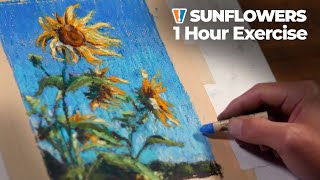
Oil Pastel Drawing - Sunflowers
Facts about mixed-media art for kids
🎨 Oil pastels were popularized in 1949 when the French maker Sennelier created sticks especially for Pablo Picasso.
🧪 Stained glass gets its bright colors from tiny amounts of metal oxides — cobalt for blue, copper for green, and gold for ruby red.
🖌️ Watercolor paint is transparent, so thin washes let light bounce off the paper and create a glowing, stained-glass look.
✏️ Crayola sold its first box of crayons in 1903, helping make waxy coloring sticks a childhood staple.
🛡️ Oil pastels and wax crayons repel water-based paint, so they act as a resist that keeps bold outlines visible under watercolor washes.
How do you make stained glass flowers with oil pastels and watercolors?
What materials do I need to make stained glass flowers with oil pastels?
What ages is this stained glass flower activity suitable for?
What are the benefits, safety tips, and variations for stained glass flower art?
