Collect Treasure on Repeat Loop with DIY Mentor @Jose_Oli
Build a tabletop repeating treasure collector using cardboard, string, and cups, then test a looped pickup mechanism guided by DIY mentor @Jose_Oli.




Step-by-step guide to build a tabletop repeating treasure collector
Step 1
Gather all Materials Needed and set up on a flat table with adult supervision nearby.
Step 2
Cut a cardboard base about 30 by 20 centimeters using the scissors.
Step 3
Use the ruler to mark two axle positions centered and about 2 centimeters from each short edge of the base.
Step 4
Cut two small cardboard support pieces about 6 by 4 centimeters each.
Step 5
Fold each support piece into a triangular stand shape.
Step 6
Tape the two stands upright onto the base at the marked axle positions.
Step 7
Slide one pencil through the left stand and the second pencil through the right stand so both pencils can spin as axles.
Step 8
Make a small hole near the rim of each cup using the tip of the scissors.
Step 9
Thread a long length of string through the cup holes and tie the string ends together to form a continuous loop with the cups opposite each other.
Step 10
Place the string loop over both pencil axles so the cups hang down across the tabletop and adjust the loop height so a cup can scoop from the table.
Step 11
Put small treasures on the tabletop in front of one hanging cup.
Step 12
Turn one pencil axle by hand to run the loop and watch the cups pick up and drop the treasures.
Step 13
Secure any loose knots or add small pieces of tape to stabilize the cups if they slip.
Step 14
Decorate your base and cups with colouring materials to make your treasure collector look awesome.
Step 15
Share your finished repeating treasure collector on DIY.org.
Help!?
What can we use instead of plastic cups if we don't have them for the step 'Make a small hole near the rim of each cup'?
Use small paper cups, yogurt pots, or make cup-shaped scoops from folded cardboard and reinforce the rim holes with tape so they don't tear when you thread the string.
The cups keep slipping on the pencils or the loop slides off — how do we fix that so the cups scoop treasures properly?
Follow the instruction 'Secure any loose knots or add small pieces of tape to stabilize the cups' and add tape around the pencil axles where the loop rests and tighten the string knot so the cups hang at equal height and don't slide.
How can we adapt this activity for different ages so it's safe and challenging for everyone?
For preschoolers have adults pre-cut the cardboard base, stands, and holes and let kids thread the string and decorate, while older kids can design different cup sizes, adjust axle spacing with the ruler, or add a crank handle to the pencil axle for more challenge.
What are some fun ways to extend or personalize the 'Collect Treasure on Repeat Loop' project after it's working?
Decorate the base and cups as suggested, then add colored stickers or a scoring chart to turn it into a game, or attach a simple gear or crank to one pencil axle so turning a handle runs the continuous loop automatically.
Watch videos on how to build a tabletop repeating treasure collector with DIY mentor @Jose_Oli
Fun Treasure Hunting for Kids: How To Find Treasure 0+
4 Videos

Fun Treasure Hunting for Kids: How To Find Treasure 0+
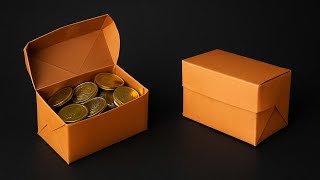
Origami Chest - How to Make a Paper Treasure Box
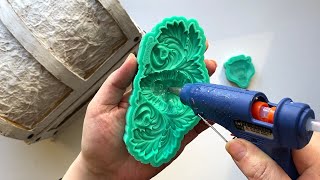
DIY 😘🌿Crafting a Cardboard Box into a Treasure Chest
Turn Trash Into Treasures: 18 Brilliant Tin Can Upcycling Hacks!
Facts about simple machines and mechanical crafts for kids
🤹♂️ Rube Goldberg machines were inspired by cartoonist Rube Goldberg’s funny drawings of overly complicated devices to do simple jobs — and people build real ones for contests!
🛠️ There are six classical simple machines (lever, wheel and axle, pulley, inclined plane, wedge, screw) that form the basis of many kid-built mechanisms.
🪢 Using multiple pulleys in a block-and-tackle setup can dramatically reduce the force needed to lift or pull objects — handy for making a repeating grabber!
📦 Corrugated cardboard has been used since the 19th century and is lightweight, strong, and super-easy to cut and fold for model machines.
🔁 Conveyor belts in factories can move thousands of items per hour — your tabletop looped collector is a tiny, fun version of that idea!
How do I build the tabletop repeating treasure collector with DIY Mentor @Jose_Oli?
What materials do I need to build the treasure collector loop?
What ages is this tabletop repeating treasure collector suitable for?
What safety tips should parents follow when making the repeating treasure collector?
