#CampDIY Day 1: Tongue Twister Challenge!
Write and practice original tongue twisters, perform them aloud with friends, time yourself, and try fast and clear recitation to build speech skills.




Step-by-step guide to #CampDIY Day 1: Tongue Twister Challenge!
Photosynthesis 🌷 | What is photosynthesis? | Step-by-step process
Step 1
Gather your materials and sit in a comfy spot where you can speak out loud.
Step 2
Pick a fun topic like animals or snacks and write that topic at the top of your paper.
Step 3
Write a list of eight similar-sounding words or short phrases related to your topic.
Step 4
Mix those words to create three short original tongue twisters and write each one on your paper.
Step 5
Give each tongue twister a silly name and write the names next to them.
Step 6
Read the first tongue twister slowly out loud three times to hear how it sounds.
Step 7
Stand in front of the mirror and say the same tongue twister slowly to watch your mouth move.
Step 8
Use the timer to time yourself saying the tongue twister at a normal speed and write down the time.
Step 9
Ask a friend or family member to listen and then perform the tongue twister as fast and clearly as you can while they count any mistakes.
Step 10
Practice that tongue twister five times trying to make fewer mistakes and beat your time.
Step 11
Perform each of your three tongue twisters for your friends and time the whole mini-show.
Step 12
Share your finished tongue-twister performance and your favorite twister on DIY.org.
Help!?
What can I use if I don't have a mirror, timer, or paper listed in the instructions?
Use your phone's front camera or a shiny spoon to watch mouth movements for step 6, use a phone stopwatch or the clock app for timing in step 8, and write your words in a notes app or on a whiteboard instead of paper for steps 2–4.
I keep tripping over words when I try to beat my time—how can I fix that?
Circle the tricky sounds on your paper (steps 2–3), slow the tongue twister and practice those phrases in front of the mirror (steps 5–6), then repeat the five practice runs in step 11 focusing only on those spots to lower mistakes counted in step 10.
How can I adapt the challenge for younger kids or make it harder for older kids?
For younger children limit the list to four simple rhyming words and let them perform for a stuffed animal or family member (steps 2–3 and 12), while older kids can use 10–12 similar-sounding words to build longer tongue twisters and record a timed mini-show to share on DIY.org (steps 3, 11, 13).
What are fun ways to extend or personalize the tongue-twister activity?
Create scorecards for speed and clarity during your mini-show (step 12), decorate each paper with a silly name and drawings (step 4), or film and add music to your performance before posting on DIY.org (steps 4, 11–13).
Watch videos on how to perform the Tongue Twister Challenge (CampDIY Day 1)
Photosynthesis
4 Videos
Photosynthesis

Photosynthesis: Crash Course Biology #8
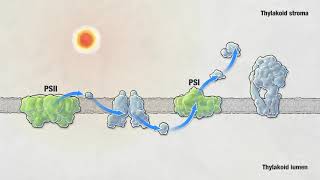
Photosynthesis | HHMI BioInteractive Video

Photosynthesis - Light Dependent Reactions and the Calvin Cycle
Facts about speech and language development for kids
🗣️ Tongue twisters are used by actors, broadcasters, and singers to warm up and sharpen articulation.
⏱️ Timing your recitations is a fun way to track progress—many people get faster AND clearer with practice.
🤯 "The sixth sick sheik's sixth sheep's sick" is often cited as one of the toughest English tongue twisters.
🎤 Making your own tongue twisters teaches alliteration and creative wordplay—great for storytelling and performance.
🧠 Regular tongue-twister practice exercises the brain's speech and motor planning areas, helping pronunciation and fluency.
How do I run the #CampDIY Day 1 Tongue Twister Challenge with kids?
What materials do I need for a Tongue Twister Challenge?
What ages is the Tongue Twister Challenge suitable for?
What are the benefits and safety tips for doing tongue twister challenges?
