Make cardboard furniture
Build small cardboard furniture like a stool, shelf, or chair using recycled boxes, cutting, folding, and gluing while learning measurements and basic design.


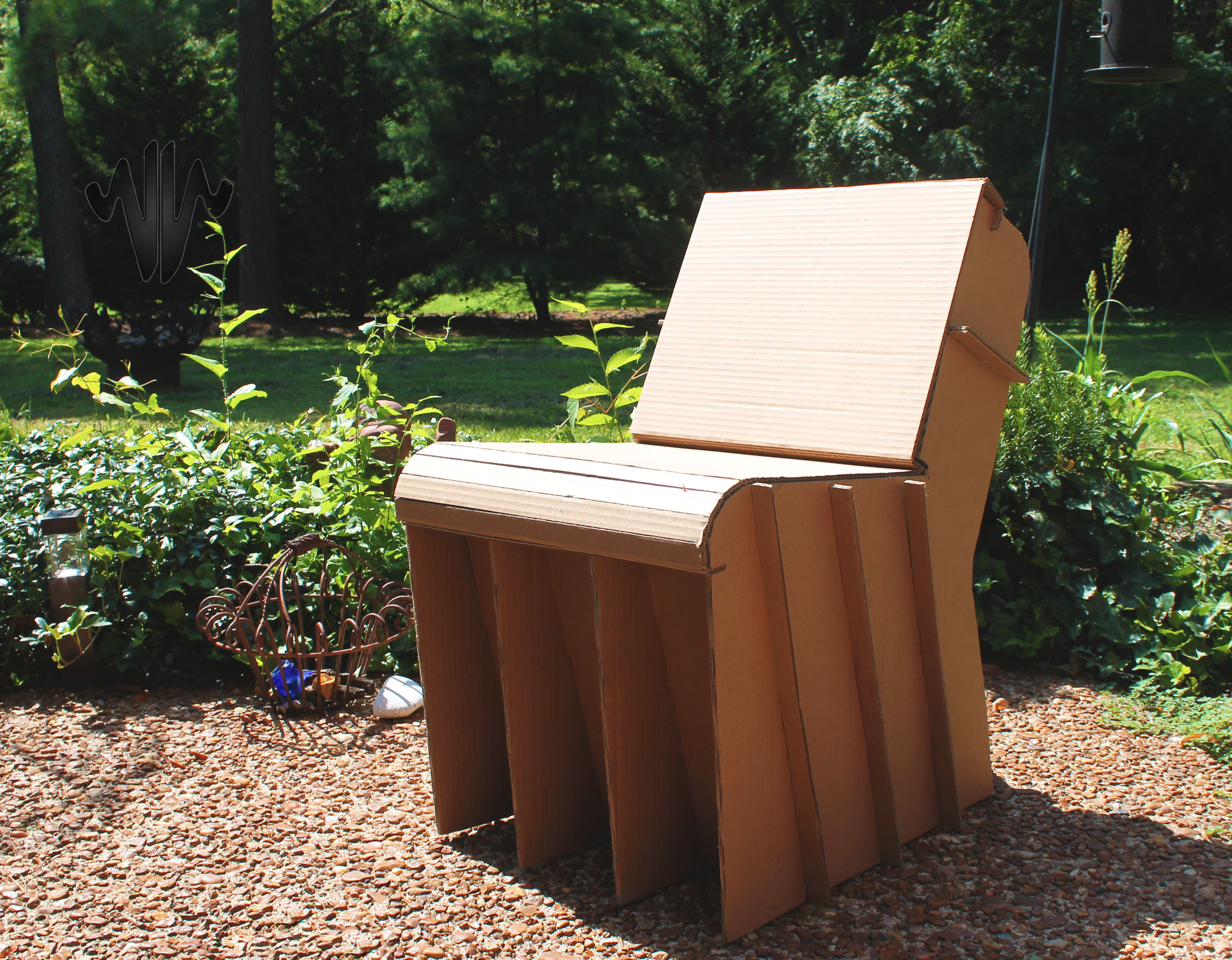

Step-by-step guide to build small cardboard furniture
Amazing furniture DIY using cardboard Very simple and easy crafts |Cardboard furniture craft at home
Step 1
Pick which small piece of furniture you want to make such as a stool shelf or chair and imagine who will use it.
Step 2
Draw a simple plan on paper showing the top and front views and write the measurements in centimetres for each part.
Step 3
Place a flat piece of cardboard on a table and use your ruler and pencil to copy the measured shapes from your plan onto the cardboard.
Step 4
Ask an adult to help if you want to use a craft knife for cutting out the shapes.
Step 5
Cut out each cardboard piece carefully along your pencil lines using scissors.
Step 6
Score any fold lines by running the ruler along the line and pressing lightly with the pencil side to make neat folds.
Step 7
Fold along your scored lines so tabs and edges line up exactly for joining.
Step 8
Attach the main pieces together by sliding tabs into slots or by applying glue and holding the pieces until they stick.
Step 9
Reinforce the joins with extra strips of cardboard or tape so the furniture holds weight better.
Step 10
Trim any rough edges or extra tape so your furniture looks neat and smooth.
Step 11
Decorate your finished furniture with paint stickers or colouring materials and let it dry completely.
Step 12
Ask an adult to help you test your furniture gently and make any small fixes needed.
Step 13
Share a photo and a short description of your finished cardboard furniture on DIY.org
Help!?
What can we use if we don't have a craft knife, special glue, or thick cardboard?
Use sharp scissors with an adult's help instead of a craft knife, stick pieces with strong clear tape if you don't have glue, and layer cereal boxes glued or taped together to get thicker cardboard for the pieces.
What should we do if the folds are messy or the joins don't hold when assembling the furniture?
Rescore fold lines by running the ruler and pencil again for neater folds, make sure tabs and slots line up exactly before sliding or gluing, and reinforce weak joins with extra strips of cardboard or tape while holding glued areas until they dry.
How can we adapt this activity for younger children or make it more challenging for older kids?
For younger children have an adult pre-cut the cardboard pieces and let them fold, slide tabs, and decorate, while older kids can draw precise top and front views with centimetre measurements, cut their own slots, and design stronger, weight-bearing joins.
What are simple ways to improve or personalize the finished cardboard furniture?
Add glued-on fabric and thin foam for upholstery, paint and stickers for decoration, trim rough edges for a neat look, and reinforce stress points with extra cardboard strips before testing gently and photographing the result for DIY.org.
Watch videos on how to build small cardboard furniture
How to Make an Easy Cardboard Table at Home | DIY Tutorial
4 Videos

How to Make an Easy Cardboard Table at Home | DIY Tutorial
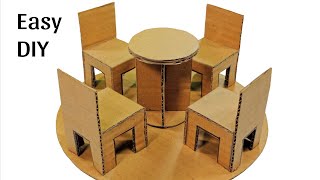
How To Make Chair And Table With Cardboard DIY Cardboard Furniture Easy
DIY Cardboard cupboard /How to make a cupboard with cardboard/diy kids cupboard/Cardboard furniture
5 CARDBOARD FURNITURES IDEAS | BEST OUT OF WASTE CRAFT | EASY CARDBOARD DIY | WASTE MATERIAL CRAFT
Facts about cardboard crafts for kids
📦 Corrugated cardboard first started being used for packaging in the 1800s and became common by the 1870s.
🪑 Folded and layered cardboard structures (like triangles and honeycombs) can support hundreds of pounds — enough to hold an adult.
♻️ Cardboard is one of the most recycled materials; recycling one ton of paper/cardboard can save around 17 trees.
🔺 Triangles add strength — using triangular bracing or folded beams in cardboard furniture makes it much more stable.
🛋️ Architect Frank Gehry popularized cardboard furniture in the 1960s–70s with his 'Easy Edges' series, proving cardboard can be designer-friendly.
How do I make small cardboard furniture like a stool or chair with my child?
What materials and tools do I need to build cardboard furniture from recycled boxes?
What ages is making cardboard furniture suitable for?
What are the benefits of building cardboard furniture with children?
