Fall Reading Challenge for Kids: Bingo + Question Stems
Download a free fall reading bingo card + question stems. Make reading fun at home or in class with 15–20 min goals and a printable tracker.
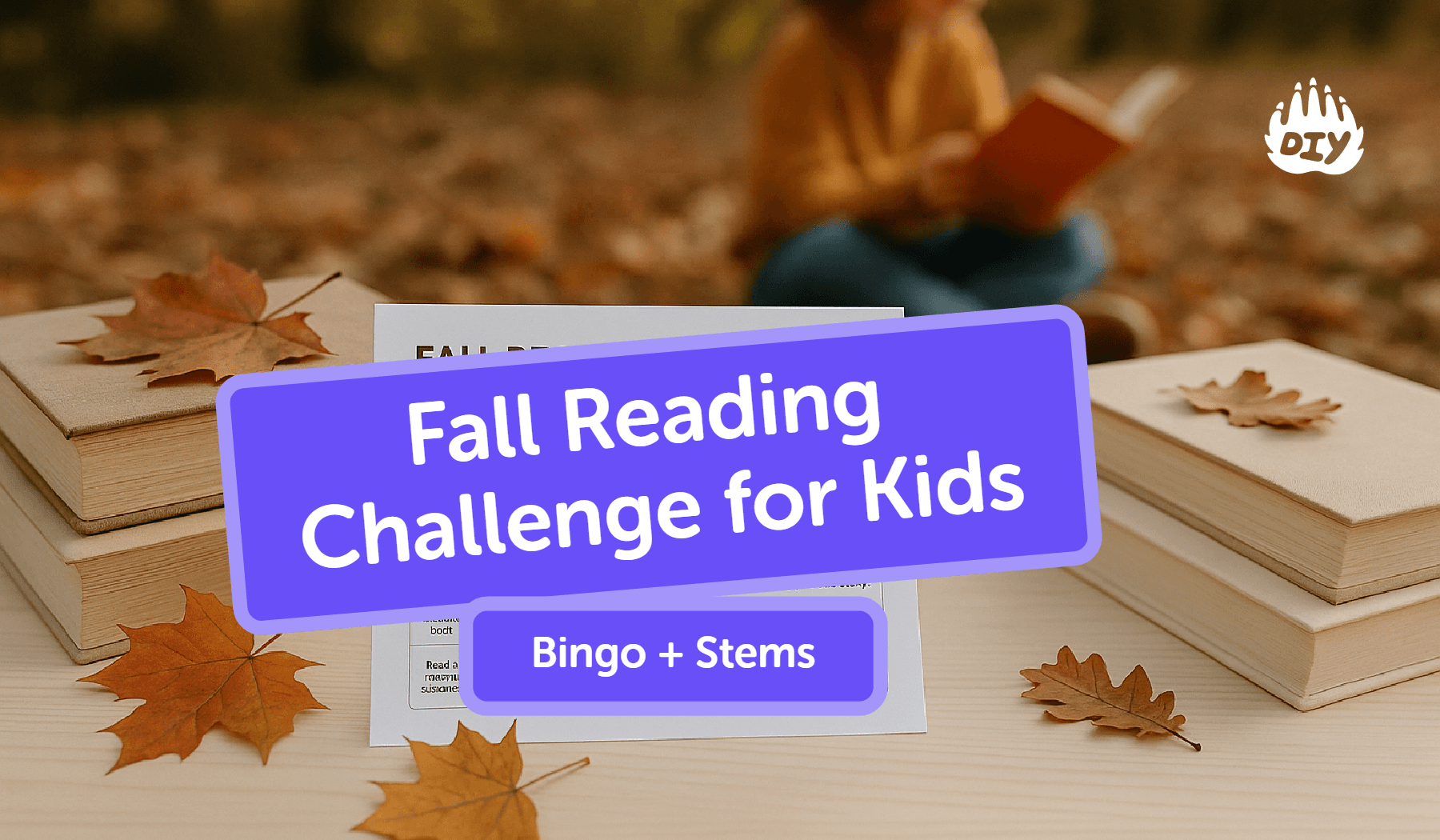
Make reading fun this fall. Print the bingo card, pick a square, read for 15–20 minutes, then use 1–2 question stems to talk about the book. Small wins add up at home or in class, grades 2–8.
Quick download: Fall Reading Bingo (PDF) + Question Stem Cards (printable).
How the Fall Reading Bingo Works
Goal: Do 1–2 squares per day or run a 7-day / 30-day reading challenge.
How to win: Beginners aim for one line (5 in a row); super readers try a full card.
Time blocks: 15–20 minutes on school nights; 20–30 minutes on weekends.
Materials: Bingo card, pen/stickers, timer, question stems (cut-out cards).
Why it works: Combines reading bingo for kids with reading comprehension questions to build understanding and confidence.
Add a tiny reward when a row is a complete bookmark, reading light night, pick-the-family-read-aloud. Turn chapters into 1-minute summaries, build flashcards, and generate quick quizzes. 👉 AI Homework helper
Download Your Bingo & Printables
Bingo Squares (Copy-Ready)
Use these as written or swap for grade level. Keep 24-30 total squares.
Read outside for 15 minutes Read a poem out loud Read a book with a map or diagram Read a myth or legend Read a nonfiction page and list 3 facts Read a graphic novel chapter Read to a family member or stuffed animal Try a new author Read a book set in fall (or with fall on the cover) Read a biography page and share one thing you learned Reread a favorite chapter spot 2 new details Read a chapter and sketch one scene Read the first chapter of a mystery Read a news article and tell the main idea Read a picture book and find 3 strong verbs Read two pages and circle tricky words (then solve them) Read a poem and find a simile or metaphor Read for 20 minutes with no phone nearby Swap books with a friend and try one chapter Read a science article and label 2 diagrams Read a chapter and write 2 “I wonder…” questions Read a folktale from another culture Read a how-to/instruction page and try it Read a book by an author you’ve never read Read a library librarian’s pick or teacher rec |
👉Download the Fall Reading Bingo (PDF)
Reading Comprehension Question Stems (K–8 Friendly)
Use 1–2 stems after each square. These are short, repeatable prompts that get evidence + explanation without making it feel like homework.
Before Reading (Activate & Predict)
What do you think this will be about? Why?
What do you already know about this topic/author?
During Reading (Monitor & Clarify)
What just happened? Can you say it in your own words?
Which words or parts are confusing? What clues help?
After Reading (Summarize & Infer)
What’s the main idea? Which details prove it?
What does the character learn? What shows that?
What’s the theme or lesson? Which events support it?
Evidence & Opinion (Cite & Explain)
Which sentence is your best evidence? Why that one?
What would you tell a friend to convince them to read this?
Compare & Connect (Extend)
How is this like something else you’ve read?
What in this text connects to your life or today’s world?
Print the stems on cards and let students draw 1–2 at random for quick share-outs. 👉Print the Question Stem Cards (cut & go)
Quick Start Plans (Home & Classroom)
Home (15–20 minutes/day)
Mon–Thu: Pick a square → read 10–15 min → answer 1–2 stems in your own words.
Weekend: Family read-aloud + 60-second retell.
Celebrate: Sticker on the bingo square or a line highlight.
Classroom (20–30 minutes/day)
Monday: Mini-lesson on a stem (e.g., “main idea” with evidence).
Tue–Thu: Independent/partner reading; 2–3 students do 1-minute book talks.
Friday: Theme or character gallery walk post sticky-note evidence under headings.
Level It Up (By Grade & Reader Type)
Grades 2–3: Shorter texts/picture books, 1 stem per session, draw a quick sketch.
Grades 4–5: Chapter books/graphic novels, 2 stems, write a 3-sentence response.
Grades 6–8: Add nonfiction articles, 3 stems, evidence + explanation in 3–5 sentences.
Reluctant readers: Audiobooks + paired reading; choose-your-own squares; start with 10 minutes.
Advanced readers: 2 lines/week, compare/contrast response, track themes across books.
👉Start a 7-Day Reading Streak (free tracker)
Sample Reading Log & Mini Response (Copy-Paste)
Date: ______ Title: ____________________ Minutes: ____ What happened (1–2 sentences)? __________________________________________ What’s the main idea or theme? __________________________________________ Best evidence (quote or detail): ________________________________________ |
Mini rubric: Complete • Uses Evidence • Clear Writing.
FAQs: Fall Reading Challenge for Kids
How many minutes should kids read each day?
Aim for 15–20 minutes on school nights (younger grades) and 20–30 minutes for older grades. Weekends can include a longer stretch or a cozy family read-aloud.
Does reading bingo work for reluctant readers?
Yes make it low-friction: audiobooks, graphic novels, and picture books count when followed by question stems and a quick retelling.
What books count?
Anything that gets them reading: fiction, nonfiction, poems, magazines, audiobooks (with a stem response), or teacher/ librarian picks.
How do I grade this in class?
Use completion + evidence: a finished line = full credit, and 1–2 short responses using evidence + explanation for mastery.
What if we miss a day?
No stress. Double up on the weekend or carry the card into next month reading streaks beat perfection.
Related DIY Challenges & Courses
More Blogs You Might Like
Ready to start creating?
Join hundreds of thousands of kids already building cool stuff.
Get started for freeYour first game is on us.
Describe a game below - no sign-up needed to try.
Powered by AstroSafe
Make real games - not just chat