Vertebral Column Facts For Kids
The vertebral column, also known as the spine or backbone, is the central part of the axial skeleton made of vertebrae that provides support, movement, and protection for the spinal cord in vertebrates.


Do more with AI
Introduction
The vertebral column, or spine, is the backbone of animals with backbones, like us! 🏋️♂️ It is made up of small bones called vertebrae. This column runs down the back, protecting the spinal cord, which is like a superhighway of nerves! 🧠The vertebral column helps you stand tall, bend, and twist. Did you know? It can even help you perform cool moves like somersaults! 💥With about 33 vertebrae in the human spine, it's fascinating to learn how they work together to support our bodies!
Images of Vertebral Column
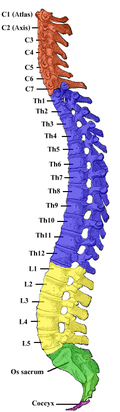

Anatomy of a vertebra

A thoracic spine X-ray of a 57-year-old male.

Lateral lumbar X-ray of a 34-year-old male

The spinal cord nested in the vertebral column.

3D medical animation still shot of spina bifida

Diagram showing normal curvature of the vertebrae from childhood to teenage

Surface projections of organs of the torso. The transpyloric line is seen at L1

A vertebra (diameter 5 mm) of a small ray-finned fish
Types Of Vertebrae
Vertebrae are special bones, and they come in different types! First, we have cervical vertebrae (7), which are the smallest for neck movement. 🦓Then, thoracic vertebrae (12) hold your ribs. These help protect your lungs and heart. 💓The lumbar vertebrae (5) are bigger and support your lower back, helping you lift heavy objects. Next, the sacral vertebrae are fused into one piece for stability. 🌟Finally, you have the coccygeal vertebrae, making the tailbone safe! Different shapes and sizes of these vertebrae work together, each helping you move and protecting organs.
Comparison Between Vertebrates
Did you know that not all vertebrates have the same type of spine? 🐢For example, fish have flexible spines, allowing them to glide easily through water. Meanwhile, birds have lighter vertebrae for flying, which are designed differently than mammals. 🦓Mammals like us have more complex vertebral columns, allowing us to run, jump, and twist! 🏃♀️ Reptiles such as turtles have a solid spine that helps them stay safe in their shells. This difference shows how each vertebrate adapts to its environment, making their spines perfect for what they need to live!
Anatomy Of The Vertebral Column
The vertebral column consists of several parts. Each bone is called a vertebra. The cervical region has 7 vertebrae for your neck! 🦒Then, 12 thoracic vertebrae support your ribcage, and 5 lumbar vertebrae help your lower back. Next, there are the sacral vertebrae (5 fused together) and the coccygeal vertebrae, often known as the tailbone. 🦴Together, they form curves that lesson pressure during movement! Each vertebra has a central hole where the spinal cord passes through, like a tunnel. 🌈Understanding this helps us know how our body stays stable.
Function Of The Vertebral Column
The vertebral column has super important jobs! First, it gives your body structure so you can stand up straight. 💪It also protects the delicate spinal cord, which sends signals all through your body. 📨Think of it like a shield! Another job is to allow movement. The vertebrae can twist and bend, letting you do things like reach for that cookie on the top shelf! 🍪The curves in your spine also help balance and absorb shock when you jump or run. So, your spine is not just there for support; it makes movement fun and safe!
Development Of The Vertebral Column
The vertebral column starts developing very early, even before you are born! 👶As a baby grows in the tummy, the vertebrae gradually form and start coming together. When you are born, your spine is mostly flat! 🌈But as you grow, it develops natural curves, like a soft "S." Children have softer bones, making them flexible. During childhood, it's important to keep active! After about age 12, your spine is almost fully developed. 🏃♂️ Each vertebra will now help support and protect your body as you grow into an adult.
Vertebral Column In Different Species
The vertebral column can look quite different in various animals! 🐘For example, elephants have a massive spine to support their weight. 🦛Giraffes have super long necks, but their cervical vertebrae are the same number as humans—7! 🦒Snakes have lots of vertebrae, which help them slither smoothly. Each vertebra in snakes is smaller and more flexible. In contrast, a bird's spine is lightweight and helps them fly. 🐦Even sea turtles have unique vertebrae shaped for swimming! This variety shows how important the vertebral column is for each animal's lifestyle and abilities!
Common Disorders Of The Vertebral Column
Sometimes, the spine can have issues, just like any part of our body. One common problem is scoliosis—a curve in the spine that makes your back look like an "S" shape. 💔Other disorders include herniated discs, where discs between vertebrae slip out and may cause pain. Ouch! 😣Spinal stenosis is when the space around the spinal cord narrows, leading to discomfort. Lastly, osteoporosis can make bones weak as you get older. ⚠️ Taking care of your vertebral column is important—keep exercising, eat healthy, and visit the doctor if something feels wrong!
Care And Maintenance Of The Vertebral Column
Taking care of your spine is important for a happy and healthy life! 🥳How? First, practice good posture by sitting and standing straight. This helps keep your spine in a nice position. Don't slouch, and sit up tall like a superhero! 💪Exercise regularly to keep those back muscles strong; try fun activities like dancing, swimming, or yoga! 🧘♂️ Also, be mindful of lifting heavy things properly, using your legs, not your back! Lastly, eat a balanced diet with calcium-rich foods, like milk and yogurt, to keep your bones healthy! 🥛Keeping your spine safe means you'll be more active and energetic!
Evolutionary History Of The Vertebral Column
The vertebral column has a long and amazing history! 🦖It first appeared in early fish over 500 million years ago! These simple backbones helped fish swim better. As animals evolved, vertebrates developed more complex spines. Dinosaurs had massive vertebral columns to support their huge bodies, while birds have lighter spines to fly. 🦅Mammals, like us, have a flexible spine, allowing many movements! Evolution shaped these columns so different creatures could survive in their habitats. The evolution of the vertebral column showcases how animals adapt to their environments, growing diverse shapes and sizes!
Interesting Facts About The Vertebral Column
The vertebral column is full of cool surprises! Did you know that humans can bend their spines somewhat due to the flexible discs in between each vertebra? 🌼Also, the vertebrae in your spine can help you grow! That’s right; when you’re taller, it’s often because your spine has developed better! 🧗♂️ Some sea creatures, like jellyfish, lack a spine altogether! And the world's largest vertebra belongs to a blue whale, which can weigh over 200 tons! 🐋Finally, our spines have nerves that help us feel touch, pressure, and even tickles! 😜Isn’t our vertebral column amazing?
Vertebral Column Quiz
Learn more about Vertebral Column
