All Articles

Third Punic War

Third Punic War Facts For Kids

The Third Punic War was the final conflict between Rome and Carthage, resulting in Carthage's complete destruction from 149 to 146 BCE.
🎨 Reading age for 6-8
Background blob
Third Punic War
Facts for Kids!
Image by Harrias, licensed under Creative Commons Attribution-Share Alike 4.0

Do more with AI

Introduction

The Third Punic War (149-146 BC) was the last battle in a series of wars between two ancient cities, Carthage and Rome. 🌍Carthage, located in present-day Tunisia, was once a powerful city with lots of trade. Meanwhile, Rome, in Italy, was rising to become a huge empire. The war lasted three years but ended with a big event: the destruction of Carthage! Boom! 💥This war showed how Rome wanted to be the strongest power in the Mediterranean Sea. The war opened up new areas for Rome, but it also taught us about the consequences of long-lasting conflicts.

Images of Third Punic War

Map of approximate extent of Numidian, Carthaginian and Roman territory in 150 BCImage by Goran_tek-en, licensed under Creative Commons Attribution-Share Alike 4.0

Map of approximate extent of Numidian, Carthaginian and Roman territory in 150 BC

A silver double shekel from Carthage's last minting of coins before its destruction.[46]

A silver double shekel from Carthage's last minting of coins before its destruction.[46]

Catapulta by Edward Poynter, 1868; modern depiction of a Roman siege engine during the siege of Carthage

Catapulta by Edward Poynter, 1868; modern depiction of a Roman siege engine during the siege of Carthage

Arrowheads, remains of a dagger and stones for slingshots exhibited at the National Museum of CarthageImage by Pascal Radigue, licensed under Creative Commons Attribution-Share Alike 3.0

Arrowheads, remains of a dagger and stones for slingshots exhibited at the National Museum of Carthage

A World War II United States Army Air Forces aerial reconnaissance photograph of the remains of the naval base of the city of Carthage. The remains of the mercantile harbour are in the centre and those of the military harbour are bottom right. (North is to the bottom-right)

A World War II United States Army Air Forces aerial reconnaissance photograph of the remains of the naval base of the city of Carthage. The remains of the mercantile harbour are in the centre and those of the military harbour are bottom right. (North is to the bottom-right)

Ruins of the Punic Quarter, Carthage, in 2005Image by Eirik Newth, licensed under Creative Commons Attribution 2.0

Ruins of the Punic Quarter, Carthage, in 2005

Map of approximate extent of Numidian, Carthaginian and Roman territory in 150 BCImage by Goran_tek-en, licensed under Creative Commons Attribution-Share Alike 4.0

Map of approximate extent of Numidian, Carthaginian and Roman territory in 150 BC

A silver double shekel from Carthage's last minting of coins before its destruction.[46]

A silver double shekel from Carthage's last minting of coins before its destruction.[46]

Catapulta by Edward Poynter, 1868; modern depiction of a Roman siege engine during the siege of Carthage

Catapulta by Edward Poynter, 1868; modern depiction of a Roman siege engine during the siege of Carthage

Arrowheads, remains of a dagger and stones for slingshots exhibited at the National Museum of CarthageImage by Pascal Radigue, licensed under Creative Commons Attribution-Share Alike 3.0

Arrowheads, remains of a dagger and stones for slingshots exhibited at the National Museum of Carthage

A World War II United States Army Air Forces aerial reconnaissance photograph of the remains of the naval base of the city of Carthage. The remains of the mercantile harbour are in the centre and those of the military harbour are bottom right. (North is to the bottom-right)

A World War II United States Army Air Forces aerial reconnaissance photograph of the remains of the naval base of the city of Carthage. The remains of the mercantile harbour are in the centre and those of the military harbour are bottom right. (North is to the bottom-right)

Ruins of the Punic Quarter, Carthage, in 2005Image by Eirik Newth, licensed under Creative Commons Attribution 2.0

Ruins of the Punic Quarter, Carthage, in 2005

Siege Of Carthage

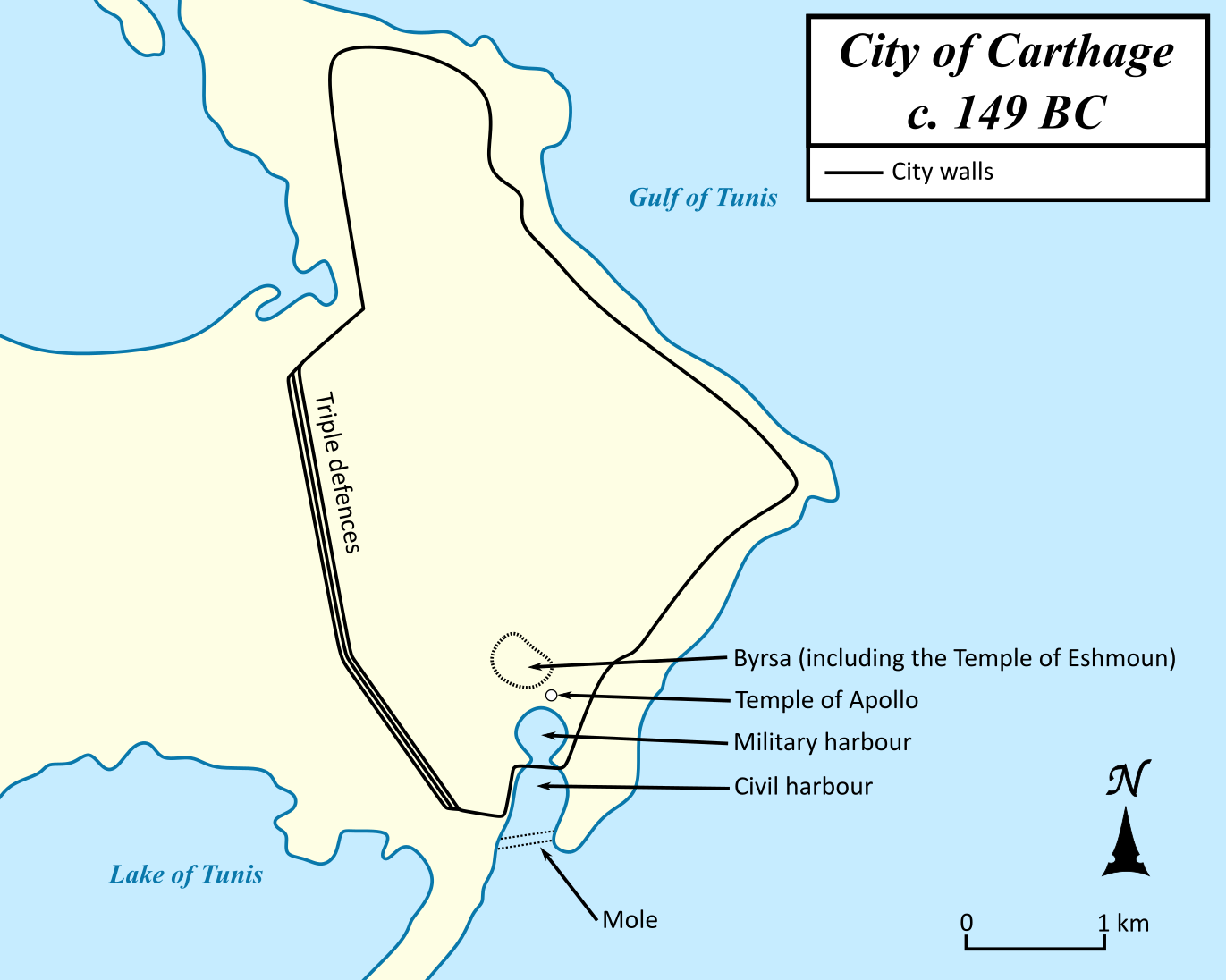
The Siege of Carthage was a dramatic event during the Third Punic War! 🏰Starting in 149 BC, the Romans surrounded the city and cut off supplies to weaken Carthage. They wanted to starve the inhabitants into surrender. Carthaginians built defensive walls and fought fiercely but were outnumbered. 👥Despite the daunting situation, they held on! The siege lasted until 146 BC, when the Romans launched a final assault. They breached the walls, and the Romans stormed into the city. Carthage was burned, and its people faced tragic fates. The siege marked the end of a great city! 🔥

Key Figures And Leaders

Several important leaders played a role in the Third Punic War! 🦸‍♂️ On the Roman side, General Scipio Aemilianus was crucial. He was the grandson of Scipio Africanus, who had defeated Hannibal in the past. The Carthaginian defense was led by Hasdrubal, who fought valiantly to protect his city. 🏛️ Romans, like Cato the Elder, ignited excitement for the war through their speeches. Other battles also had other famous personalities, like Hannibal in earlier conflicts. These figures shaped the outcome and meaning of the war, making their actions memorable in history. ✨

Legacy Of The Punic Wars

The Punic Wars left a lasting legacy in history! 🌟They helped shape Rome into a powerful empire, dominating the Mediterranean for centuries. The Third Punic War, in particular, signaled the importance of military strength and strategy. Many future leaders studied these wars to learn about power struggles. Also, the story of Carthage became a cautionary tale about the dangers of conflict. 📜The legacy also lives on in phrases and military tactics used today. Schools still teach about the Punic Wars, helping students learn that peace is often better than war! 🕊️

Aftermath And Consequences

The aftermath of the Third Punic War was a huge change for both cultures! 🌍With the end of Carthage, Rome became the dominant power in the Mediterranean. They razed the city and sold its citizens into slavery, marking an end to Carthage's rich history. ⚔️ The war also led to expansions, as Rome took over Carthaginian territories. New lands meant more resources for Rome! However, this victory also resulted in more conflicts, as other nations saw Rome's strength and challenged it later. 📜So, while it helped Rome grow, it also set the stage for even more battles in the future!

Cultural Impact Of The War

The Third Punic War had a big cultural impact on history! 📚After the war, the phrase "Carthago delenda est," meaning "Carthage must be destroyed," became famous in Roman culture. This reflected how Romans viewed their enemies. Also, the destruction of Carthage meant the loss of its rich cultural ideas, like art and trade practices. People learned about war's harsh realities and the importance of diplomacy. Future generations understood from this war that conflicts could change cities and cultures forever. 🌌The war created stories, legends, and lessons that historians still study today!

Historical Interpretations

Historians have different opinions about the Third Punic War! 📖Some think it was necessary for Rome to eliminate a rival and ensure safety. Others believe the war was avoidable and led to unnecessary suffering. Many argue that Cato's insistence on war fueled the conflict. 🛡️ The interpretations have changed over time. Some view Scipio Aemilianus as a hero, while others criticize the Romans’ harsh treatment of defeated Carthaginians. This diversity of viewpoints shows how history can be seen in different ways. Understanding these interpretations teaches us about human behavior in times of crisis! 🔍

Major Battles And Campaigns

The major battles of the Third Punic War included the Siege of Carthage, which was the biggest event! ⚔️ The war began with a few skirmishes but became a full-blown siege in 147 BC. Roman General Scipio Aemilianus led a powerful army against Carthage, which was defended fiercely. 🏹The Romans used their strength and strategy to cut off food and supplies. They built walls and used siege engines to attack. The Carthaginians fought hard, but after three years, Roman persistence paid off. The city was finally captured in 146 BC, marking a significant Roman victory! 🎉

Causes Of The Third Punic War

The Third Punic War was caused by many factors! One major reason was that Rome was worried about Carthage rebuilding its power. 🏰After losing the Second Punic War, Carthage had to pay financial reparations and could only fight in self-defense. But in 150 BC, Carthage defended itself against a neighboring tribe, making Rome very uneasy. 🗡️ Some Roman leaders, like Cato the Elder, famously ended speeches with "Carthage must be destroyed!" This urgency made war almost unavoidable. The animosity and the need for power pushed both sides into conflict, leading to one final showdown! ⚔️

Military Strategies And Tactics

The Romans used smart military strategies in the Third Punic War! 🛡️ First, they surrounded Carthage, cutting off food and supplies. This tactic is called a "blockade." Next, they built massive siege engines to break down the city's walls. ⚒️ Romans also created a strong network of camps to protect their troops. They made sure to keep their soldiers fed and organized during the long siege. The Carthaginians defended with bravery but couldn't hold out against the superior numbers and strategies of the Romans. In the end, Roman tactics helped them achieve victory in a brutal conflict! ⚔️

Third Punic War Quiz

Q1
Question 1 of 10

Learn more about Third Punic War

Ready to create?

Make

To create a safe space for kid creators worldwide!

Create

Vibe Coding

Kids GPT

All Tools

Kibu

Resources

Worksheets

SafeTube

Blog

FAQ

Account

Pricing

Log-in

Sign-up

Data Deletion

Company

About

Community Guidelines

Privacy Policy

Terms of Service

2025, URSOR LIMITED. All rights reserved. DIY is in no way affiliated with Minecraft™, Mojang, Microsoft, Roblox™ or YouTube. LEGO® is a trademark of the LEGO® Group which does not sponsor, endorse or authorize this website or event. Made with love in San Francisco.