All Articles

Season

Season Facts For Kids

Seasons are divisions of the year defined by distinct weather patterns, temperature variations, and daylight changes, typically including spring, summer, autumn, and winter.

🎨 Reading age for 6-8
Background blob
Season
Season
Facts for Kids!
Image by Arne Hückelheim, licensed under Creative Commons Attribution-Share Alike 3.0

Do more with AI

Introduction

Seasons are special times of the year that bring changes in weather and nature! 🌍There are four main seasons: spring, summer, autumn (or fall), and winter. These seasons change as the Earth orbits the Sun. Each season has its own unique traits, including temperatures and daylight hours. For example, in summer, the days are long and warm, while in winter, the days are short and cold! The excitement of seasons helps us appreciate the world around us. So let’s jump into the beauty of seasons and learn why they matter! 🌼☀️🍂❄️

Images of Season

Panoramic View during rain season from the Panorama Point on the Matheran Hill. On the ridge in front you can see the railroad track wriggling around.Image by Arne Hückelheim, licensed under Creative Commons Attribution-Share Alike 3.0

Panoramic View during rain season from the Panorama Point on the Matheran Hill. On the ridge in front you can see the railroad track wriggling around.

Axial parallelism is a characteristic of the Earth (and most other orbiting bodies in space) in which the direction of the axis remains parallel to itself throughout its orbit.

Axial parallelism is a characteristic of the Earth (and most other orbiting bodies in space) in which the direction of the axis remains parallel to itself throughout its orbit.

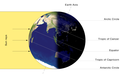
This diagram shows how the tilt of Earth's axis aligns with incoming sunlight around the winter solstice of the Northern Hemisphere. Regardless of the time of day (i.e. the Earth's rotation on its axis), the North Pole will be dark and the South Pole will be illuminated; see also arctic winter. In addition to the density of incident light, the dissipation of light in the atmosphere is greater when it falls at a shallow angle.

This diagram shows how the tilt of Earth's axis aligns with incoming sunlight around the winter solstice of the Northern Hemisphere. Regardless of the time of day (i.e. the Earth's rotation on its axis), the North Pole will be dark and the South Pole will be illuminated; see also arctic winter. In addition to the density of incident light, the dissipation of light in the atmosphere is greater when it falls at a shallow angle.

Photos of Season
Photos of Season
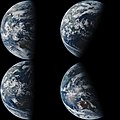
Photos of SeasonImage by AHI image captured by the Japan Meteorological Agency’s Himawari-8 satellite, licensed under Creative Commons Attribution 4.0
Photos of Season
Animation of seasonal differences, notably the snow cover in the Northern Hemisphere

Animation of seasonal differences, notably the snow cover in the Northern Hemisphere

Four Seasons by Alphonse Mucha (1897)

Four Seasons by Alphonse Mucha (1897)

Panoramic View during dry season from the Panorama Point on the Matheran Hill. On the ridge in front you can see the railroad track wriggling around.Image by Arne Hückelheim, licensed under Creative Commons Attribution-Share Alike 3.0

Panoramic View during dry season from the Panorama Point on the Matheran Hill. On the ridge in front you can see the railroad track wriggling around.

Panoramic View during rain season from the Panorama Point on the Matheran Hill. On the ridge in front you can see the railroad track wriggling around.Image by Arne Hückelheim, licensed under Creative Commons Attribution-Share Alike 3.0

Panoramic View during rain season from the Panorama Point on the Matheran Hill. On the ridge in front you can see the railroad track wriggling around.

Axial parallelism is a characteristic of the Earth (and most other orbiting bodies in space) in which the direction of the axis remains parallel to itself throughout its orbit.

Axial parallelism is a characteristic of the Earth (and most other orbiting bodies in space) in which the direction of the axis remains parallel to itself throughout its orbit.

This diagram shows how the tilt of Earth's axis aligns with incoming sunlight around the winter solstice of the Northern Hemisphere. Regardless of the time of day (i.e. the Earth's rotation on its axis), the North Pole will be dark and the South Pole will be illuminated; see also arctic winter. In addition to the density of incident light, the dissipation of light in the atmosphere is greater when it falls at a shallow angle.

This diagram shows how the tilt of Earth's axis aligns with incoming sunlight around the winter solstice of the Northern Hemisphere. Regardless of the time of day (i.e. the Earth's rotation on its axis), the North Pole will be dark and the South Pole will be illuminated; see also arctic winter. In addition to the density of incident light, the dissipation of light in the atmosphere is greater when it falls at a shallow angle.

Photos of SeasonImage by Przemyslaw "Blueshade" Idzkiewicz, licensed under Creative Commons Attribution-Share Alike 4.0
Photos of SeasonImage by Image by Przemyslaw " Blueshade " Idzkiewicz, licensed under Creative Commons Attribution-Share Alike 2.0
Photos of SeasonImage by AHI image captured by the Japan Meteorological Agency’s Himawari-8 satellite, licensed under Creative Commons Attribution 4.0
Photos of Season
Animation of seasonal differences, notably the snow cover in the Northern Hemisphere

Animation of seasonal differences, notably the snow cover in the Northern Hemisphere

Four Seasons by Alphonse Mucha (1897)

Four Seasons by Alphonse Mucha (1897)

Types Of Seasons

The four main seasons are spring, summer, autumn (fall), and winter. 🌷☀️🍂❄️ In spring, flowers bloom, and animals wake up from hibernation. 🌸In summer, it’s sunny and hot, perfect for beach days! 🏖️ Autumn brings beautiful falling leaves and cooler weather. 🍁Finally, winter can be cold, and some places even have snow, making it great for snowmen and ice skating! ⛷️ While the timing of these seasons varies around the world, they each bring their own joys and activities, helping us connect to nature!

Definition Of Seasons

A season is a part of the year that lasts for a few months and is marked by specific weather patterns and daylight hours. 🌞For example, many places experience four seasons, which occur in a cycle. However, some regions, like Florida and Hawaii, are warm all year! Seasons are triggered by the tilt of the Earth on its axis as it moves around the Sun. This tilt causes different parts of the Earth to receive varying amounts of sunlight. Isn’t that cool? 🌎🌟 The way seasons work is an exciting part of how our planet operates!

Global Variation In Seasons

Around the world, seasons can vary greatly! 🌐In Australia, for example, summer is from December to February, which is opposite to countries like the U.S. 🌎In tropical countries, the weather is hot most of the year, while in polar regions, there are long dark winters. ⛄Some places even experience just two seasons: wet and dry! ☔Knowing about these differences helps us understand the world’s diverse climate and how it shapes our experiences with nature. Isn’t that fascinating? ❓

Seasonal Changes In Weather

Weather changes with each season! 🌦️ In spring, we often see rainbows as gentle spring rains help flowers grow. 🌈Summers are hot and bright, perfect for playing outside. ☀️ In autumn, cooler winds make the leaves change color and fall from trees. 🍃Finally, winter brings cold temperatures and sometimes snow. ❄️ It’s important to dress appropriately for the weather, like wearing a coat in winter or shorts in summer. The seasons help us remember to adapt and enjoy outdoor activities that fit perfectly with the changing weather!

Impact Of Seasons On Ecosystems

Seasons play a big role in our ecosystems! 🌳In spring, many animals have babies and plants start to grow. 🐣🐦 In summer, plants make strong leaves and flowers bloom, providing food for hungry animals. 🍉Autumn is a time for animals to collect food and prepare for winter, while trees shed their leaves. 🍂Finally, in winter, some animals hibernate, conserving energy during the cold months. 🦙Seasons help nature balance and adapt, showing that everything in the environment is connected and interdependent!

Cultural Significance Of Seasons

Seasons have inspired many cultures around the world! 🌍For example, in Japan, cherry blossoms bloom in spring, and people celebrate Hanami by picnicking under the trees. 🌸Thanksgiving in the U.S. is in autumn, when families gather to give thanks for the harvest. 🦃In winter, many celebrate Christmas or New Year’s, marking the warmth of family and friendship during chilly weather. 🎉These traditions often help people connect with nature and each other, showing how seasons can shape our lives and celebrations!

Seasonal Activities And Festivals

Seasons bring fun activities and festivals! 🎊In spring, families might plant gardens and enjoy outdoor picnics. 🌼Summer is great for swimming and going to fairs! 🎡Autumn, with its colorful leaves, is perfect for pumpkin picking and Halloween costumes! 🎃And in winter, people often build snowmen or celebrate with festivities like Christmas and New Year! 🎄Each season whispers new adventures to enjoy with friends and family. 🎈Think about your favorite season—what special things do you like to do during that time of the year?

Seasons In Different Climate Zones

The way we experience seasons can change based on where we live! 🌏For example, places near the Equator, like Ecuador, have warm weather all year and don’t have four seasons. ☀️ In polar regions, like Antarctica, winter lasts most of the year, while summer is very short! 🐧Most temperate zones, like the United States and Europe, experience all four distinct seasons with changing weather. 🌻This diversity in seasons shows how Earth’s geography and climate influence our experience of the world!

The Science Behind Seasonal Change

Seasons change due to the Earth's tilt and its journey around the Sun! 🌍When one part of the Earth is tilted towards the Sun, it gets more sunlight and experiences warmer weather. ☀️ That’s summer! ⏳As the Earth moves throughout the year, different areas receive varying amounts of sunlight, leading to winter when it’s colder and has shorter days. 🌌This tilt is about 23.5 degrees and is what creates the magic of seasons! Understanding this helps us appreciate the natural cycles that occur throughout the year! 🌈

Future Of Seasons In A Changing Climate

Climate change is impacting our seasons! 🌏🌡️ Many scientists agree that our planet is getting warmer, which can alter how seasons change. For example, some places may have longer summers or shorter winters. ❄️ This could lead to less snow and changes in plant blooming times, which affects animals and ecosystems. 🐾It’s important for everyone, especially young people, to learn about climate change and help protect our planet to maintain the beauty and balance of our seasons! 🌈Together, we can make a positive difference! 🌍

Season Quiz

Q1
Question 1 of 10

Learn more about Season

Ready to create?

Make

To create a safe space for kid creators worldwide!

Create

Vibe Coding

Kids GPT

All Tools

Kibu

Resources

Worksheets

SafeTube

Blog

FAQ

Account

Pricing

Log-in

Sign-up

Data Deletion

Company

About

Community Guidelines

Privacy Policy

Terms of Service

2025, URSOR LIMITED. All rights reserved. DIY is in no way affiliated with Minecraft™, Mojang, Microsoft, Roblox™ or YouTube. LEGO® is a trademark of the LEGO® Group which does not sponsor, endorse or authorize this website or event. Made with love in San Francisco.