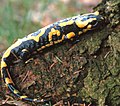
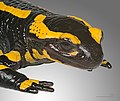
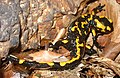
The fire salamander, scientifically known as Salamandra salamandra, is a brightly colored amphibian found in the forests and streams of Europe, known for its toxicity and fascinating life cycle.
Set reading age
View for Kids
Easy to read and understand
View for Students
Clear, detailed explanations
View for Scholars
Deep dives and big ideas
Fire salamanders (Salamandra salamandra) are amazing amphibians that live in Europe! 🌍They are known for their shiny black bodies with bright yellow or orange spots. These colorful patterns help warn predators that they are toxic, meaning they can be dangerous if eaten. Fire salamanders are mainly found in forests and near water bodies, where they like to hide in damp spots or under logs. They’re nocturnal, which means they come out to play at night! 🌙These creatures are super cool and play an important role in their ecosystems by helping control insect populations.
There are several other salamanders that are similar to the fire salamander! 🦎One is the yellow spotted salamander (Ambystoma maculatum), which has similar colors but lives in North America. Another is the Alpine salamander (Salamandra atra), which lives in the Alps and is darker in color. While these salamanders live in different places, they share some common features like moist skin and a love for cool habitats. Learning about these similar species helps us understand the wonderful variety of salamanders around the world! 🌍
Fire salamanders face challenges that make their future worrisome! 😟The International Union for Conservation of Nature (IUCN) lists them as "Least Concern," but their populations are declining due to habitat loss and pollution in rivers and streams. Climate change is another danger they face, which can change their wet habitats into dry ones. 🌍Conservation efforts are crucial to protect these special amphibians and their homes, so they can continue to thrive!
Even though fire salamanders are pretty cool, they do have some enemies! 🦅Birds, snakes, and some mammals might try to eat them. However, their bright colors often warn those predators that they might not taste good. 🌈Toxins in their skin help keep them safe from being eaten. But habitat loss from humans building cities and pollution are serious threats to their survival. Protecting their homes is very important so they can continue to thrive and escape their predators!
Fire salamanders are great at surviving in their rainforest homes! 🌧️ They stay moist by hiding under leaves, logs, or rocks during the day. Being nocturnal helps them avoid the heat and find food more easily at night. Their bright colors not only look pretty but serve as a warning to predators about their toxins! 💥Fire salamanders can also release poisonous secretions from their skin when they feel threatened, which helps them stay safe from danger.
Fire salamanders are mostly found in the forests of central and southern Europe. 🌲Countries like Germany, France, and Italy have many fire salamanders. They love to live in moist areas, especially near rivers and streams, because they need water to survive. The weather is also important! They prefer cool and damp places, making mountains and forests perfect homes! ⛰️ However, since they need moisture, they might not be found in very dry or hot places, making them special residents of their forest habitats.
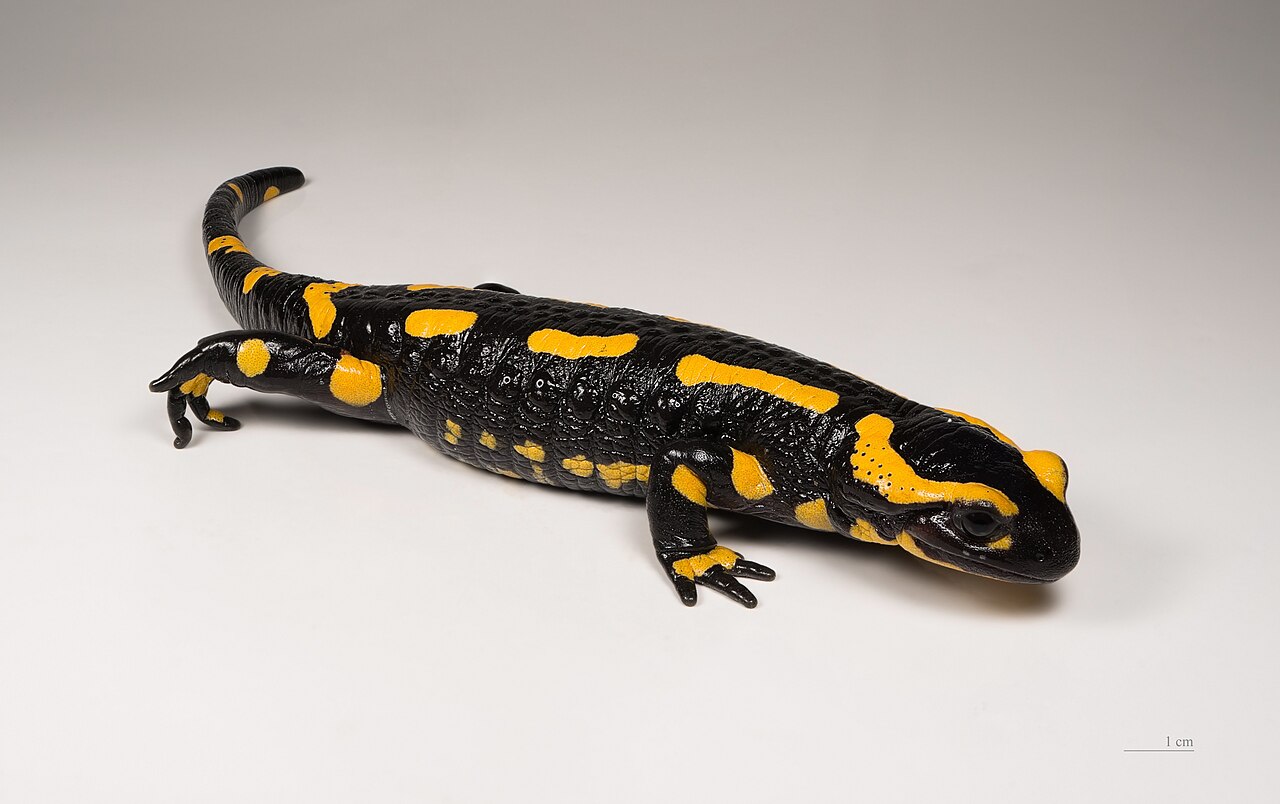
Fire salamanders are striking with their smooth, black skin covered in yellow or orange spots or stripes. 🖤💛 They usually grow between 15 to 25 cm long, which is about the size of a little ruler! Their bodies are soft and can absorb water, so they need to stay moist. They have four legs with webbed toes to help them move around on land and in water. Fire salamanders also have bulging eyes for better nighttime vision; their eyes also help them spot food! 👀
Fire salamanders are insect-eaters! 🐛They dine on a variety of small creatures like worms, beetles, and slugs. When they are hungry, they carefully hunt at night, using their keen senses to find food. With their sharp tongues, they catch their snacks quickly. They don't have teeth like we do but can swallow their food whole! Always looking for something to munch on, fire salamanders are good at helping keep bug populations in check. This makes them great little helpers in their environment! 🍽️
Fire salamanders have a fascinating life cycle! 🌱They usually mate in spring. After the eggs are fertilized, female salamanders lay their eggs in water. The tiny baby salamanders, called larvae, hatch from the eggs and live in water for some time. In about 3-5 months, they grow legs and lose their tails as they become adult salamanders and move onto land! 🐸It can take several years for them to fully grow into adults! This transformation is called metamorphosis, and it’s a magical part of their journey!
Fire salamanders belong to the Salamandridae family, which includes other salamanders too! 🦎Their scientific name, Salamandra salamandra, tells us exactly what type of salamander they are. The name "salamandra" comes from a Greek word meaning "fire," referring to their bright colors. They are part of the Amphibia class, which includes frogs and toads. Fire salamanders are distinguished from other salamanders by their unique colors and skin texture. There are also different variations called morphs—some have more spots than others! 🌟
In some cultures, fire salamanders are seen as signs of good luck or transformation! 🔥Some stories say they are born from fire or were once magical creatures. They appear in many folk tales and symbolize protection. Ancient Greeks believed they were fire spirits because of their bright colors! Many people are inspired by their beauty and uniqueness and even use them in art. 🎨Fire salamanders remind us of the wonders of nature and spark our imaginations!


DIY is a creative community where kids draw, build, explore ideas, and share.
No credit card required