Rice Facts For Kids
Rice is a cereal grain and a vital staple food for over half of the world's population, particularly in Asia and Africa.
Select reading age

Rice Facts For Kids
Videos & Quizzesincluded
About this topic
Rice 🍚 is an important food that many people around the world eat every day! Every year, about 500 million tons of rice is produced globally. It grows in wet areas like paddies, which are flooded fields. Rice helps feed over half of the world’s population, especially in countries like China 🇨🇳, India 🇮🇳, and Indonesia 🇮🇩. There are many types of rice, each with its own flavor and texture. Whether it’s served as a side dish or in sushi, rice is loved by kids and adults alike! 🌍
Explore with ChatDinoKey Points
People all over the world cook rice in many yummy ways!
There are many types of rice!
Rice is not just tasty, it's healthy too!
Rice is a big part of many countries' economies!
Growing rice can be both good and bad for the environment.
Rice isn’t just enjoyed where it is grown; it’s traded all over the world!
Rice is more than just food; it's a symbol of life and prosperity!
Growing rice requires a lot of care!
Rice is called Oryza sativa in scientific terms.
Rice has been grown for thousands of years!
Photos of Rice

Rice grains of different varieties at the International Rice Research Institute
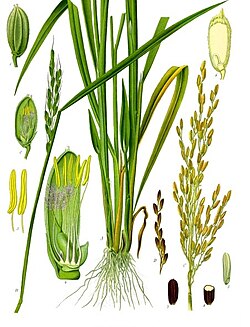
Reis. A blühendes Exemplar der Pflanze (var. melanoceras Alef.), unterer Teil. B Blütenrispe. C Fruchtrispe der var. italica Körnicke. D Fruchtzweig der var. Sundanensis Körnicke. 1 ein Ährchen von A; 2 dasselbe im Längsschnitt; 3 Staubblätter; 4 Ährchen stärker vergrössert nach Entfernung der unteren (grösseren) Spelze und eines Perigonblattes; 5 Endosperm mit Keimling von C; 6 Scheinfrucht von C im Längsschnitt; 7 Frucht von D; 8 dieselbe im Querschnitt. A, B, C, D etwas verkleinert; 1 bis 7 vergrössert.
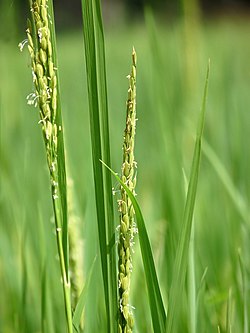
Rice — photo 3


🍽️ Culinary Uses
People all over the world cook rice in many yummy ways! 🍽️ In Japan, they make sushi, which rolls rice with fish and vegetables. In India, there are spicy rice dishes like biryani. In southern USA, rice is used in dishes like jambalaya! Rice can be eaten plain or mixed into soups, salads, and desserts like rice pudding. 🌈You can also boil, steam, or fry rice, making it one of the most versatile foods! No matter how it’s cooked, rice always adds a delicious flavor to meals. 😋
Go deeper🍚 Types Of Rice
There are many types of rice! 🍚White rice is very common, and it's milled to remove the outer layer. Brown rice is healthier because it has the bran layer left on, making it more nutritious. Other popular types include jasmine rice, which is fragrant, and basmati rice, known for its fluffy texture. In Italy, they use arborio rice to make delicious risotto! 🎉There’s even sticky rice, which is used in Asian desserts and dumplings. Each type of rice brings something special to the table! 🍽️
Go deeper🌟 Nutritional Value
Rice is not just tasty, it's healthy too! 🌟A cup of cooked white rice has about 200 calories and provides energy to help you play and learn. Brown rice has more fiber, which is good for your tummy. It also has vitamins like B1 and B3, important for energy and growth. Rice is gluten-free, which is great for people with gluten allergies. To stay healthy, it’s best to eat rice with vegetables and protein, like chicken or beans! Eating a variety of foods helps keep you strong! 💪
Go deeper💰 Economic Importance
Rice is a big part of many countries' economies! 💰It helps provide jobs for millions of farmers and workers. Countries like China, India, and Thailand are some of the biggest rice exporters, meaning they sell rice to other countries. In some places, rice farming is the main way people make a living! The prices of rice can affect food availability and costs for families. When rice is abundant, it can lower prices, making it easier for everyone to enjoy! 🌾Sharing rice around the world helps strengthen communities and economies!
Go deeper🌍 Environmental Impact
Growing rice can be both good and bad for the environment. 🌍On one hand, rice paddies create habitats for many animals, including fish and birds. However, flooding fields can release methane, a gas that can be bad for our planet. Farmers are finding new ways to grow rice that use less water and help the environment. 🚰Some techniques include using different rice varieties and planting trees around the fields to improve air quality. Taking care of our Earth while growing food is super important for our future! 🌿
Go deeper🌏 Rice In Global Trade
Rice isn’t just enjoyed where it is grown; it’s traded all over the world! 🌏The global rice market is huge, with many countries buying and selling rice. Countries like Vietnam 🇻🇳 and India are important rice traders. In 2020, about 45 million tons of rice were traded worldwide! The United Nations even tracks how much rice is sold internationally. Because rice is such an important food, it helps strengthen friendships between countries. 🌐So, when you eat rice, remember that it connects people from all around the world! 😊
Go deeper🌾 Cultural Significance
Rice is more than just food; it's a symbol of life and prosperity! 🌾In many Asian cultures, rice is used in important celebrations. For example, during the Lunar New Year, people enjoy rice cakes to bring good luck! People also plant rice during ceremonies to show gratitude to the Earth 🌍. In some countries, rice is even offered as a gift during weddings. It signifies happiness and abundance, making it an important part of traditions in countries like Vietnam 🇻🇳 and Thailand 🇹🇭.
Go deeper🌱 Agricultural Practices
Growing rice requires a lot of care! 🌱Farmers need to plant rice seeds in muddy fields called paddies. They flood these fields with water for the rice to grow. Most rice is harvested in late summer when it's golden brown. The farmers then cut the plants and dry the rice grains. 🌾Some farmers use special tools to help with planting and harvesting. In certain countries, they even use ducks to eat bad insects in the fields! Farming rice is an art and takes teamwork as families usually help each other! 🤝
Go deeper🌱 Botanical Classification
Rice is called Oryza sativa in scientific terms. 🌱It belongs to the grass family called Poaceae. Grass plants are known for their long, thin leaves. There are two main types of rice: indica and japonica. Indica rice is mostly grown in warm places like India and has long grains. Japonica rice is round and often used for sushi in Japan 🇯🇵. Each type has different growing needs and tastes yummy in different dishes! Rice plants can grow up to 3 feet tall (about 1 meter)! 🌾
Go deeper🎉 History And Domestication
Rice has been grown for thousands of years! 🎉It is believed to have been domesticated around 9,000 years ago in places like China. Farmers learned how to cultivate rice by planting seeds in water. Over time, people spread rice to different countries. Did you know that rice was so important that there were even festivals to celebrate the harvest? 🥳In Japan, they have a festival called “Inaho Matsuri” to honor rice gods! Rice has become a big part of cultures and traditions around the world. 🌿
Go deeper