All Articles

Primary Color

Primary Color Facts For Kids

Primary colors are a fundamental set of colors that can be mixed in various amounts to produce a wide range of other colors, making them crucial in art and design.
🎨 Reading age for 6-8
Background blob
Primary Color
Primary Color
Facts for Kids!

Do more with AI

Introduction

Colors are everywhere! 🌈From the blue sky to the green grass, they brighten our world. At the heart of all colors are primary colors. These special colors can’t be made by mixing other colors together. Instead, they are the building blocks for every other color! The three primary colors are red, blue, and yellow. When we mix them in different ways, we can create a rainbow of new colors! 🎨Learning about primary colors helps us understand art, design, and even science! Let’s dive in and explore the wonderful world of colors together.

Images of Primary Color

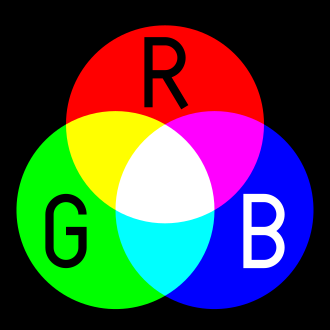
Additive primary color model

Additive primary color model

A photograph of the red, green, and blue elements (subpixels) of an LCD. Additive mixing explains how light from these colored elements can be used for photorealistic color image reproduction.

A photograph of the red, green, and blue elements (subpixels) of an LCD. Additive mixing explains how light from these colored elements can be used for photorealistic color image reproduction.

A magnified representation of small partially overlapping spots of cyan, magenta, yellow, and key (black) halftones in CMYK process printing. Each row represents the pattern of partially overlapping ink "rosettes" so that the patterns would be perceived as blue, green, and red when viewed on white paper from a typical viewing distance. The overlapping ink layers mix subtractively while additive mixing predicts the color appearance from the light reflected from the rosettes and white paper in between them.

A magnified representation of small partially overlapping spots of cyan, magenta, yellow, and key (black) halftones in CMYK process printing. Each row represents the pattern of partially overlapping ink "rosettes" so that the patterns would be perceived as blue, green, and red when viewed on white paper from a typical viewing distance. The overlapping ink layers mix subtractively while additive mixing predicts the color appearance from the light reflected from the rosettes and white paper in between them.

Color Mixing Guide, John L. King 1925, cover and plates describing yellow, red, and blue color mixing

Color Mixing Guide, John L. King 1925, cover and plates describing yellow, red, and blue color mixing

A representation of Johannes Itten's color wheel showing his red, yellow, and blue as primary colors within the central equilateral triangle[26]

A representation of Johannes Itten's color wheel showing his red, yellow, and blue as primary colors within the central equilateral triangle[26]

A conceptual visualization of a color matching experiment. A circular foveal bipartite field (about the size one's thumbnail an arm's length away[56]) is presented to the observer in a dark surround. One part of the field is illuminated by a monochromatic test stimulus. The participant adjusts the intensities of the three coincident monochromatic primary lights (which are usually red, green and blue hues) on either field until both the test stimulus and match stimulus appear as the exact same color. In this case the participant has added red to the 480 nm test stimulus and has almost matched the match stimulus made of only the green and blue lights of comparable intensities. The specific monochromatic primaries shown here are from the Stiles-Burch 1955 experiment.[57]Image by Maneesh, licensed under Creative Commons Attribution-Share Alike 4.0

A conceptual visualization of a color matching experiment. A circular foveal bipartite field (about the size one's thumbnail an arm's length away[56]) is presented to the observer in a dark surround. One part of the field is illuminated by a monochromatic test stimulus. The participant adjusts the intensities of the three coincident monochromatic primary lights (which are usually red, green and blue hues) on either field until both the test stimulus and match stimulus appear as the exact same color. In this case the participant has added red to the 480 nm test stimulus and has almost matched the match stimulus made of only the green and blue lights of comparable intensities. The specific monochromatic primaries shown here are from the Stiles-Burch 1955 experiment.[57]

The CIE RGB,[58][59] CIE XYZ[60] color matching functions and LMS cone fundamentals.[61][62] The curves are all for 2° fields.

The CIE RGB,[58][59] CIE XYZ[60] color matching functions and LMS cone fundamentals.[61][62] The curves are all for 2° fields.

Additive primary color model

Additive primary color model

A photograph of the red, green, and blue elements (subpixels) of an LCD. Additive mixing explains how light from these colored elements can be used for photorealistic color image reproduction.

A photograph of the red, green, and blue elements (subpixels) of an LCD. Additive mixing explains how light from these colored elements can be used for photorealistic color image reproduction.

A magnified representation of small partially overlapping spots of cyan, magenta, yellow, and key (black) halftones in CMYK process printing. Each row represents the pattern of partially overlapping ink "rosettes" so that the patterns would be perceived as blue, green, and red when viewed on white paper from a typical viewing distance. The overlapping ink layers mix subtractively while additive mixing predicts the color appearance from the light reflected from the rosettes and white paper in between them.

A magnified representation of small partially overlapping spots of cyan, magenta, yellow, and key (black) halftones in CMYK process printing. Each row represents the pattern of partially overlapping ink "rosettes" so that the patterns would be perceived as blue, green, and red when viewed on white paper from a typical viewing distance. The overlapping ink layers mix subtractively while additive mixing predicts the color appearance from the light reflected from the rosettes and white paper in between them.

Color Mixing Guide, John L. King 1925, cover and plates describing yellow, red, and blue color mixing

Color Mixing Guide, John L. King 1925, cover and plates describing yellow, red, and blue color mixing

A representation of Johannes Itten's color wheel showing his red, yellow, and blue as primary colors within the central equilateral triangle[26]

A representation of Johannes Itten's color wheel showing his red, yellow, and blue as primary colors within the central equilateral triangle[26]

A conceptual visualization of a color matching experiment. A circular foveal bipartite field (about the size one's thumbnail an arm's length away[56]) is presented to the observer in a dark surround. One part of the field is illuminated by a monochromatic test stimulus. The participant adjusts the intensities of the three coincident monochromatic primary lights (which are usually red, green and blue hues) on either field until both the test stimulus and match stimulus appear as the exact same color. In this case the participant has added red to the 480 nm test stimulus and has almost matched the match stimulus made of only the green and blue lights of comparable intensities. The specific monochromatic primaries shown here are from the Stiles-Burch 1955 experiment.[57]

A conceptual visualization of a color matching experiment. A circular foveal bipartite field (about the size one's thumbnail an arm's length away[56]) is presented to the observer in a dark surround. One part of the field is illuminated by a monochromatic test stimulus. The participant adjusts the intensities of the three coincident monochromatic primary lights (which are usually red, green and blue hues) on either field until both the test stimulus and match stimulus appear as the exact same color. In this case the participant has added red to the 480 nm test stimulus and has almost matched the match stimulus made of only the green and blue lights of comparable intensities. The specific monochromatic primaries shown here are from the Stiles-Burch 1955 experiment.[57]

The CIE RGB,[58][59] CIE XYZ[60] color matching functions and LMS cone fundamentals.[61][62] The curves are all for 2° fields.

The CIE RGB,[58][59] CIE XYZ[60] color matching functions and LMS cone fundamentals.[61][62] The curves are all for 2° fields.

Types Of Primary Colors

There are two main types of primary colors: additive and subtractive. In the additive color system, which is used in screens like TVs and computers, the primary colors are red, green, and blue (RGB). Mixing them creates white light! 🌟In the subtractive color system, used in painting and printing, the primary colors are red, yellow, and blue (RYB). Mixing these creates other colors by subtracting light. Both systems are important in art and technology, helping us create stunning visuals in different ways. 🎉

Definition Of Primary Colors

Primary colors are unique colors that can’t be created by mixing other colors. The three primary colors are red ❤️, blue 💙, and yellow 💛. You can find these colors in nature, art, and everywhere around you! When you mix just two primary colors, you get a secondary color. For example, mixing red and yellow makes orange 🍊, yellow and blue make green 🍏, and blue and red make purple 💜. Primary colors are like magic keys that unlock a whole world of beautiful colors!

Fun Facts About Primary Colors

Did you know that the primary colors red, blue, and yellow are used in the famous game *Twister*? 🎲You might also visit a science museum where you can see how lights mix to create colors! Did you ever wonder why clowns wear colorful outfits? 🎉It’s to grab attention with bright, primary colors! Also, there’s a dance called the Color Dance, where kids wear different colored clothes! 🌈Primary colors are also used in traffic lights. So next time you see them, remember the special role colors play in your everyday life! 🚦✨

Color Theory And Primary Colors

Color theory helps us understand how colors work together. It explains how to mix colors to create new ones! 🎨The color wheel is a tool that shows how primary colors mix to create secondary colors. It helps artists choose colors that look great together. For example, complementary colors, which are directly opposite each other on the wheel, create contrast and make each other stand out! Understanding color theory can boost your art skills and help you express your creativity through colors! 🎨✨

Activities To Explore Primary Colors

Let’s have some fun with colors! 🎨One fun activity is to create a color wheel. Grab red, blue, and yellow paints and mix them to discover all the secondary colors! You can also go for a color hunt: look around your home or outside and spot items that are primary colors! 🌳You could even make a primary color collage by cutting out pictures from magazines. Another exciting idea is to create a rainbow using colored paper or markers! Colors are fun, so let your imagination run wild while exploring! 🌈✨

Examples Of Primary Colors In Nature

Nature is a great artist, and you can find primary colors everywhere! 🌳For instance, think of vibrant red flowers like roses 🌹, deep blue lakes and oceans 🌊, and bright yellow sunflowers 🌻. Animals also flaunt these colors; a blue jay bird shines with its beautiful blue feathers, while a red fox shows off its reddish-brown fur. Even the sun can appear golden yellow in the sky! All these examples highlight how primary colors add joy and vibrancy to the natural world around us! 🦋🌼

The Role Of Primary Colors In Design

In design, primary colors help influence feelings and reactions. For example, using a lot of red can make things feel exciting or urgent! ❤️ Designers choose colors carefully to send messages and create moods in their work. Yellow can be cheerful and bright, while blue can be calming and cool. When designing products, websites, or logos, understanding primary colors helps create amazing visuals that catch people’s attention! 🎉Nice colors can even make us feel happy or curious, making colors an important tool for anyone who creates! ✨

Applications Of Primary Colors In Art

Artists love to use primary colors because they are the building blocks for creating other colors! 🎨By mixing primary colors together, artists can make countless shades. For example, red and blue make purple, while yellow and red make orange. 🎉Many famous artists, like Picasso, used primary colors in their work to create eye-catching and bold pieces. When you’re painting, using primary colors can help you make your artwork lively, exciting, and full of expression! Remember, feeling free to experiment can lead to amazing discoveries in your art! 🖌️🌈

Historical Perspectives On Primary Colors

Throughout history, people have explored colors and their meanings! Ancient civilizations, like the Egyptians, used primary colors in their art and pottery, creating beautiful designs. 🌍In the 18th century, artists and scientists began studying color more closely. Isaac Newton, a famous scientist, created the first color wheel! 🎡This helped people understand how colors work together. Ringing in the 20th century, artists like Mondrian even used only primary colors in their works! These discoveries show how exploring primary colors has helped shape art and science over time! 🎇

Mixing Primary Colors: Additive Vs. Subtractive

Mixing colors works differently depending on whether you're using additive or subtractive methods! In additive mixing (like on TVs), starting with no light gives you black. When you add colors, like red and green, you get yellow. If you mix all three, red, green, and blue, you achieve white light! 🌟On the other hand, in subtractive mixing (like painting), if you start with white light, you'll get black when all primary colors are mixed. Mixing primary paints gives you colors like orange, purple, and green. Each method creates exciting results! 🎨✨

Primary Color Quiz

Q1
Question 1 of 10

Learn more about Primary Color

Ready to create?

Make

To create a safe space for kid creators worldwide!

Create

Vibe Coding

Kids GPT

All Tools

Kibu

Resources

Worksheets

SafeTube

Blog

FAQ

Account

Pricing

Log-in

Sign-up

Data Deletion

Company

About

Community Guidelines

Privacy Policy

Terms of Service

2025, URSOR LIMITED. All rights reserved. DIY is in no way affiliated with Minecraft™, Mojang, Microsoft, Roblox™ or YouTube. LEGO® is a trademark of the LEGO® Group which does not sponsor, endorse or authorize this website or event. Made with love in San Francisco.