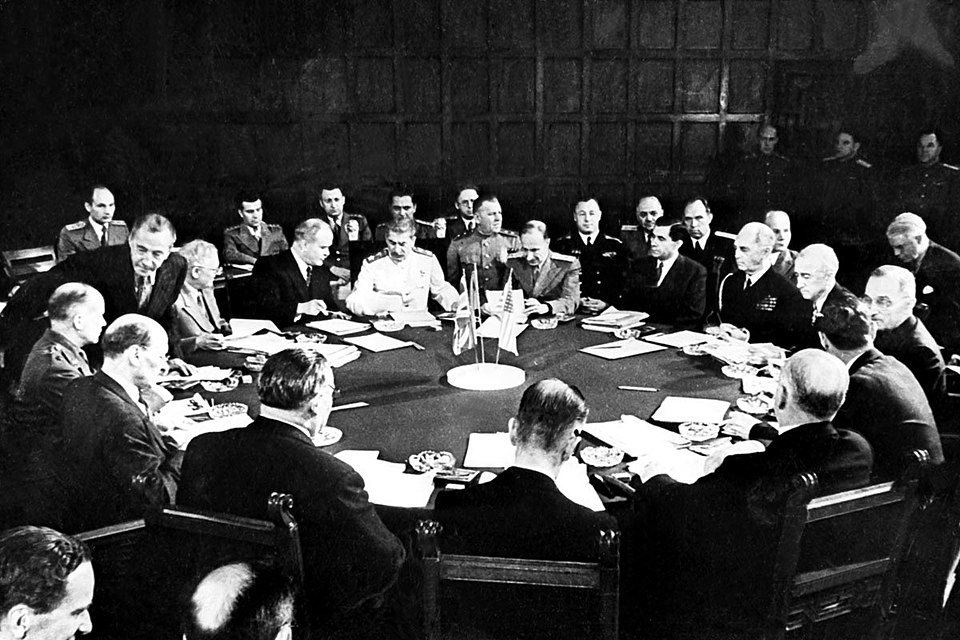
The Potsdam Conference was a crucial meeting between the leaders of the United States, Soviet Union, and United Kingdom from July 17 to August 2, 1945, to plan for the post-war world and avoid past mistakes.
Set reading age
View for Kids
Easy to read and understand
View for Students
Clear, detailed explanations
View for Scholars
Deep dives and big ideas
The Potsdam Conference was an important meeting after World War II. 🌍It took place in Potsdam, Germany, from July 17 to August 2, 1945. The leaders of three countries – the United States, the Soviet Union, and Great Britain – came together to discuss how to make the world better after the war. They wanted to avoid making the same mistakes that happened after World War I. The conference helped shape the future of Europe and how countries would interact for many years. With so many big decisions, it was like a giant team meeting for the whole world! 🌟
The Potsdam Conference resulted in many important agreements! 💫The leaders confirmed the division of Germany and agreed to hold war crime trials for people responsible for committing horrible acts during the war. They established borders for Poland, giving some of its land to the Soviet Union. 🌍They also promised to help rebuild Europe together, much like a neighborhood coming together to clean up after a storm. These outcomes influenced international relations for years to come, shaping how countries worked together and solved their differences.
Three big names attended the Potsdam Conference! 🇺🇸 President Harry S. Truman represented the United States, while Prime Minister Winston Churchill was there for Great Britain. After Churchill, Clement Attlee became the new Prime Minister in the middle of the conference! 🇬🇧 Finally, the Soviet Union was represented by Joseph Stalin, a powerful but controversial leader. Each leader had their own ideas and thoughts about how to help the world after the war, and they had to find a way to work together, just like working in a group project at school! 🤝
The Potsdam Conference changed how the United States and the Soviet Union interacted. 🇺🇸🇷🇺 Although they worked together to defeat the Nazis, they had major disagreements about how to lead nations after the war. The Soviets pushed for control in Eastern Europe, while the US wanted democracy. This created mistrust, making their friendship feel more like a game of tug-of-war! 🤼♂️ Over the following years, their relationship would grow tense, eventually leading to the Cold War, a time when they competed for power but didn’t fight directly. It was like two kids who wanted to be the best on the playground!
At the conference, Germany was a top priority! 🇩🇪 The leaders wanted to discuss how to rebuild the country after its destruction during the war. They agreed that Germany would be divided into four zones, each controlled by one of the Allies: the US, the UK, the Soviet Union, and France. 🗺️ They also established guidelines for demilitarization, meaning that Germany could not have a strong army anymore. They needed a plan to stop any future wars! The goal was to help Germany recover and become a peaceful country again, similar to fixing a broken toy so it can be played with safely. 🧸
The legacy of the Potsdam Conference is significant! 🏛️ It represented hope for a peaceful future after the destruction of war. However, the disagreements from the meetings laid the groundwork for conflicts in the coming years. The decisions made at Potsdam led to greater divisions between East and West, ultimately resulting in the Cold War. 🌐The conference reminds us of the importance of communication, teamwork, and understanding among nations. Similar to working through a tough challenge in school, the leaders' actions have lessons for us today about how we should work together for peace! 🌈
The main focus of the Potsdam Conference was to create a peaceful and stable post-war world. ✨The leaders wanted to make sure that countries would respect each other. They aimed to establish terms for Germany, like how to support rebuilding and prevent future wars. They also wanted to discuss how to deal with occupied territories. Another important goal was to ensure the safety of all nations, which was like creating rules for a neighborhood to keep everyone safe and happy. 🏡Together, they hoped to make the world a better place for everyone!
The leaders discussed Eastern Europe at the Potsdam Conference, which was a region with many countries like Poland and Hungary. 🌍They agreed to allow the Soviet Union to have more influence in these countries, which made the leaders from the US and the UK nervous. They wanted to ensure everyone had the right to choose how they were governed, like picking your favorite game to play at recess. 🎮However, the leaders also worried about the spread of communism, a different way of organizing society. This important discussion set the stage for future challenges in Europe!
One key decision made was the Declaration on Liberated Europe. 📜This document aimed to support countries freed from Nazi control. It promised these nations would have free elections, allowing their people to choose their leaders. Just like deciding who will be the captain of a team! 🏆However, the reality was not as simple as it sounded. Different powers had different ideas on how free these countries should really be. This declaration showcased hopes for democracy but also highlighted the differences between the leaders, making it complicated like a puzzle! 🧩
The Potsdam Conference was a result of World War II ending in 1945. 🌟Before this meeting, there was the Yalta Conference in February, where leaders discussed plans for Europe. The leaders met again in Potsdam because they needed to finalize their plans. Potsdam was in a part of Germany controlled by the Soviet Union. The main goal was to ensure peace and bring stability, especially in Germany, which had been heavily affected by the war. They talked about everything from rebuilding towns to establishing new borders. It was like preparing a big feast after a long, hard day! 🍽️