All Articles

Popocatépetl

Popocatépetl Facts For Kids

Popocatépetl is a prominent and active stratovolcano in central Mexico, known for its beautiful conical shape and frequent eruptions.

🎨 Reading age for 6-8
Background blob
Popocatépetl
Popocatépetl
Facts for Kids!

Do more with AI

Introduction

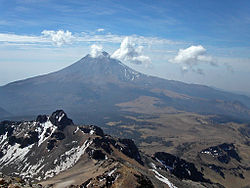
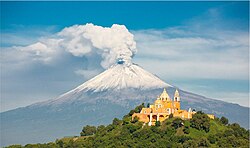
Popocatépetl, also known as "Popo," is a famous volcano in Mexico! 🌋It is located about 70 miles (110 kilometers) southeast of Mexico City. At 17,797 feet (5,426 meters), it is the second highest peak in Mexico! Popocatépetl is part of a national park called Izta-Popo, where visitors can enjoy nature and beautiful views. The name Popocatépetl means "smoking mountain" in the Nahuatl language, as it often lets out smoke and ash. It’s a very important mountain in both nature and culture!

Images of Popocatépetl

Popocatépetl, or Popo, the active volcano located about 70 km southeast of Mexico City, sends a plume south on January 23, 2001. The astronaut crew on the International Space Station Alpha observed and recorded this image as they orbited to the northeast of the volcano. Popo has been frequently active for six years. On this day, the eruption plume reportedly rose to more than 9 km above sea level [for reference, Popo’s summit elevation is 5426 m (17,800 feet)]. Note the smaller ash plume below the main plume (arrow). The perspective from the ISS allowed the astronauts this unique 3 dimensional view. Popo is situated between two large population centers: Mexico City (more than 18 million people, and just off the image to the right) and Puebla (about 1.2 million people). The region’s dense population provides the potential for extreme impacts from volcanic hazards. Recent eruptions have been frequent, and have resulted in evacuations around the mountain.

Popocatépetl, or Popo, the active volcano located about 70 km southeast of Mexico City, sends a plume south on January 23, 2001. The astronaut crew on the International Space Station Alpha observed and recorded this image as they orbited to the northeast of the volcano. Popo has been frequently active for six years. On this day, the eruption plume reportedly rose to more than 9 km above sea level [for reference, Popo’s summit elevation is 5426 m (17,800 feet)]. Note the smaller ash plume below the main plume (arrow). The perspective from the ISS allowed the astronauts this unique 3 dimensional view. Popo is situated between two large population centers: Mexico City (more than 18 million people, and just off the image to the right) and Puebla (about 1.2 million people). The region’s dense population provides the potential for extreme impacts from volcanic hazards. Recent eruptions have been frequent, and have resulted in evacuations around the mountain.

Photos of Popocatépetl
View of the Popocatepetl volcano from Amecameca, Mexico State

View of the Popocatepetl volcano from Amecameca, Mexico State

Popocatepetl seen from UNAM (instituto de Ecologia with Sigma 500 mm), Mexico CityImage by SchneidIt, licensed under Creative Commons Attribution-Share Alike 4.0

Popocatepetl seen from UNAM (instituto de Ecologia with Sigma 500 mm), Mexico City

Popocatépetl, or Popo, the active volcano located about 70 km southeast of Mexico City, sends a plume south on January 23, 2001. The astronaut crew on the International Space Station Alpha observed and recorded this image as they orbited to the northeast of the volcano. Popo has been frequently active for six years. On this day, the eruption plume reportedly rose to more than 9 km above sea level [for reference, Popo’s summit elevation is 5426 m (17,800 feet)]. Note the smaller ash plume below the main plume (arrow). The perspective from the ISS allowed the astronauts this unique 3 dimensional view. Popo is situated between two large population centers: Mexico City (more than 18 million people, and just off the image to the right) and Puebla (about 1.2 million people). The region’s dense population provides the potential for extreme impacts from volcanic hazards. Recent eruptions have been frequent, and have resulted in evacuations around the mountain.

Popocatépetl, or Popo, the active volcano located about 70 km southeast of Mexico City, sends a plume south on January 23, 2001. The astronaut crew on the International Space Station Alpha observed and recorded this image as they orbited to the northeast of the volcano. Popo has been frequently active for six years. On this day, the eruption plume reportedly rose to more than 9 km above sea level [for reference, Popo’s summit elevation is 5426 m (17,800 feet)]. Note the smaller ash plume below the main plume (arrow). The perspective from the ISS allowed the astronauts this unique 3 dimensional view. Popo is situated between two large population centers: Mexico City (more than 18 million people, and just off the image to the right) and Puebla (about 1.2 million people). The region’s dense population provides the potential for extreme impacts from volcanic hazards. Recent eruptions have been frequent, and have resulted in evacuations around the mountain.

Photos of PopocatépetlImage by Dulce Maria Gomez Gonzalez, Puebla, Mexico, licensed under Creative Commons Attribution-ShareAlike 2.5
Photos of PopocatépetlImage by Carlos Valenzuela, licensed under Creative Commons Attribution-Share Alike 4.0
Photos of Popocatépetl
Photos of PopocatépetlImage by Conversion script at the English-language Wikipedia , the copyright holder of this work, hereby publishes it under the following license:, licensed under Creative Commons Attribution-Share Alike 3.0
Photos of PopocatépetlImage by Comisión Mexicana de Filmaciones from México D. F., México, licensed under Creative Commons Attribution-Share Alike 2.0
View of the Popocatepetl volcano from Amecameca, Mexico StateImage by AlejandroLinaresGarcia, licensed under Creative Commons Attribution-Share Alike 4.0

View of the Popocatepetl volcano from Amecameca, Mexico State

Flora And Fauna

The area around Popocatépetl is full of life! 🌳🌼 The mountainside is home to many plants, including pine trees and colorful wildflowers. Animals such as foxes, rabbits, and even the beautiful golden eagle can be found here! 🦅The cooler climate at higher elevations helps these creatures thrive. The rich ecosystems make Popo a wonderful place for nature lovers and scientists alike. Studying the flora and fauna is an exciting way to learn about the environment!

Eruptions History

Popocatépetl has had many eruptions, and the first recorded one happened in 1519! ⏳It was quite big, and people from the nearby city of Cholula saw it erupt! Since then, Popo has erupted more than 15 times, with the most significant eruptions happening in the 1900s. In 1994, the volcano woke up after a long sleep, and since then, it has been more active. Scientists monitor it closely to keep people safe! There are even daily alerts about the volcano, so everyone knows what's happening.

Safety Precautions

When living near an active volcano like Popocatépetl, safety is essential! 🚨👷‍♀️ Authorities monitor the volcano closely and give warnings if an eruption is expected. If you're visiting, it's crucial to follow park rules and stay on designated trails. Always listen to the guides and park officials, as they know the safest paths to take. Have an emergency kit ready with important items like water and food. By being prepared and staying informed, everyone can enjoy the beauty of Popocatépetl safely!

Geological Features

Popocatépetl is a stratovolcano, which means it's made from layers of lava, ash, and rocks that have formed over many years! 🌋✨ It has a cone-shaped appearance and is surrounded by rocky cliffs and stunning landscapes. The volcano is still active, meaning it can erupt, and it has a crater at the top that is about 1,500 feet (460 meters) wide. Scientists study the layers of lava and ash to learn how Popo was formed. Being a high mountain, it often has snow on its peak, making it look magical! ❄️

Scientific Research

Popocatépetl is a hotspot for scientific research! 🔬👨‍🔬 Scientists study the volcano to understand how it works and why it erupts. They monitor the gases released and measure earthquakes nearby. This helps keep people safe and gives us valuable information about volcanic behavior. Many universities and research organizations collaborate to share knowledge about Popo. Their discoveries can help improve safety measures for people living near volcanoes worldwide. Learning from Popocatépetl benefits everyone, especially those who study the Earth!

Tourist Attractions

Many people visit Popocatépetl for its breathtaking views! 🥾🌄 The Izta-Popo National Park has hiking trails where visitors can walk through beautiful landscapes. While you can't hike to the very top because of safety concerns, you can explore lower trails that offer incredible sights of the volcano and the surrounding mountains. There's also a visitor center with information about Popo's history, geology, and wildlife. It's a great place for families to have fun and learn together!

Conservation Efforts

To protect Popocatépetl's beauty, many conservation efforts are underway! 🌱💚 The Mexican government created Izta-Popo National Park to preserve its rich ecosystems and wildlife. Park rangers help keep the area clean and teach visitors about the importance of respecting nature. Additionally, scientists monitor the volcano to ensure a safe environment for both flora and fauna. Participation in earth-friendly activities like recycling and not littering can help keep Popo a safe and beautiful place for years to come!

Cultural Significance

Popocatépetl is very important to the people of Mexico! 🏞️💕 In ancient Aztec mythology, it is believed to be the resting place of a warrior named Popoca, who fell in love with a princess named Iztaccíhuatl. Their love story says that they turned into the mountains we see today! Popo also appears in art and festivals, reminding people of its beauty and power. Local traditions celebrate the volcano's spirit, and it's a symbol of Mexican culture and history!

Popocatépetl Quiz

Q1
Question 1 of 10

Learn more about Popocatépetl

Ready to create?

Make

To create a safe space for kid creators worldwide!

Create

Vibe Coding

Kids GPT

All Tools

Kibu

Resources

Worksheets

SafeTube

Blog

FAQ

Account

Pricing

Log-in

Sign-up

Data Deletion

Company

About

Community Guidelines

Privacy Policy

Terms of Service

2025, URSOR LIMITED. All rights reserved. DIY is in no way affiliated with Minecraft™, Mojang, Microsoft, Roblox™ or YouTube. LEGO® is a trademark of the LEGO® Group which does not sponsor, endorse or authorize this website or event. Made with love in San Francisco.