Pleistocene Facts For Kids
The Pleistocene is a geological epoch from about 2.6 million to 11,700 years ago, known for its Ice Age climate, unique megafauna, and the evolution of early humans.
Select reading age

Pleistocene Facts For Kids
Videos & Quizzesincluded
About this topic
The Pleistocene was a super cool time in Earth's history! 🌍It lasted from about 2.6 million years ago to about 11,700 years ago. During this epoch, Earth saw many changes, like big ice sheets covering places like Canada and parts of Europe. ❄️ Scientists call it the "Ice Age" because it got really cold! Animals and plants evolved to survive in these chilly conditions, and humans were just starting to appear. The Pleistocene left a big mark on our planet, shaping the landscapes we see today. Let's dive into this fascinating time and discover what it was like!
Explore with ChatDinoKey Points
The Pleistocene was filled with massive creatures, known as megafauna!
Archaeologists study ancient human artifacts from the Pleistocene to learn how early people lived!
Many animals went extinct at the end of the Pleistocene, and scientists are still trying to figure out why!
The Pleistocene was known for its cold weather, which caused glaciers to form!
The Pleistocene had many amazing plants and animals!
Paleontologists, who study ancient life, have found fascinating fossils from the Pleistocene all around the world!
The Pleistocene is known for its dramatic changes in the Earth’s surface!
Humans began evolving during the Pleistocene!
The Pleistocene shaped today's ecosystems in many ways!
Photos of Pleistocene
![Evolution of temperature in the Post-Glacial period at the very end of the Pleistocene, according to Greenland ice cores[6]](https://upload.wikimedia.org/wikipedia/commons/thumb/3/3a/Evolution_of_temperature_in_the_Post-Glacial_period_according_to_Greenland_ice_cores.jpg/960px-Evolution_of_temperature_in_the_Post-Glacial_period_according_to_Greenland_ice_cores.jpg)
Evolution of temperature in the Post-Glacial period at the very end of the Pleistocene, according to Greenland ice cores[6]

Temperature rise marking the end of the Pleistocene, as derived from Antarctic ice core data.

The maximum extent of glacial ice in the north polar area during the Pleistocene Period

Ice ages as reflected in atmospheric CO2, stored in the bubbles from glacial ice of Antarctica

Map of Earth as it appeared 1 million years ago during the Pleistocene epoch, Calabrian stage

Various schemes for subdividing the Pleistocene
Pleistocene — photo 7

Pleistocene — photo 8

🦣 Major Megafauna Species
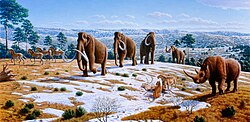
The Pleistocene was filled with massive creatures, known as megafauna! 🦣One of the most famous was the woolly mammoth, standing 13 feet tall! Some other huge animals included the giant short-faced bear, which could weigh as much as 2,200 pounds! 🐻Also, there were giant beavers and mastodons. These megafauna roamed the Earth, eating plants and living in herds. Many of them went extinct by the end of the Pleistocene, likely due to climate changes and human hunting. 🏹Learning about these giant creatures helps us understand how ecosystems shift over time!
Go deeper🏺 Pleistocene Archaeology
Archaeologists study ancient human artifacts from the Pleistocene to learn how early people lived! 🏺They find tools made from stone, bones, and even cave paintings, telling stories about how our ancestors survived. Some famous sites include the caves of Lascaux in France, where beautiful paintings of animals were found! 🎨These discoveries show us that early humans were skilled thinkers and artists. By examining their tools, we can see how they hunted, cooked, and built shelters. Pleistocene archaeology helps us understand our own history and how we've grown!
Go deeper🦖 Pleistocene Extinctions
Many animals went extinct at the end of the Pleistocene, and scientists are still trying to figure out why! 🦖Some believe it was due to climate changes that made it hard for them to survive. Others think humans contributed by hunting large animals like mammoths and saber-toothed cats. 🔫In North America alone, almost 80% of large animals disappeared! These extinctions changed ecosystems forever, leading to a world with different species. It also gave smaller animals a chance to thrive and diversify, leading to the animals we see today, like modern elephants and tigers!
Go deeper❄️ Climate Changes And Glaciations
The Pleistocene was known for its cold weather, which caused glaciers to form! ❄️ Every so often, the Earth cooled, creating what we call "glaciations." During these times, large parts of the planet were covered in ice, making it look very different! 🌎There were also warmer periods called "interglacials," where the ice would melt somewhat, and plants and animals thrived. Times of climate change affected where plants could grow and where animals could live. Did you know that during one of these glacial periods, sea levels dropped, creating land bridges that connected continents? 🌉
Go deeper🌳 Flora And Fauna Of The Pleistocene
The Pleistocene had many amazing plants and animals! 🌳Trees like pine and spruce thrived in the cold, while grasses spread across other areas. This diverse plant life supported incredible creatures. 🦙Animals like mammoths, saber-toothed cats, and giant ground sloths roamed the Earth! Fossils tell us about their lives and what they looked like. Some, like the woolly mammoth, had thick fur to keep warm and could weigh as much as a small car! 🐘The interactions between these plants and animals were essential to the ecosystem during the Pleistocene.
Go deeper🌍 Paleontological Sites And Discoveries
Paleontologists, who study ancient life, have found fascinating fossils from the Pleistocene all around the world! 🌍One famous site is the La Brea Tar Pits in Los Angeles, California. Here, numerous fossils, like saber-toothed cats and mammoths, have been found preserved in tar! 🦴Other important sites include Stone Age caves in Europe and digging sites in Siberia. These findings help scientists gather information about the animals and plants of that time. Each discovery adds to our knowledge about how life has changed over millions of years!
Go deeper🌄 Geological Overview Of The Pleistocene
The Pleistocene is known for its dramatic changes in the Earth’s surface! 🌄It had many cycles of warming and cooling. The big ice sheets, called glaciers, carved out valleys and created lakes. Some of the most famous glaciers formed the Great Lakes in North America! 🌊The Pleistocene began after the Pliocene epoch, and it’s part of a larger era called the Quaternary Period. Scientists study rocks and soil from this time to learn how the Earth has changed. The Pleistocene helped shape mountains, rivers, and the way land looks today!
Go deeper🌍 Human Evolution During The Pleistocene
Humans began evolving during the Pleistocene! 🌍Our ancestors, called Homo habilis and Homo erectus, appeared about 1.9 million years ago. They were quite different from us! 🧑🤝🧑 People learned to use tools and work together to hunt and gather food. By the end of the epoch, Homo sapiens, our species, emerged and spread across different continents! 🌐Archaeological findings show they created art and gathered in groups. Humans adapted to these harsh environments, just like other plants and animals, using their brains to invent new ways to survive.
Go deeper🌱 Impact Of The Pleistocene On Modern Ecosystems
The Pleistocene shaped today's ecosystems in many ways! 🌱The extinction of large animals led to the rise of smaller species that adapted better to the new environment. In North America, for example, the woolly mammoth is gone, but modern elephants share some traits! 🐘The climate also changed the types of plants that grow in different areas today. The Earth’s surface was reshaped by glaciers, influencing rivers, mountains, and lakes we enjoy now. By studying the Pleistocene, we learn how history affects present-day nature and how ecosystems can change over time! 🌳
Go deeper