Paraboloid Facts For Kids
A paraboloid is a three-dimensional geometric shape formed by revolving a parabola around its axis of symmetry, characterized by its unique reflective properties and applications in various fields.


Do more with AI
Introduction
A paraboloid is a special 3D shape that looks like a bowl or a satellite dish! 😃You can find them in many places, from science labs to parks. Imagine it as a curved surface where any line drawn parallel to the axis (the middle line going up and down) meets the surface only at one point. Paraboloids help us understand the shape of objects better, either for math or design. There are two main types—elliptical and hyperbolic—and they have different uses in the real world!
Images of Paraboloid
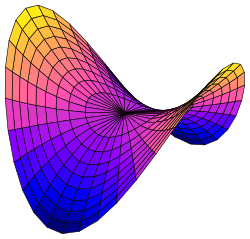
Hyperbolic paraboloid

Polygon mesh of a circular paraboloid

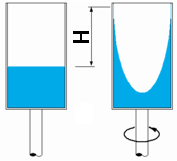
Circular paraboloid


A hyperbolic paraboloid with lines contained in it

Pringles fried snacks are in the shape of a hyperbolic paraboloid.

A hyperbolic paraboloid with hyperbolas and parabolas

STL hyperbolic paraboloid model
Fun Facts
Here are some fun facts about paraboloids! 🎉Did you know that the word "paraboloid" comes from two Greek words: “parabole” meaning “comparison” and “eidos” meaning “shape”? That means it’s a shape that compares well with others! Also, if you ever find a bowl, you can think of it as an example of a paraboloid in your kitchen! 🍽️ Finally, the formulae and shapes of paraboloids are not just useful—they can be found in art and creativity, inspiring designers worldwide!
Historical Context
Paraboloids date back to ancient times! 📜They were studied by mathematicians like René Descartes and Isaac Newton, who loved exploring curved shapes. By the 18th century, others found ways to use paraboloids in telescopes and satellite dishes. 🚀Over time, architects started using them in bold building designs, creating masterpieces like the Sydney Opera House. Today, students and scientists continue to explore these fascinating shapes, revealing new applications and designs!
Graphing Paraboloids
When we graph paraboloids, we can learn more about their shapes! 📊We usually use a three-dimensional coordinate system with x, y, and z axes to visualize them. The z-axis usually represents height. By plotting different points using our paraboloid equations, we can see the beautiful bowl or saddle shapes appear on the graph. Graphing helps us understand how changes in equations affect the shape, which is crucial for engineers and mathematicians alike!
Types Of Paraboloids
There are two main types of paraboloids: elliptical and hyperbolic! Elliptical paraboloids look like a bowl 🍲 and are wider at the top, while hyperbolic paraboloids have a saddle shape and curve differently. You can see elliptical paraboloids in objects like satellite dishes and telescopes, while hyperbolic ones can be found in modern architecture, like the roof of the Sydney Opera House in Australia! 🏛️ Each type has its own unique shapes and uses in technology and design!
Paraboloids In Nature
Did you know that nature has its own versions of paraboloids? 🌼For example, certain flowers and fruit, like the cross-section of a ripe pear, can resemble elliptical paraboloids. The way some plants grow helps carry water to their roots like a small bowl holding rain. Additionally, some bird nests are shaped like paraboloids, offering protection and comfort, showing us how shapes are important even in nature! 🌳
Definition And Properties
A paraboloid is defined as a surface created when a parabola (a curved shape) is rotated around its axis. 📏It has a unique property: any light or sound waves coming in parallel to its axis will bounce off and meet at one point, called the focus. For example, if you shine a flashlight into a satellite dish, the light concentrates at the focus, making it super bright! Paraboloids can be either open, like a bowl, or closed, where the top is rounded. Understanding its shape helps us make things like car headlights or giant telescopes!
Mathematical Representation
In math, scientists describe a paraboloid with an equation. For an elliptical paraboloid, the equation is z = (x²/a²) + (y²/b²), where x and y are coordinates on the flat surface, and z is the height. 🌟The ‘a’ and ‘b’ values control how wide the paraboloid is! For a hyperbolic paraboloid, the equation is z = (x²/a²) - (y²/b²). These equations help engineers design amazing structures and machines that make our life easier!
Applications In Science And Engineering
Paraboloids are used in many cool inventions! 📡Telecommunication satellites use paraboloid shapes to send signals to Earth. Their curves help focus signals, ensuring a stronger connection. 🎥In optics, large telescopes are also shaped like paraboloids to gather light from distant stars. Engineers design sound systems using paraboloids to enhance sound quality! The unique shape helps focus sound waves, making them clearer and louder, so everyone can enjoy the music!
Paraboloid Quiz
Learn more about Paraboloid
