All Articles

Neville Chamberlain

Neville Chamberlain Facts For Kids

Arthur Neville Chamberlain was a British politician who served as Prime Minister from May 1937 to May 1940 and led the Conservative Party during that time, becoming known for his policy of appeasement towards Nazi Germany.

🎨 Reading age for 6-8
Background blob
Neville Chamberlain
Facts for Kids!

Do more with AI

Introduction

Arthur Neville Chamberlain was a British politician who became Prime Minister from May 1937 to May 1940. 🇬🇧 He was born on March 18, 1869, in Birmingham, England. Chamberlain belonged to the Conservative Party, which is one of the two main political parties in the UK. His leadership is remembered for both peace talks and challenges during a tough time in history, especially before World War II. He tried to keep Britain out of the war by making agreements with other countries, but many people remember him for his decisions during that time. 🏛️

Images of Neville Chamberlain

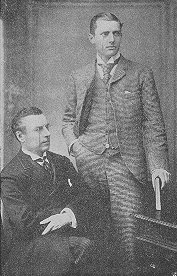
Joseph Chamberlain (seated) and Austen Chamberlain, 1892

Joseph Chamberlain (seated) and Austen Chamberlain, 1892

Chamberlain as Lord Mayor of Birmingham in May 1916, alongside Prime Minister Billy Hughes of Australia

Chamberlain as Lord Mayor of Birmingham in May 1916, alongside Prime Minister Billy Hughes of Australia

Portrait by William Orpen, 1929

Portrait by William Orpen, 1929

Caricature of Chamberlain, c. 1940

Caricature of Chamberlain, c. 1940

Chamberlain arrives in Munich, September 1938.Image by Unknown author Unknown author, licensed under Creative Commons Attribution-Share Alike 3.0 de

Chamberlain arrives in Munich, September 1938.

Chamberlain (centre, hat and umbrella in hands) walks with German foreign minister Joachim von Ribbentrop (right) as the Prime Minister leaves for home after the Berchtesgaden meeting, 16 September 1938. On the left is Alexander von Dörnberg.Image by Unknown author Unknown author, licensed under Creative Commons Attribution-Share Alike 3.0 de

Chamberlain (centre, hat and umbrella in hands) walks with German foreign minister Joachim von Ribbentrop (right) as the Prime Minister leaves for home after the Berchtesgaden meeting, 16 September 1938. On the left is Alexander von Dörnberg.

Chamberlain (left) and Hitler leave the Bad Godesberg meeting, 23 September 1938.Image by Unknown author Unknown author, licensed under Creative Commons Attribution-Share Alike 3.0 de

Chamberlain (left) and Hitler leave the Bad Godesberg meeting, 23 September 1938.

From left to right, Chamberlain, Daladier, Hitler, Mussolini and Italian foreign minister Count Galeazzo Ciano as they prepare to sign the Munich AgreementImage by Unknown author Unknown author, licensed under Creative Commons Attribution-Share Alike 3.0 de

From left to right, Chamberlain, Daladier, Hitler, Mussolini and Italian foreign minister Count Galeazzo Ciano as they prepare to sign the Munich Agreement

Chamberlain holding up the paper signed by both Hitler and himself on his return from Munich to Heston Aerodrome

Chamberlain holding up the paper signed by both Hitler and himself on his return from Munich to Heston Aerodrome

Joseph Chamberlain (seated) and Austen Chamberlain, 1892

Joseph Chamberlain (seated) and Austen Chamberlain, 1892

Chamberlain as Lord Mayor of Birmingham in May 1916, alongside Prime Minister Billy Hughes of Australia

Chamberlain as Lord Mayor of Birmingham in May 1916, alongside Prime Minister Billy Hughes of Australia

Portrait by William Orpen, 1929

Portrait by William Orpen, 1929

Caricature of Chamberlain, c. 1940

Caricature of Chamberlain, c. 1940

Chamberlain arrives in Munich, September 1938.Image by Unknown author Unknown author, licensed under Creative Commons Attribution-Share Alike 3.0 de

Chamberlain arrives in Munich, September 1938.

Chamberlain (centre, hat and umbrella in hands) walks with German foreign minister Joachim von Ribbentrop (right) as the Prime Minister leaves for home after the Berchtesgaden meeting, 16 September 1938. On the left is Alexander von Dörnberg.Image by Unknown author Unknown author, licensed under Creative Commons Attribution-Share Alike 3.0 de

Chamberlain (centre, hat and umbrella in hands) walks with German foreign minister Joachim von Ribbentrop (right) as the Prime Minister leaves for home after the Berchtesgaden meeting, 16 September 1938. On the left is Alexander von Dörnberg.

Chamberlain (left) and Hitler leave the Bad Godesberg meeting, 23 September 1938.Image by Unknown author Unknown author, licensed under Creative Commons Attribution-Share Alike 3.0 de

Chamberlain (left) and Hitler leave the Bad Godesberg meeting, 23 September 1938.

From left to right, Chamberlain, Daladier, Hitler, Mussolini and Italian foreign minister Count Galeazzo Ciano as they prepare to sign the Munich AgreementImage by Unknown author Unknown author, licensed under Creative Commons Attribution-Share Alike 3.0 de

From left to right, Chamberlain, Daladier, Hitler, Mussolini and Italian foreign minister Count Galeazzo Ciano as they prepare to sign the Munich Agreement

Chamberlain holding up the paper signed by both Hitler and himself on his return from Munich to Heston Aerodrome

Chamberlain holding up the paper signed by both Hitler and himself on his return from Munich to Heston Aerodrome

Fall From Power

Chamberlain's time as Prime Minister ended in May 1940. 📉As the war worsened, many people lost faith in his ability to lead. Even some members of his party wanted him to resign. He faced criticism over how he handled the early stages of World War II. After leaving office, Chamberlain became a Member of Parliament again, but his influence was diminished. He remained involved in politics but never returned to the position of Prime Minister. He eventually stepped back from public life. 🏴

Early Life And Education

Neville Chamberlain was born into a well-off family! 🎩His father, Joseph Chamberlain, was also a politician. Young Neville was educated at the King Edward's School in Birmingham, where he learned a lot about politics and economics. He didn't go to college but started working in his family's business. By 21, he took charge of his own company. Working gave him leadership skills that helped in his later political career. He learned how to manage people and solve problems, important skills for a future Prime Minister! 📚

Personal Life And Interests

Outside of politics, Chamberlain loved nature and gardening. 🌳He found peace in looking after plants and enjoyed spending time in beautiful gardens. He also liked to paint! 🎨Chamberlain was married to a woman named Anne, and they had one daughter together named Helena. Family life was important to him, and he often spent his time away from politics enjoying the simple pleasures of life, like walking in the countryside. It shows that even politicians need time for hobbies and relaxation!

Political Career Beginnings

Chamberlain entered politics in 1918 when he was elected as a Member of Parliament for Birmingham. 🗳️ He quickly became known for his determination and hard work. He served as the Minister of Health and the Minister of Education before becoming the Chancellor of the Exchequer. In this position, he was in charge of the country's money. 💰He focused on helping people by supporting policies, like public health programs. His early experiences gave him a great understanding of how the government worked and prepared him for bigger roles.

Public Perception Over Time

People's views of Chamberlain have changed over the years. 🕰️ Initially, he was admired by some for seeking peace. However, after the war started, many criticized him for being too soft on Hitler. As history has evolved, newer generations see his efforts to avoid conflict but also the consequences of those actions. Today, Chamberlain's story is taught to help understand leadership, decision-making, and the importance of confronting dangers properly. 🏛️ His legacy offers important lessons about politics and the choices leaders must make during tough times.

Legacy And Historical Impact

Today, Neville Chamberlain is remembered in different ways. 📜Some people think of him as a peacemaker who tried to avoid war, while others criticize him for his agreements with Hitler. The Munich Agreement is often taught in schools as an example of the dangers of "appeasement." Chamberlain's leadership style and decisions continue to be studied by historians. 🎓His impact on British politics and World War II remains a significant topic of discussion even years later.

As Prime Minister: Key Policies

When he became Prime Minister in 1937, Chamberlain focused on avoiding war and maintaining peace in Europe. 🕊️ He worked on policies to improve people's lives, including creating healthcare programs and buildings for schools. Chamberlain's main goal was to secure peace, especially with Germany, which had been causing trouble. He believed that talking and making agreements was better than fighting. 🔍However, while his efforts were noble, many later questioned if this approach was the best way to protect Britain.

Munich Agreement And Appeasement

In September 1938, Chamberlain signed the Munich Agreement with Adolf Hitler, the leader of Germany. 📝This agreement allowed Germany to take over part of Czechoslovakia called the Sudetenland. Chamberlain and other leaders thought this would prevent war, so he famously declared, "Peace for our time!" However, this decision was controversial because many believed it gave in to Germany's demands. They thought it showed weakness rather than strength. 😟The agreement is often seen as a significant mistake as it did not stop the conflict.

Reactions To The Munich Agreement

When Chamberlain returned to Britain after signing the Munich Agreement, some people welcomed him as a hero! 🌟However, many others were concerned about his decisions. Critics argued that he was too lenient with Hitler and didn’t protect Britain properly. Some even called him "Weak Neville" and felt very worried about the future. 📉The debates about the Munich Agreement sparked a lot of discussions in the media and among the public, highlighting how different people saw Chamberlain’s actions in different ways.

World War Ii And Chamberlain's Leadership

When World War II began in September 1939, Chamberlain faced a huge challenge. 🌍He was in charge during a dangerous time when Britain was at war with Germany. He called on British citizens to support the war effort and worked hard to organize arms and supplies for the military. 💣However, many felt he was not strong enough in his leadership. By May 1940, after many challenges and defeats, he resigned as Prime Minister, and Winston Churchill took over.

Neville Chamberlain Quiz

Q1
Question 1 of 10

Learn more about Neville Chamberlain

Ready to create?

Make

To create a safe space for kid creators worldwide!

Create

Vibe Coding

Kids GPT

All Tools

Kibu

Resources

Worksheets

SafeTube

Blog

FAQ

Account

Pricing

Log-in

Sign-up

Data Deletion

Company

About

Community Guidelines

Privacy Policy

Terms of Service

2025, URSOR LIMITED. All rights reserved. DIY is in no way affiliated with Minecraft™, Mojang, Microsoft, Roblox™ or YouTube. LEGO® is a trademark of the LEGO® Group which does not sponsor, endorse or authorize this website or event. Made with love in San Francisco.