Migratory Locust Facts For Kids
The migratory locust is a species of short-horned grasshopper known for its capacity to form swarms that can cause severe agricultural damage.
Select reading age

Migratory Locust Facts For Kids
Videos & Quizzesincluded
About this topic
The migratory locust is a fascinating insect found in many countries! 🐞They are known for their bright colors, which can change depending on their mood and numbers. These locusts can travel longer distances than most insects. They can fly over 100 kilometers (about 62 miles) in a single day! 🌍These critters are social and often gather in large swarms. Interestingly, the scientific name of migratory locusts is *Locusta migratoria*. They prefer warm climates and can be found in areas such as Africa, the Middle East, and India. This makes them pretty special in the insect world!
Explore with ChatDinoKey Points
One of the coolest things about migratory locusts is their swarming behavior!
Throughout history, migratory locusts have caused many famous outbreaks!
Migratory locusts can be both helpful and harmful!
Locusts aren't just pests; they also play essential roles in their ecosystems!
Migratory locusts go through several life stages: egg, nymph, and adult.
Migratory locusts enjoy different habitats around the globe!
Scientists are continually studying migratory locusts to learn more about their behavior and impacts.
To manage migratory locusts, scientists and farmers use several effective strategies!
Photos of Migratory Locust

An audio speaker emitting sound waves, in the Gnome style

Adult female (top), adult male (bottom left), fifth instar nymph (bottom right)

L. m. migratorioides female (solitary)

L. m. migratorioides male (solitary)

Migratory Locust — photo 5

Migratory Locust — photo 6

Migratory Locust — photo 7

Migratory Locust — photo 8
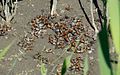
Migratory Locust — photo 9
🐜 Swarming Phenomena
One of the coolest things about migratory locusts is their swarming behavior! 🐜When locust populations increase, they switch from being solitary to forming large swarms. These swarms can contain billions of locusts and stretch for miles! 🌪️ They can travel long distances searching for food, eating everything in their path. Swarms can be so dense that they can block the sun, creating a shadow! This phenomenon can lead to serious agricultural damage, making them both fascinating and a challenge for farmers.
Go deeper🌍 Historical Outbreaks
Throughout history, migratory locusts have caused many famous outbreaks! 🌍One major event occurred in 1954, when swarms invaded Egypt, destroying crops. Another historical outbreak took place in 1986-1989 in North Africa, where locusts affected countries like Algeria and Morocco. For many years, people have struggled with these pests. Each outbreak teaches us more about how to deal with locusts effectively! Stories and records from ancient times show how agriculture and culture were impacted by locust swarms long ago. 📜
Go deeper🌱 Impact On Agriculture
Migratory locusts can be both helpful and harmful! 🌱While they are part of the ecosystem, their swarms can cause significant damage to crops and plants. In places like Africa and India, millions of locusts can destroy fields of wheat, rice, and other important crops within hours. 🌾This impacts farmers and people who rely on these crops for food. For example, a swarm can eat enough food to feed 35,000 people in a day! This is why keeping an eye on migratory locust populations is so important.
Go deeper🌿 Benefits To Ecosystems
Locusts aren't just pests; they also play essential roles in their ecosystems! 🌿They help break down plants and add nutrients to the soil, promoting healthier ecosystems. When they swarm, they can create new habitats for other animals and insects by changing the landscape through grazing. 🦋Their feeding habits also help increase biodiversity, allowing new plants to grow. Furthermore, they serve as food for birds, reptiles, and other creatures, providing a food source that keeps the ecosystem balanced. So, even though they can be destructive, they also contribute to nature!
Go deeper🥚 Life Cycle And Behavior
Migratory locusts go through several life stages: egg, nymph, and adult. 🥚The female locust lays eggs in the ground, and they hatch into small nymphs or "hoppers." 🦗 Hoppers grow in size and change colors before becoming adults. This process is called metamorphosis, and it takes about three months. Adult locusts are very active and love to munch on plants! They can also change behavior when food is scarce, becoming more social and forming big groups, which is why you see them in swarms.
Go deeper🌾 Habitat And Distribution
Migratory locusts enjoy different habitats around the globe! 🌾They are usually found in dry, warm areas like deserts and grasslands. These locusts can adapt to many places, from Africa's savannas to Australia's Outback. When there's rain, they thrive and reproduce quickly! 🌦️ Their favorite temperature is between 20°C to 35°C (68°F to 95°F). Countries like Ethiopia, India, and Pakistan often experience swarms. Because they can travel far, locust swarms can reach new areas in search of food!
Go deeper🔬 Research And Future Studies
Scientists are continually studying migratory locusts to learn more about their behavior and impacts. 🔬By understanding how they form swarms and what triggers their migrations, researchers hope to reduce agricultural damage. Currently, projects using technology, like satellite imaging, help track locust movements! 📡There are also efforts to develop new methods to control swarms without harming the environment. Future studies may reveal more about their biology and help improve pest management strategies worldwide. Scientists aim to find a balance between controlling locusts and preserving ecosystems!
Go deeper🔬 Control And Management Strategies
To manage migratory locusts, scientists and farmers use several effective strategies! 🔬One common approach is called "integrated pest management," which includes monitoring locust populations and planting resistant crops. They also use biological controls, like introducing natural predators. When swarms do appear, pesticides can help reduce their numbers. 🧪However, it's crucial to use them carefully to protect the environment. Governments work with communities to share information and plan ahead for swarming events. This teamwork helps keep crops safe!
Go deeper