All Articles

Incense

Incense Facts For Kids

Incense is an aromatic biotic material that releases fragrant smoke when burnt, used widely for relaxation, worship, and creating a pleasant environment.
🎨 Reading age for 6-8
Background blob
Incense
Incense
Facts for Kids!
Image by Photo by NosniboR80, CC License, licensed under Creative Commons Attribution-Share Alike 2.5

Do more with AI

Introduction

Incense is a special material that smells amazing when it’s burned! 🔥It’s often made from things like resins, herbs, and essential oils. People use incense in many different ways, such as to relax, to help with meditation, or to create a nice atmosphere. You can find incense in various shapes, like sticks, cones, and powders! 🌈The delightful smell wafts through the air, making spaces feel cozy and inviting. Incense has been used for thousands of years and is popular in many cultures around the world. Let’s discover more about this fragrant world! 🌍

Images of Incense

Smoke from incense stickImage by Chepry 💬 ( Andrzej Barabasz ) 📷 🇵🇱, licensed under Creative Commons Attribution-Share Alike 4.0

Smoke from incense stick

Qustul Incense Burner, Nubia, Cemetery L, tomb 24, A-Group, 3300-3000 BC, limestone - Oriental Institute Museum, University of Chicago

Qustul Incense Burner, Nubia, Cemetery L, tomb 24, A-Group, 3300-3000 BC, limestone - Oriental Institute Museum, University of Chicago

Egyptian incense burner, 7th century BCE

Egyptian incense burner, 7th century BCE

Some commonly used raw incense and incense-making materials (from left to right, top down): Makko powder (Machilus thunbergii), Borneol camphor (Dryobalanops aromatica), Sumatra Benzoin (Styrax benzoin), Omani frankincense (Boswellia sacra), Guggul (Commiphora wightii), Golden Frankincense (Boswellia papyrifera), the new world Tolu balsam (Myroxylon toluifera) from South America, Somali myrrh (Commiphora myrrha), Labdanum (Cistus villosus), Opoponax (Commiphora opoponax), and white Indian sandalwood powder (Santalum album)Image by Sjschen at English Wikipedia, licensed under Creative Commons Attribution-Share Alike 3.0

Some commonly used raw incense and incense-making materials (from left to right, top down): Makko powder (Machilus thunbergii), Borneol camphor (Dryobalanops aromatica), Sumatra Benzoin (Styrax benzoin), Omani frankincense (Boswellia sacra), Guggul (Commiphora wightii), Golden Frankincense (Boswellia papyrifera), the new world Tolu balsam (Myroxylon toluifera) from South America, Somali myrrh (Commiphora myrrha), Labdanum (Cistus villosus), Opoponax (Commiphora opoponax), and white Indian sandalwood powder (Santalum album)

A Räucherkerzchen – A charcoal-based incense coneImage by André Karwath aka Aka, licensed under Creative Commons Attribution-Share Alike 2.5

A Räucherkerzchen – A charcoal-based incense cone

Incense coils hanging from the ceiling of an East Asian templeImage by Denise Chan from Hong Kong, China, licensed under Creative Commons Attribution-Share Alike 2.0

Incense coils hanging from the ceiling of an East Asian temple

Burning incense stick and its smokeImage by AntanO, licensed under Creative Commons Attribution-Share Alike 4.0

Burning incense stick and its smoke

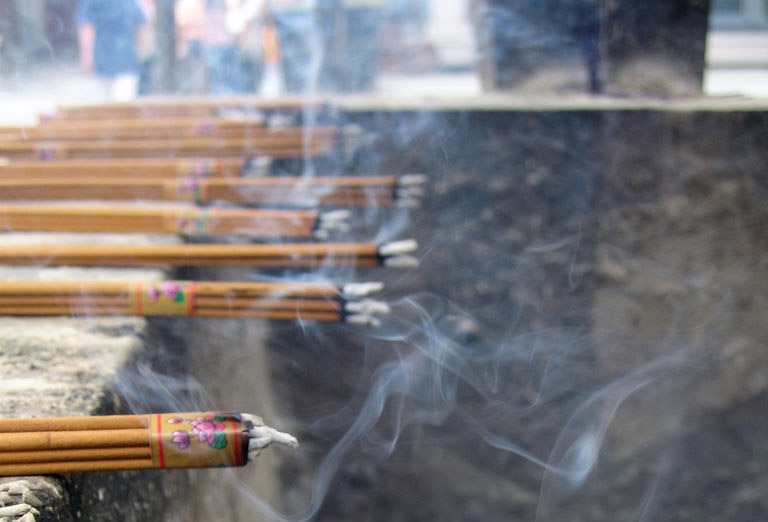
Joss sticks in the Temple of Literature, Hanoi in Hanoi, VietnamImage by Myrabella, licensed under Creative Commons Attribution-Share Alike 4.0

Joss sticks in the Temple of Literature, Hanoi in Hanoi, Vietnam

Incense production in Hanoi, VietnamImage by Trantuanviet, licensed under Creative Commons Attribution-Share Alike 4.0

Incense production in Hanoi, Vietnam

Smoke from incense stickImage by Chepry 💬 ( Andrzej Barabasz ) 📷 🇵🇱, licensed under Creative Commons Attribution-Share Alike 4.0

Smoke from incense stick

Qustul Incense Burner, Nubia, Cemetery L, tomb 24, A-Group, 3300-3000 BC, limestone - Oriental Institute Museum, University of Chicago

Qustul Incense Burner, Nubia, Cemetery L, tomb 24, A-Group, 3300-3000 BC, limestone - Oriental Institute Museum, University of Chicago

Egyptian incense burner, 7th century BCE

Egyptian incense burner, 7th century BCE

Some commonly used raw incense and incense-making materials (from left to right, top down): Makko powder (Machilus thunbergii), Borneol camphor (Dryobalanops aromatica), Sumatra Benzoin (Styrax benzoin), Omani frankincense (Boswellia sacra), Guggul (Commiphora wightii), Golden Frankincense (Boswellia papyrifera), the new world Tolu balsam (Myroxylon toluifera) from South America, Somali myrrh (Commiphora myrrha), Labdanum (Cistus villosus), Opoponax (Commiphora opoponax), and white Indian sandalwood powder (Santalum album)Image by Sjschen at English Wikipedia, licensed under Creative Commons Attribution-Share Alike 3.0

Some commonly used raw incense and incense-making materials (from left to right, top down): Makko powder (Machilus thunbergii), Borneol camphor (Dryobalanops aromatica), Sumatra Benzoin (Styrax benzoin), Omani frankincense (Boswellia sacra), Guggul (Commiphora wightii), Golden Frankincense (Boswellia papyrifera), the new world Tolu balsam (Myroxylon toluifera) from South America, Somali myrrh (Commiphora myrrha), Labdanum (Cistus villosus), Opoponax (Commiphora opoponax), and white Indian sandalwood powder (Santalum album)

A Räucherkerzchen – A charcoal-based incense coneImage by André Karwath aka Aka, licensed under Creative Commons Attribution-Share Alike 2.5

A Räucherkerzchen – A charcoal-based incense cone

Incense coils hanging from the ceiling of an East Asian templeImage by Denise Chan from Hong Kong, China, licensed under Creative Commons Attribution-Share Alike 2.0

Incense coils hanging from the ceiling of an East Asian temple

Burning incense stick and its smokeImage by AntanO, licensed under Creative Commons Attribution-Share Alike 4.0

Burning incense stick and its smoke

Joss sticks in the Temple of Literature, Hanoi in Hanoi, VietnamImage by Myrabella, licensed under Creative Commons Attribution-Share Alike 4.0

Joss sticks in the Temple of Literature, Hanoi in Hanoi, Vietnam

Incense production in Hanoi, VietnamImage by Trantuanviet, licensed under Creative Commons Attribution-Share Alike 4.0

Incense production in Hanoi, Vietnam

Types Of Incense

There are several types of incense that people use! 🔥The two most common forms are stick and cone incense. Stick incense is thin and typically made from a bamboo stick coated with aromatic materials. Cone incense, shaped like a small triangle, burns longer and produces a stronger scent. There’s also loose incense, which looks like a mix of dried herbs and can be burned on charcoal. Additionally, there are different scents, like sandalwood, lavender, and frankincense! 🌸Each type of incense offers unique fragrances that create different moods and experiences.

Diy Incense Making

Making your own incense can be a fun and creative project! 🎨You can use natural materials like dried herbs, flowers, and spices. For a simple recipe, mix some ground herbs with a little water and natural binder, like honey or flour, to create a paste. Shape it into sticks or cones and let it dry for a few days. 🌼When it’s dry, you can burn them just like store-bought incense! Experiment with different scents and combinations, and have fun creating your unique fragrances! 🌈

History Of Incense

Incense has a long and fascinating history! 🌟It dates back over 5,000 years! Ancient Egyptians used it in temples to honor their gods, like Ra, the sun god. 🏺They believed the smoke carried their prayers up to the heavens. Other ancient cultures, like the Chinese and Greeks, also burned incense for spiritual and healing purposes. In fact, the word "incense" comes from the Latin word "incensum," meaning "to burn." Many exciting discoveries about incense have been made through archaeology, showcasing its importance in human traditions across the globe! 🔍

Health Effects Of Incense

Burning incense can have both positive and negative effects on health. 🌟Many people find the scents pleasant and relaxing, helping them reduce stress and improve focus while studying or meditating. Some studies even show that certain incense types can purify the air in small spaces! However, it's essential to be careful, as burning incense can also release tiny particles that may irritate the lungs, especially for people with asthma. It's always a good idea to use incense in well-ventilated areas and not to burn it for too long! 🏡

Materials Used In Incense

Incense is made from a variety of natural materials! 🌿Common ingredients include tree resins, like myrrh and frankincense, which produce strong smells when burned. People also use dried flowers, leaves, and herbs, such as sage and rose petals. 🪴Essential oils are another important part of making incense, providing rich scents from plants like lavender and eucalyptus. Some incenses even include spices, like cinnamon! When mixed together, these materials create beautiful combinations that fill the air with their delightful fragrances.

Methods Of Burning Incense

There are different ways to burn incense! 🔥The most common method is using a stick or cone holder, which keeps the incense steady while it burns. You light one end and let it smolder, releasing scented smoke. Some people use charcoal discs to burn loose incense. Just place the charcoal in a special burner, light it, and let it become hot before sprinkling the loose incense on top! 🌬️ Another method involves using an electric incense burner, which warms the incense without flames. Each method can create different experiences and scents!

Incense In Modern Aromatherapy

Aromatherapy is a way people use scents to feel better, and incense plays a role in it! 🍃Aromatherapy uses essential oils to promote relaxation, happiness, and even focus! Many people burn incense during yoga, meditation, or just while relaxing at home. Some popular scents include lavender for relaxation and eucalyptus for refreshing the air. 🌼The aromas from incense help create a calming atmosphere, making it easier to unwind after a busy day. So, lighting an incense stick can be a fun way to enjoy aromatherapy!

Incense In Religious Practices

Incense has long been used in religious practices around the world! 🌈In Christianity, incense is burned during church services to symbolize prayers rising to heaven. In Hinduism, devotees offer incense to deities as part of their rituals. 🙏Similarly, in Buddhism, incense is burned as a sign of respect and devotion. In many Indigenous cultures, it’s used in ceremonies to connect with spirits. Each tradition gives special meanings to different scents, making incense an essential part of expressing beliefs and connecting with the divine! ✨

Cultural Significance Of Incense

Incense plays a big role in many cultures around the world! 🌍In India, it’s used in spiritual practices and to honor gods during festivals. Japanese culture features a tradition called "kodo," where people appreciate the scent of incense. In the Middle East, burning frankincense is part of important ceremonies, and Egyptians historically buried it with their pharaohs. 🏺Many cultures believe that incense brings peace, cleanses spaces, and connects people to the spirit world. By using incense, people celebrate their traditions and share their beliefs!

Environmental Impact Of Incense Production

The production of incense can have some environmental effects. 🌱Many ingredients, like resins and essential oils, come from plants. If these plants aren’t harvested sustainably, it can threaten their populations. 🌳Overharvesting may cause deforestation and loss of biodiversity. It’s essential to choose brands that practice sustainable harvesting and to recycle incense packaging when possible! To help the environment, you can also grow your own herbs for DIY incense. Making eco-friendly choices ensures that we can enjoy incense while protecting our planet! 🌍

Incense Quiz

Q1
Question 1 of 10

Learn more about Incense

Ready to create?

Make

To create a safe space for kid creators worldwide!

Create

Vibe Coding

Kids GPT

All Tools

Kibu

Resources

Worksheets

SafeTube

Blog

FAQ

Account

Pricing

Log-in

Sign-up

Data Deletion

Company

About

Community Guidelines

Privacy Policy

Terms of Service

2025, URSOR LIMITED. All rights reserved. DIY is in no way affiliated with Minecraft™, Mojang, Microsoft, Roblox™ or YouTube. LEGO® is a trademark of the LEGO® Group which does not sponsor, endorse or authorize this website or event. Made with love in San Francisco.