Gong Facts For Kids
A gong is a large percussion instrument that produces a deep, resonant sound when struck, often used in musical compositions and ceremonial occasions.
Select reading age

Gong Facts For Kids
Videos & Quizzesincluded
About this topic
A gong is a large, round metal disc that makes a deep, resonant sound when struck. It can be gold, bronze, or brass and is often found in Asian cultures. Gongs are typically hanging and need to be played with a beater, which is like a big stick. 🌏You can find gongs in countries like China, Indonesia, and India! They have been used for centuries in temples, celebrations, and music. The size of a gong can vary widely. Some are just a few inches across, while others can be as big as a door! 🚪Let’s explore more about this fascinating instrument!
Explore with ChatDinoKey Points
Gongs are popular in many different types of music!
There are many different types of gongs!
Playing a gong is all about technique!
Gongs have been around for thousands of years!
Gongs are very important in many cultures!
Making a gong is quite an art!
Gongs are not just for making music; they are also used for relaxation and healing!
Many talented musicians play the gong!
Photos of Gong
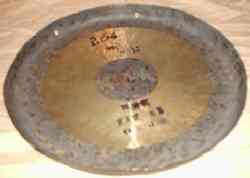
The familiar "Chinese" gong (a 25 cm or 10 in chau gong)

Large gong at Ashikaga Banna-ji

Nipple gongs at Wat Chulaphonwararam, a Wat (Buddhist temple) in Nakhon Nayok

An intricately carved and painted Maranao kulintang ensemble from the National Museum of Anthropology, Philippines, with nipple gongs of various names and pitches

Sculptural gong made by Steve Hubback
🎼 Gong In Music
Gongs are popular in many different types of music! 🎼You can hear them in orchestras, where they add drama, especially in film music. Famous composers like Richard Wagner and Gustav Mahler have used gongs in their pieces. 🌟They also appear in rock music, classical pieces, and traditional music from countries like Thailand and Japan. Bands sometimes have their own gongs to create unique sounds during performances, making music even more exciting! You might also hear gongs in soundtracks, adding an epic feel to movies!
Go deeper🎶 Types Of Gongs
There are many different types of gongs! One common type is the "tam-tam," which is thin and gives a loud, crashing sound. 🎶Another type is the "wind gong," which is larger and has an airy sound. Then there’s the "bossed gong," which has a raised center and produces a beautiful, rich tone. Often, gongs come in various sizes, from tiny ones you can hold in your hand to massive ones that need to be played with special stands! Some gongs are even decorated with beautiful designs! 🖌️ Which type do you think you would like to play?
Go deeper🎾 Playing Techniques
Playing a gong is all about technique! 🎾Musicians use a beater, usually a big mallet, to strike the gong, creating sound. One technique is playing gently to create softer sounds, while striking hard can make loud, booming noises! Some players also use different parts of the mallet, like the soft end for gentle music and the hard end for powerful strikes. 🎵You can also use rubbing movements to create vibrations. Often, players stand close and vary their strikes to produce exciting sounds. It’s like conducting a symphony with just one instrument!
Go deeper🎉 History Of The Gong
Gongs have been around for thousands of years! 🎉The first gongs were made in Southeast Asia, around 3,000 years ago, and were discovered in the region of what is now Vietnam. In the 7th century, gongs traveled to China, where they were used in ceremonies and festivals. 🏮The famous Chinese emperor, Wu of Han, even had gongs in his court! Gongs were also brought to Europe in the 19th century, where they quickly became popular with composers and musicians. Today, gongs are used all around the world in many different styles.
Go deeper🎊 Cultural Significance
Gongs are very important in many cultures! In Indonesia, they are used in the traditional music of gamelan, which includes various instruments. 🎊Gongs are also found in Buddhism and Hinduism, where they are used to signal prayer times or ceremonies. In China, gongs are part of celebrations, like the Lunar New Year, to scare away evil spirits! 👹They can even be seen in dance performances and rituals. Gongs are not just musical instruments; they are believed to bring good luck and happiness, carrying deep meanings in different traditions!
Go deeper🛠️ Gong Manufacturing Process
Making a gong is quite an art! 🛠️ The process starts by melting metals like copper and tin to create an alloy. Then, the molten metal is poured into a mold to form the rough shape of the gong. After cooling, skilled artisans hammer the gong to perfect its shape and sound. 🔨This can take hours or even days! Next, the gong is polished and sometimes even decorated with designs. Finally, it is hung and tested to make sure it sounds just right. Each gong is unique, with its own “voice,” making them special instruments!
Go deeper🧘♂️ Uses In Meditation And Healing
Gongs are not just for making music; they are also used for relaxation and healing! 🧘♂️ Many people believe that the sound of gongs can help relieve stress and bring peace. Practitioners often play gongs during yoga or meditation sessions, creating soothing soundscapes that help people relax. 🌌The deep vibrations can be felt in the body, which is said to help with healing. Some even have “gong baths,” where you lie down and listen to the calming sounds. It’s a fantastic way to feel calm and rejuvenated!
Go deeper🌟 Famous Gong Players And Compositions
Many talented musicians play the gong! 🌟One famous player is Kecak Rina from Bali, who plays in traditional dances. In the Western world, you might have heard the gong used by musicians like André Previn and composer Philip Glass in their orchestral works. 🎻Gongs also appear in famous compositions like “Also sprach Zarathustra” by Richard Strauss, which you might recognize! Additionally, many modern bands incorporate gongs in their music to create powerful effects. Gongs are versatile and have left a mark in both traditional and contemporary music!
Go deeper