Ghana Empire Facts For Kids
The Ghana Empire was one of the first great empires in West Africa, flourishing from the 6th to the 13th centuries through trade, particularly in gold, and was a key player in the trans-Saharan trade routes.
Select reading age
Ghana Empire Facts For Kids
Videos & Quizzesincluded
About this topic
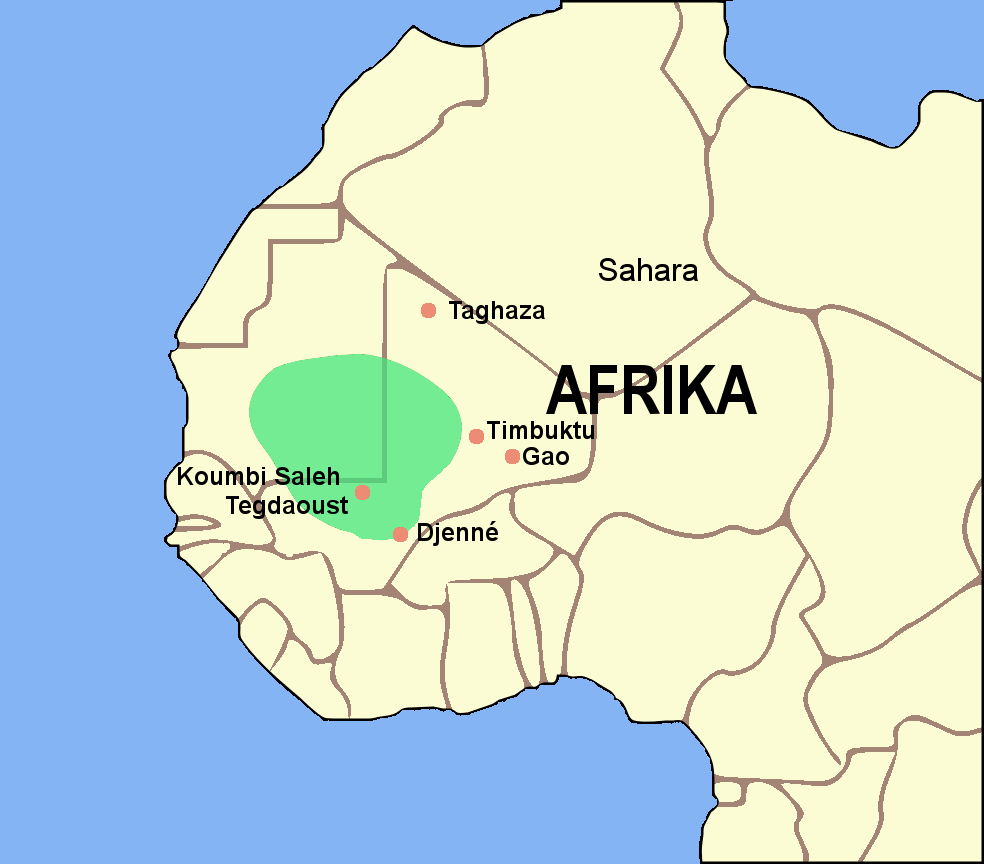
The Ghana Empire was an ancient kingdom that existed in West Africa from the 6th to the 13th century. 🌍It wasn't in present-day Ghana, but in parts of modern Mali and Mauritania. The empire was famous for its wealth, especially from trading gold and salt. The people of Ghana were skilled traders, selling their goods across the Sahara Desert to reach places like Europe and the Middle East. 🌄The capital city was Kumbi Saleh, which was a bustling market. The Ghana Empire was one of the first great African empires!
Explore with ChatDinoKey Points
The economy of the Ghana Empire was mainly based on trade, especially gold and salt!
The Ghana Empire began to decline in the 12th century due to various reasons, such as overextension and invasions.
Ghanaian culture was rich and diverse, with influences from various tribes and religions.
The Ghana Empire had a strong military to protect its extensive territory and trade routes.
The Ghana Empire grew as a powerful kingdom around the 6th century.
The Ghana Empire was located in West Africa, mainly in what is now southeastern Mauritania and western Mali.
The Ghana Empire was ruled by a king called the Ghana.
The Ghana Empire significantly influenced modern West Africa by establishing trade routes and cultural exchanges.
Photos of Ghana Empire

Trade routes of the Western Sahara c. 1000–1500. Goldfields are indicated by light brown shading: Bambuk, Bure, Lobi, and Akan.

Map of successor states to the Ghana Empire

Ghana Empire — photo 3

Ghana Empire — photo 4
Ghana Empire — photo 5

Ghana Empire — photo 6

Ghana Empire — photo 7

Ghana Empire — photo 8

Ghana Empire — photo 9
💰 Economy And Trade
The economy of the Ghana Empire was mainly based on trade, especially gold and salt! 💰The empire had many gold mines, and the gold was highly valued. Traders came from far and wide to buy gold and exchange it for other goods. 🧂Salt was also essential for preserving food, so it was in high demand. The famous trade routes across the Sahara connected the empire to North Africa and beyond, making it one of the wealthiest empires of its time! 🚛💨
Go deeper😢 Decline And Legacy
The Ghana Empire began to decline in the 12th century due to various reasons, such as overextension and invasions. 😢The Almoravids, a Muslim group, invaded and weakened the kingdom, leading to its fall. By the late 1200s, the empire was no longer powerful, and new empires, like Mali, rose in its place. However, the legacy of Ghana lives on! It helped shape the trade and culture of West Africa and established connections that influenced future empires and the entire region! 🌟
Go deeper🎨 Culture And Religion
Ghanaian culture was rich and diverse, with influences from various tribes and religions. 🎨Music and dance were important parts of life, often celebrating rituals or successful harvests. The people wore colorful garments, and artisans created beautiful artwork! 🖌️ As for religion, the Ghanaians practiced a mix of traditional beliefs and Islam, which had entered through trade. Mosques were built, and Islamic scholars came to learn. This blend of cultures made Ghana a unique and vibrant place! ✨
Go deeper🛡️ Military And Warfare
The Ghana Empire had a strong military to protect its extensive territory and trade routes. 🛡️ The army was made up of skilled warriors who were well-trained and equipped with weapons like bows and arrows. They also used horses for speed during battles! 🏇When invaders threatened the empire, the military defended the land fiercely. The most significant threat came from the Almoravids in the 11th century. Even though the troops fought bravely, the empire eventually fell to outside forces, which changed the region's history. ⚔️
Go deeper✨ History And Formation
The Ghana Empire grew as a powerful kingdom around the 6th century. ✨It was formed by the Soninke people, who united many tribes to create a strong, central government. By the 8th century, the empire controlled important trade routes, especially for gold! Gold from the Ghanan mines attracted traders and made the empire wealthy. ⚒️ The empire reached its height in the 11th century when it extended across a large area. Unfortunately, it eventually fell to invaders in the 12th century, marking the end of its dominance! ⏳
Go deeper📍 Geography And Location
The Ghana Empire was located in West Africa, mainly in what is now southeastern Mauritania and western Mali. 📍It spread across the Sahara Desert, which is the largest hot desert in the world! 🐪The empire had important rivers, like the Senegal and Niger Rivers, which helped with trade and farming. The Sahara’s warm climate supported various animals like camels, perfect for long journeys. The geography of the area contributed to the empire's wealth through trade routes, making it a central hub for merchants! 🏞️
Go deeper👑 Government And Society
The Ghana Empire was ruled by a king called the Ghana. 👑The king had a powerful army and advisors who helped him make decisions. Society was organized into clans or families, and the common people were farmers and traders. 🧑🌾 There were also skilled craftsmen who made beautiful jewelry and tools. The empire was known for its strong trade alliances, and the people practiced different religions, including traditional beliefs and Islam. The introduction of Islam helped improve trade and education. 📚
Go deeper📦 Influence On Modern West Africa
The Ghana Empire significantly influenced modern West Africa by establishing trade routes and cultural exchanges. 📦Many of the cities that prospered during that time laid the foundation for today's economies and cultures. The introduction of Islam during the empire's reign continues to play a significant role in West African culture today. 🌙Additionally, the concept of a centralized government seen in Ghana influenced many future states. The legacy of trade, art, and craftsmanship from the Ghana Empire still resonates in the West African nations we see today! 🌍
Go deeper