Europium Facts For Kids
Europium is a rare earth metal known for its unique luminescent properties, primarily utilized in phosphors and electronic applications.


Do more with AI
Introduction
Europium is a special element on the periodic table with the symbol Eu. It is a shiny, silvery-white metal, and it is one of the rare earth elements, which means it's not very common in the Earth's crust. 🌎Europium is important because it helps create bright red and blue colors in televisions and smartphones! 📱It was discovered in the late 1800s by a French chemist named Eugène-Anatole de Boitard. Europium is also used in things like lasers and some types of lights. 💡It was named after Europe, a continent filled with history and culture!
Images of Europium

Europium is one of the elements involved in emitting red light in CRT televisions.
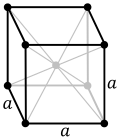
The body-centred cubic crystal structure.

About 300 g of dendritic sublimated 99.998% pure europium handled in a glove box

Oxidized europium, coated with yellow europium(II) carbonate

Europium(III) sulfate, Eu2(SO4)3

Europium(III) sulfate fluorescing red under ultraviolet light

Chemical Properties
Europium is a metal that belongs to the lanthanide series of the periodic table. It has an atomic number of 63, which means it has 63 protons in its nucleus. 🧪It can react with oxygen in the air and can easily turn powdery or rusty if not kept safe! Europium is unique because it can absorb and emit light, making it useful for creating colors. 🌈For example, it glows red when excited by ultraviolet light. This property is what makes europium so special for use in bright displays like those found in TVs and computer screens!
Physical Properties
Europium is a relatively soft and bendable metal, making it easy to shape. Its density is about 5.24 grams per cubic centimeter, which is lighter than some other metals. ⚖️ It has a melting point of 1,527 degrees Celsius (2,800 degrees Fahrenheit), meaning it can withstand a lot of heat before turning to liquid. 🌡️ Europium is silvery-white and can look a bit shiny when polished. It’s not magnetic, which means it can’t be pulled toward a magnet. This makes it different from some other metals, like iron. ✨
Safety And Handling
Although europium is not extremely dangerous, it’s essential to handle it carefully! 🧤People should use gloves when touching it to avoid skin irritation. Europium metal can react with air and moisture, which might create harmful dust. To keep it safe, workers often store europium in airtight containers filled with an inert gas. 🧊Always remember, safety first! If you ever come across europium in school or a lab, make sure an adult is there to supervise and guide you in using it properly.
Applications And Uses
Europium has some really cool uses! One of the most important is in making bright colors for screens, such as TVs and smartphones. 📺It helps create the vibrant colors we love to watch! In addition, europium is used in special red phosphors for lighting. This means it helps light bulbs glow bright and colorful! 💡Scientists also use europium in lasers and to help create special materials in research labs. Its unique properties let people explore new technologies. Isn’t it amazing how one little element can help us see things in color? 🌈
Discovery And History
Europium was discovered in 1896 by Eugène-Anatole de Boitard and later by a chemist named Vladimir I. D. V. (Yukov). It was a challenging task because it looks a lot like other rare earth elements, which made it tricky to identify. 🌟The name "europium" was inspired by Europe, where it was first found. Scientists had to use complicated chemical methods and careful experiments to isolate europium. This process is called "extraction." Since then, scientists have learned a lot about europium, making it one of the most interesting elements in the periodic table! 📚
Occurrence And Extraction
Europium is not found as a pure metal, but rather in rare earth minerals like bastnäsite and monazite. These minerals are mostly found in countries like China, Brazil, and Australia. 🌏To extract europium, miners dig up these minerals and use chemical processes to separate it from the other materials. This can be difficult because europium likes to stick to other elements! The mining and extraction of europium often takes place in large factories where scientists carefully work to get the right amount. 🏭
Future Prospects And Research
Scientists are continually researching europium to find new and exciting uses! 🚀One area of research is developing even better display technologies for devices we use daily, such as new kinds of screens that require less energy. They are also studying how europium can play a role in clean energy solutions, such as solar panels. ☀️ As technology advances, europium may contribute more to our lives, enabling new discoveries in fields like medicine and environmental protection. The future looks bright with europium! ✨
Isotopes And Nuclear Properties
Europium has two main isotopes, which are versions of the element that have different numbers of neutrons. The most stable one is europium-153, which has 90 neutrons! 🛡️ Isotopes can behave differently in scientific experiments. Europium-153 is used in some medical imaging tests and nuclear research. Scientists have also discovered europium isotopes can help in studying stars because they emit unique signals. ⭐This makes europium not just important for technology but also for understanding our universe better!
Europium Quiz
Learn more about Europium
