European Flounder Facts For Kids
The European flounder is a flatfish found in European coastal waters, known for its flat shape and ability to camouflage.
Select reading age

European Flounder Facts For Kids
Videos & Quizzesincluded
About this topic
The European flounder is a flatfish that lives in coastal waters! 🌊It can be found from the White Sea in northern Europe all the way down to the warm Mediterranean and Black Sea in the south. This fish is special because it has a unique shape – both eyes are on one side of its body! The European flounder is usually brown or gray, which helps it blend in with the sandy seafloor. Adults can reach up to 75 centimeters (about 30 inches) long and weigh around 4 kilograms (8.8 pounds). So, the next time you visit the beach, think about the flounders swimming below! 😊
Explore with ChatDinoKey Points
European flounders play a very important role in their environment!
The European flounder is currently not listed as endangered, meaning it is not in immediate danger of extinction!
European flounders have some cool physical features!
European flounders aren’t just important in the ocean – they also have a place in culture!
The European flounder is a fantastic predator!
European flounders love to make their homes in coastal waters!
European flounders are quite interesting when it comes to having babies!
The scientific name for the European flounder is Platichthys flesus.
The European flounder may look similar to other flatfish, but it has unique traits!
People love to catch and eat European flounders!
Photos of European Flounder

European Flounder — photo 1
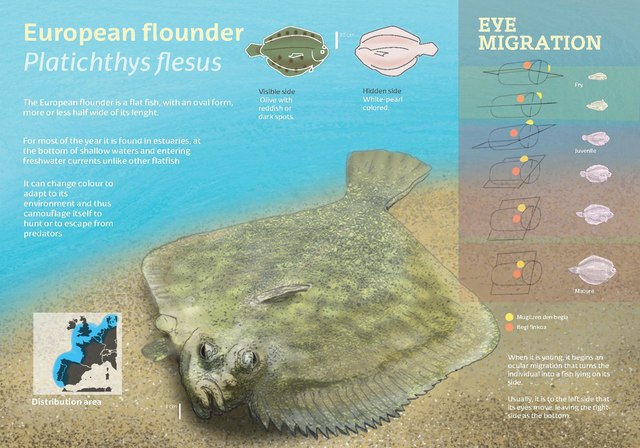
European flounder, like other flatfish, experience an eye migration during their lifetime.

European Flounder — photo 3
🌊 Ecological Role
European flounders play a very important role in their environment! 🌊They are part of the ocean’s food web. As predators, they help keep the populations of small fish and invertebrates in check. By feeding on these animals, European flounders help maintain a balance in the ecosystem. 🌿Many bigger fish, birds, and marine mammals also rely on flounders as food. So, by being part of the ocean, these fish help ensure that all their ocean friends stay healthy and thrive together! This balance is crucial for the health of coastal habitats.
Go deeper👍 Conservation Status
The European flounder is currently not listed as endangered, meaning it is not in immediate danger of extinction! 👍However, some populations are affected by overfishing and habitat loss in certain areas. Scientists and fishery managers are working together to ensure sustainable practices are followed. 🌏It is important to protect their habitats and regulate fishing so future generations can enjoy seeing and learning about European flounders! Keeping our oceans clean and healthy is crucial for these fish families to thrive! Let's all do our part to care for our blue planet! 💙
Go deeper⚡ Physical Description
European flounders have some cool physical features! ⚡Their bodies are flat and oval-shaped, which helps them hide on the seafloor. They can be brown, green, or gray with light-colored spots, making them blend in with the sand and mud – it's like they are wearing a disguise! Their eyes are on the right side of their body, and their left side is usually white. This helps them see their prey while hidden. They have a mouth full of small, sharp teeth to catch small fish and invertebrates. With all these features, the European flounder looks quite different from a regular fish! 🎣
Go deeper🎨 Cultural Significance
European flounders aren’t just important in the ocean – they also have a place in culture! 🎨In many European countries, they symbolize aspect of coastal life and tradition. Artists and chefs often feature flounders in their paintings and dishes, showcasing their beauty and culinary appeal. 🎭In some coastal communities, flounder festivals celebrate the fish and its significance to local fishing traditions. People enjoy music, food, and even fishing competitions! So, the European flounder is not just a fish; it’s a part of many cultural celebrations in Europe! 🌍
Go deeper🦑 Diet And Feeding Habits
The European flounder is a fantastic predator! 🦑It loves to eat worms, small fish, shrimp, and crabs. Flounders hunt by lying still on the bottom of the ocean, waiting for their prey to swim by. Then, with a quick flick of their tail, they dart out and catch their meal! They have a great sense of smell, which helps them locate food underwater. Interestingly, they can change color to match their surroundings, making it easier to sneak up on their dinner! 🍽️ This clever feeding strategy keeps them well-fed and healthy in their underwater world.
Go deeper🌅 Habitat And Distribution
European flounders love to make their homes in coastal waters! 🌅They prefer shallow areas like sandy or muddy seabeds where they can camouflage themselves while they swim. You can find them in the cold waters of the White Sea in Russia down to the warm and sunny Mediterranean Sea, passing through the North Sea as well. They also like the Black Sea. These fish can live in freshwater, but they spend most of their life in brackish or saltwater. This wide distribution makes them adaptable and a common sight in European waters! 🌍
Go deeper🐣 Reproduction And Lifecycle
European flounders are quite interesting when it comes to having babies! 🐣They reproduce by releasing eggs and sperm into the water during the spring and summer months. A female can lay up to 1 million eggs at once! The eggs float on the surface of the water until they hatch into tiny fry. 🎈After about a week, the fry start to swim deeper and eventually adapt to their bottom-dwelling lifestyle. As they grow, the young flounders change shape and color. This transformation helps them survive in their ocean habitat. It can take a few years for flounders to reach adult sizes!
Go deeper🐟 Taxonomy And Classification
The scientific name for the European flounder is *Platichthys flesus*. It belongs to the flatfish family called Pleuronectidae. 🐟Flatfish are a group of fish known for their flattened bodies and swimming sideways! The European flounder has a special place in the "order of fish," known as Pleuronectiformes, sharing its family with other flatfishes like halibut and soles. The European flounder is divided into various subspecies found in different areas, each adapted to its environment. This classification helps scientists understand how different fish relate and how they have adapted to live in different conditions! 📚
Go deeper🌟 Comparison With Other Flatfish
The European flounder may look similar to other flatfish, but it has unique traits! 🌟For example, the halibut, another flatfish, can grow much larger, reaching weights of over 200 kilograms (440 pounds)! ⚖️ While both flounders and soles have their eyes on the same side of the body, flounders have a wider, more oval shape. Additionally, while some flatfish prefer deeper waters, European flounders are often found in shallower regions. This diversity in flatfish helps scientists study how different fish adapt to their environments. So, next time you see flatfish swimming, remember how unique each one is! 🐠
Go deeper🎣 Fishing And Economic Importance
People love to catch and eat European flounders! 🎣They are considered a tasty fish in many countries and are a popular catch for fishermen. The flounder is also commercially important, providing jobs in fishing and seafood industries. Restaurants serve flounder dishes, making it a delicacy in places like the UK and France! 🍽️ Moreover, flounders are sometimes used as bait for larger fish, making them essential in the fishing community. These little flatfish help the economy while being delicious at the same time! So don't forget to try flounder if you ever get the chance! 😋
Go deeper