Dysprosium Facts For Kids
Dysprosium is a rare earth element known for its magnetic properties and critical role in advanced materials and technology applications.
Select reading age

Dysprosium Facts For Kids
Videos & Quizzesincluded
About this topic
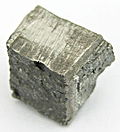
Dysprosium is a special element found on the periodic table. 🌍It's represented by the symbol "Dy" and has the atomic number 66. Dysprosium is a shiny, silvery-white metal that belongs to the rare earth metals group! It was discovered in 1886 by the scientist Paul Émile Lecoq de Boisbaudran, who named it from the Greek word "dysprositos," meaning hard to get! It mostly comes from minerals like bastnäsite and monazite, which are found in places like China, the United States, and Brazil.
Explore with ChatDinoKey Points
Dysprosium was discovered a long time ago, over 130 years ago in 1886, by the French chemist Paul Émile Lecoq de Boisbaudran.
Dysprosium has some interesting chemical properties!
In the future, dysprosium might become even more important!
Physically, dysprosium is a fascinating element!
Dysprosium is a superstar in many technologies!
Dysprosium isn’t found in nature all by itself.
Dysprosium has a few different isotopes, which are forms of the same element that have different numbers of neutrons.
Dysprosium does not play a big role in living things.
Photos of Dysprosium


🧪 Historical Context
Dysprosium was discovered a long time ago, over 130 years ago in 1886, by the French chemist Paul Émile Lecoq de Boisbaudran. 🧪Initially, scientists didn’t know much about rare earth elements, but with more research, they learned how useful dysprosium is! As technology grew, so did the need for dysprosium in strong magnets and gadgets. The exploration of rare earth elements helped us understand more about the Earth and its resources!
Go deeper🔥 Chemical Properties
Dysprosium has some interesting chemical properties! It is quite reactive, meaning it can easily combine with things, especially when it's hot. 🔥When exposed to air, dysprosium can form a layer of oxide that protects it from further reactions. It also does not dissolve well in water. When it does react, it can create compounds like dysprosium oxide (Dy₂O₃) and dysprosium fluoride (DyF₃). Plus, dysprosium likes to bond with other rare earth metals, making it a team player in the chemistry world!
Go deeper🌈 Future Developments
In the future, dysprosium might become even more important! 🌈Scientists are always looking for new and better ways to use dysprosium, especially in green technology like electric vehicles and renewable energy. As we try to make the Earth cleaner, dysprosium can help create powerful batteries and efficient engines! Researchers also want to explore new methods to recycle dysprosium from old devices, making it more sustainable for our planet. How exciting is that! 🌍
Go deeper🌡️ Physical Properties
Physically, dysprosium is a fascinating element! It has a melting point of 1,412 degrees Celsius (2,574 degrees Fahrenheit) and a boiling point of 2,570 degrees Celsius (4,698 degrees Fahrenheit). 🌡️ Dysprosium is denser than water and weighs about 8.55 grams per cubic centimeter. It is also a good conductor of electricity, which means it can help power devices! In solid form, dysprosium is malleable, so you can bend it into shapes without breaking. It shines when polished, making it very pretty! ✨
Go deeper🌟 Applications And Uses
Dysprosium is a superstar in many technologies! 🌟It is mainly used in making strong magnets. These magnets are called neodymium magnets, and they are found in speakers, electric motors, and hard drives. Dysprosium is also used in lasers and lighting, helping to create bright, colorful displays. 🔦Some nuclear reactors even use dysprosium because it can absorb neutrons, helping to control reactions. Thanks to dysprosium, our world has some exciting tech and gadgets!
Go deeper🌌 Occurrence And Extraction
Dysprosium isn’t found in nature all by itself. Instead, it’s mixed with other rare earth elements in ores. 🌌These ores are taken from the Earth and processed to separate dysprosium. The main places to find dysprosium are in China, which produces around 95% of the world’s supply! The extraction process involves crushing the ores and using chemicals to pull out dysprosium. This process takes time and effort, but it’s important to get this essential metal for technology!
Go deeper☢️ Isotopes And Radioactivity
Dysprosium has a few different isotopes, which are forms of the same element that have different numbers of neutrons. The most common one is dysprosium-164! This isotope isn’t radioactive, meaning it doesn’t emit harmful radiation. Nevertheless, dysprosium-162 is known to be a bit radioactive! ☢️ Isotopes are important for scientists because they can be used for research and different applications. Dysprosium is a stable element, so it’s safe for everyday use in technology!
Go deeper💚 Biological Role And Toxicity
Dysprosium does not play a big role in living things. 💚Although it’s not found to be essential for any biological processes, it’s generally not very harmful in tiny amounts. However, if someone were to inhale or consume too much dysprosium, it could be dangerous! ⚠️ It’s important to handle dysprosium with care, especially because it can be toxic in larger doses. So, scientists and workers keep safety in mind when using it, just like wearing gloves and masks!
Go deeper