Crystallization Facts For Kids
Crystallization is the process by which solids form, where the atoms or molecules are highly organized into a structure known as a crystal.
Select reading age
Crystallization Facts For Kids
Videos & Quizzesincluded
About this topic
Crystallization is a super cool process! 🌟It happens when a liquid turns into a solid, forming beautiful structures called crystals. Crystals can be found all around us, from snowflakes ❄️ to sugar cubes! They have a special arrangement of atoms or molecules that make them organized like a puzzle. This also makes them sparkle and shine! Think of crystals as nature's way of organizing tiny building blocks. They can form in different shapes, colors, and sizes. Next time you look at your favorite candy or a shiny rock, you might just spot some crystals waiting for you to discover! 💎
Explore with ChatDinoKey Points
Crystallization has two main types: cooling crystallization and evaporation crystallization.
Crystallization is like magic where liquids become solids!
Crystallization is everywhere in nature!
Crystallization plays a HUGE role in many industries!
The crystallization process has four important steps: saturation, nucleation, growth, and completion!
Did you know there are many types of crystalline materials?
Crystallization isn’t just pretty; it’s super useful, too!
Many things can affect how crystals form!
Did you know scientists have special ways to look at crystals?
Crystallization has a rich history!
Photos of Crystallization

DTB Crystallizer

Snowflakes are a very well-known example, where subtle differences in crystal growth conditions result in different geometries.

Crystallized honey

Low-temperature SEM magnification series for a snow crystal. The crystals are captured, stored, and sputter-coated with platinum at cryo-temperatures for imaging.

Crystal growth

Crystallization of sodium acetate

Solubility of the system Na2SO4 – H2O

Vertical cooling crystallizer in a beet sugar factory

🌬️ Types Of Crystallization
Crystallization has two main types: cooling crystallization and evaporation crystallization. Cooling crystallization happens when a liquid is cooled down slowly. 🌬️ For example, when hot sugar syrup cools, it forms sweet crystals! Evaporation crystallization occurs when a liquid evaporates, leaving behind solids. 🌞When seawater evaporates, it leaves behind salt crystals! There are also other ways to crystallize, like using solvents. Each type has its own cool ways to create beautiful crystals. So whether it’s sugar, ice, or salt, every type brings fun and unique shapes waiting to be explored! 🍭✨
Go deeper🌈 What Is Crystallization?
Crystallization is like magic where liquids become solids! 🌈It happens when particles, like molecules or atoms, come together and arrange themselves in a very special way. Imagine stacking blocks neatly – that's what particles in crystals do! When a liquid cools down or loses water, it can start to form these solid shapes. The result is often a shiny and colorful crystal! One famous crystal is quartz, which can be found in places like Brazil and Arkansas. So next time you enjoy ice water, remember it's the start of a fascinating crystallization adventure! 🥤
Go deeper🌍 Crystallization In Nature
Crystallization is everywhere in nature! 🌍Snowflakes, those icy wonders that fall in winter, are actually crystals formed when water freezes! ❄️ Each snowflake is unique and has beautiful shapes. Another amazing example is geodes, which are rock formations that can contain stunning crystals like amethyst! 💎Even in caves, stalactites and stalagmites are created from minerals crystallizing over time! Nature has its special way of creating various crystals, each with their own stories. So, next time you play outside in the snow or explore a cave, look for these crystal wonders of nature! 🌟
Go deeper🏭 Crystallization In Industry
Crystallization plays a HUGE role in many industries! 🏭In food production, it’s used to create everything from candies to chocolate. 🍫The sugar industry uses crystallization to refine sugar from sugarcane or sugar beets. In the pharmaceutical world, drugs are often made more effective by crystallization to ensure they are pure. 💊Even in construction, crystallization helps create stronger concrete! 🏗️ So, whether it’s sweet treats or important medicines, crystallization helps create products we use every day. It’s not just science; it’s a big part of how we live our lives! 🌟✨
Go deeper📈 The Crystallization Process
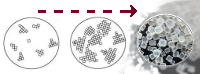
The crystallization process has four important steps: saturation, nucleation, growth, and completion! 📈First, saturation happens when a liquid has too much material in it, like when sugar won't dissolve in water anymore. Next, nucleation is when tiny groups of particles come together to form a small crystal. 🌱Then, growth happens as more and more particles attach to the crystal, making it bigger! Finally, the process gets completed when the liquid has fully transformed into a solid crystal. Each step is like a little adventure for the particles as they create amazing shapes and colors just for us! 🌟
Go deeper✨ Common Crystalline Materials
Did you know there are many types of crystalline materials? ✨Some of the most common ones are salt (sodium chloride), sugar (sucrose), and ice (frozen water)! Salt crystals are often found in many kitchens; they look like tiny cubes! 🧂Sugar crystals, like those on rock candy, are sweet and fun! Crystals like diamonds are precious and made from carbon! 💎There are also quartz crystals, which are clear and found in nature, especially in places like Brazil, Arkansas, and Madagascar. Next time you see these materials, remember they all have amazing crystallization stories! 💖
Go deeper💼 Applications Of Crystallization
Crystallization isn’t just pretty; it’s super useful, too! 💼It's used in cooking, where sugar crystallization makes candy sweet and yummy! 🍬In science, crystallization helps purify chemicals. For example, when a scientist wants pure salt, they can use crystallization to separate it from impurities. Pharmaceutical companies also use crystallization to make medicines at their best quality. 🏥Think of crystals as tiny helpers in everyday life! From your kitchen to laboratories, crystallization plays a big role making sure we have what we need. So, next time you enjoy your favorite snacks, you might be tasting crystallization magic! 🍭✨
Go deeper🌊 Factors Affecting Crystallization
Many things can affect how crystals form! 🌊Temperature is a major one. If it’s colder, crystals grow slower, creating bigger shapes! The type of solution, like how much sugar is in water, matters too. 🌡️ The more sugar, the faster the crystallization! Stirring can change the size and shape of crystals while cooling speed also plays a part. All these factors create a unique environment for them to grow. Even the container can affect crystals! Some prefer flat surfaces, while others grow better in round jars. Understanding these factors is fun for crystal explorers! 🧪🔍
Go deeper🔍 Techniques For Analyzing Crystals
Did you know scientists have special ways to look at crystals? 🔍They use techniques like X-ray diffraction, which helps identify crystal structures by shining X-rays on them. This tells us how particles are arranged inside! Scanning electron microscopy (SEM) is another cool way, offering super detailed images of crystals. It shows their texture and shape! 🌌There’s also chemical analysis to understand what the crystals are made of. By using these techniques, scientists can learn about everything from minerals in the Earth to medicines in our bodies. Analyzing crystals is like being a crystal detective! 🕵️♀️🔬
Go deeper📜 Historical Perspectives On Crystallization
Crystallization has a rich history! 📜Ancient Egyptians used crystallization to make glass around 4000 years ago! They understood how liquids could solidify into beautiful forms. In the 18th century, scientist William Henry realized that crystallization could purify substances. 🌍In the 19th century, famous scientists like Alfred Nobel explored crystallization to improve explosives! 💥Crystallography, the study of crystal structures, boomed in the early 20th century, helping us understand many materials better. From ancient times to the modern age, crystallization has been essential in science and everyday life, shaping our understanding of the world around us! 🌌✨
Go deeper