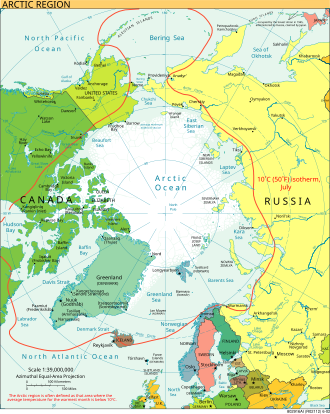
A contour line is a curve on a map that connects points with the same height above sea level, helping us visualize the land's features.
Set reading age
View for Kids
Easy to read and understand
View for Students
Clear, detailed explanations
View for Scholars
Deep dives and big ideas
Contour lines are special lines drawn on maps that show places with the same height above sea level! 🌍They create a picture of the Earth's surface, helping us understand hills and valleys without needing to see them directly. Imagine you're looking down at a mountain from above! The lines help you see where the mountain goes up and down. 🏔️ They help hikers, city planners, and even architects figure out the lay of the land. These lines connect points that are equal in height, making it easy to understand the shape of the land. Let’s dig into the world of contour lines! 📏
Reading contour lines can be like solving a mystery! 🔍First, look at the numbers on the lines. Each number shows a height; a line with "200" means that area is 200 feet high! 🏞️ Next, check how close the lines are. If they are close together, that means it is steep! If they are far apart, then it's flat. Sometimes you’ll find little marks called "hachures," which show a downhill slope. 📉By understanding these patterns, you can picture the mountains, valleys, and plains even without climbing them!
Contour mapping goes back hundreds of years! 🌟The first contour maps were created in the 18th century by a French engineer named Pierre Charles L’Enfant. He designed the map for Washington, D.C.! 🏛️ Over time, more people learned to use contour lines. In the 19th century, Sir Henry Godwin-Austen improved these maps, making them even better for explorers and scientists. Today, we use computers to make amazing contour maps! 🖥️ These maps help us understand the world and plan for things like roads, parks, and buildings! 🚧
Contour lines are imaginary lines on a map that connect points of equal height. 🌄Imagine drawing a line around all the places that are the same height! If you have a very tall mountain, the contour lines will be close together at the top because the height changes quickly. If you are on flat land, the lines will be further apart! 🌾Each line has a number that tells you how high it is, like 100 feet or 200 feet above sea level. This helps us picture how high or low different areas are. 🌊
Topographic maps are special maps that show elevation using contour lines. 📈These maps show how high a place is at different points. When you look at a topographic map, you will see many contour lines! They help hikers understand where they are going and how high they will climb. ⛰️ The lines might also show trails, rivers, and other interesting places. When you go hiking, bringing a topographic map can make your adventure even more exciting. You’ll know what to expect on your journey, like steep climbs or flat paths! 🌲
When talking about contour lines, there are some important words to know! 📚First, "elevation" means how high a place is above sea level. "Interval" refers to the difference between contour lines, like how far apart the numbers are. "Steepness" shows how quickly the height changes – close lines mean steep areas! 📊"Benchmarks" are special points that show exact heights, like a treasure chest on a map! Finally, "hachures" are tiny lines drawn on slopes to show which way the hill goes. 🌟Knowing these terms can help you understand contour maps better!
Creating contour lines can be a fun project! 🎨One way to do it is using a digital software that collects elevation data. 🌐You can also use physical models! Imagine creating a mud or clay model of a mountain and then slicing it to see each layer, just like the contour lines! Another way is to go outside with a measuring tool and mark the heights of different land points. Then, you can connect them! 🖌️ This is how geographers and scientists create beautiful and helpful contour maps.
Contour lines help us imagine the Earth's terrain, which means the way land looks! 🌄They show hills, valleys, and flat areas. For instance, think of contour lines like layers in a cake! 🎂Each layer is flat, but together they show the tall cake! 🌋When lines curve tightly, it shows a steep hill; when they are spread apart, it’s flat. This helps us see the shapes without physically being there. Scientists use terrain representations to study how land affects life, like where animals live or where to plant crops! 🌱
Many people think contour lines are just wiggly lines! ❌But they actually have important meanings! Each line shows a specific height. People might also confuse contour lines with just random shapes, but remember: they connect points that are the same height! 🌈Another myth is that contour maps only show mountains. In reality, they show all types of land! So, when you see contour lines, know they are great tools for understanding both tall and flat areas. 🌳Next time you see a map, you’ll be a contour line expert!
Contour lines are super helpful in geography! 🗺️ They help us identify landforms like mountains, plains, and valleys. By studying these maps, scientists and geographers can understand how rainwater flows and where rivers might go. 🌧️ For example, if we see a lot of tightly packed contour lines, we know there’s a steep hill, meaning rain will rush down quickly! 🏞️ City planners also use contour lines to decide where to build roads and houses. That's important, as we want to build safely on flat ground rather than steep hills! 🏘️
Contour lines are super important in architecture and engineering! 🏗️ Architects use them to design homes and buildings that fit well in the landscape. For example, if there is a steep hill, they have to make special plans so the house doesn’t slide down! 🏡Engineers also look at contour lines to plan roads and bridges. They need to know how high the road should go over hills and how deep to dig in valleys. By using contour lines, they make sure our roads, parks, and cities are safe and fun for everyone! 🛣️


DIY is a creative community where kids draw, build, explore ideas, and share.
No credit card required