All Articles

Color

Color Facts For Kids

Color is the visual perception based on the electromagnetic spectrum, helping us experience the vibrant world around us.
🎨 Reading age for 6-8
Background blob
Color
Color
Facts for Kids!
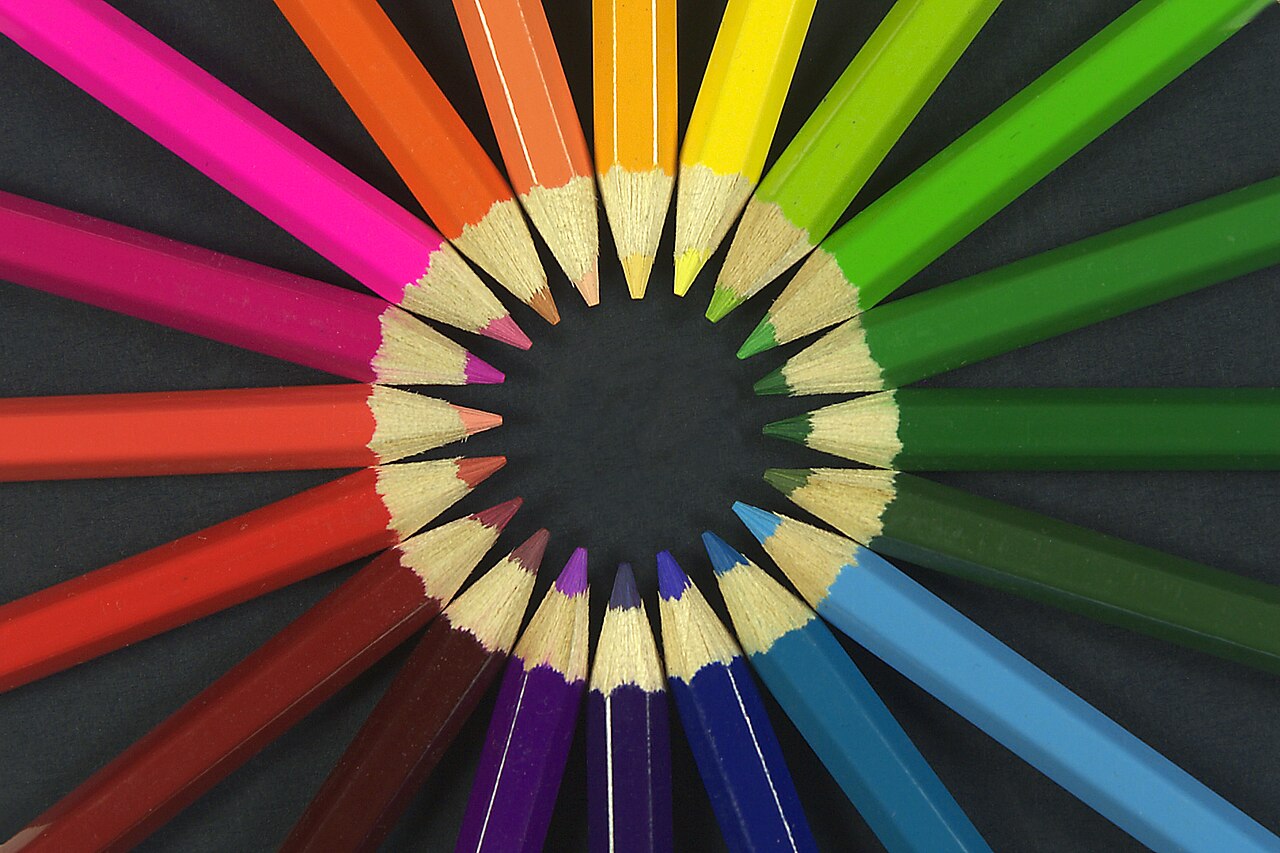
Image by MichaelMaggs, licensed under Creative Commons Attribution-Share Alike 3.0

Do more with AI

Introduction

Color is everywhere around us! 🌈It’s what makes the world bright and beautiful. Colors come from light, and our eyes help us see them. When light shines on an object, it reflects different colors. For example, a red apple looks red because it reflects red light and absorbs all other colors. Did you know our eyes contain special cells called cones? These cells help us recognize color! The study of color is super important because it helps artists, scientists, and designers understand how to use colors in exciting ways. So, let’s dive into the wonderful world of color!

Images of Color

The upper disk and the lower disk have exactly the same objective color, and are in identical gray surroundings; based on context differences, humans perceive the squares as having different reflectances, and may interpret the colors as different color categories; see checker shadow illusion

The upper disk and the lower disk have exactly the same objective color, and are in identical gray surroundings; based on context differences, humans perceive the squares as having different reflectances, and may interpret the colors as different color categories; see checker shadow illusion

Normalized typical human cone cell responses (S, M, and L types) to monochromatic spectral stimuliImage by Vanessaezekowitz at en.wikipedia / Later version uploaded by BenRG ., licensed under Creative Commons Attribution 3.0

Normalized typical human cone cell responses (S, M, and L types) to monochromatic spectral stimuli

The visual dorsal stream (green) and ventral stream (purple) are shown; the ventral stream is responsible for color perceptionImage by Selket, licensed under Creative Commons Attribution-Share Alike 3.0

The visual dorsal stream (green) and ventral stream (purple) are shown; the ventral stream is responsible for color perception

The CIE 1931 color space xy chromaticity diagram with the visual locus plotted using the CIE (2006) physiologically relevant LMS fundamental color matching functions transformed into the CIE 1931 xy color space and converted into Adobe RGB; the triangle shows the gamut of Adobe RGB, the Planckian locus is shown with color temperatures labeled in Kelvins, the outer curved boundary is the spectral (or monochromatic) locus, with wavelengths shown in nanometers, the colors in this file are being specified using Adobe RGB, areas outside the triangle cannot be accurately rendered since they are outside the gamut of Adobe RGB, therefore they have been interpreted, the colors depicted depend on the gamut and color accuracy of your displayImage by Nick Spiker, licensed under Creative Commons Attribution-Share Alike 4.0

The CIE 1931 color space xy chromaticity diagram with the visual locus plotted using the CIE (2006) physiologically relevant LMS fundamental color matching functions transformed into the CIE 1931 xy color space and converted into Adobe RGB; the triangle shows the gamut of Adobe RGB, the Planckian locus is shown with color temperatures labeled in Kelvins, the outer curved boundary is the spectral (or monochromatic) locus, with wavelengths shown in nanometers, the colors in this file are being specified using Adobe RGB, areas outside the triangle cannot be accurately rendered since they are outside the gamut of Adobe RGB, therefore they have been interpreted, the colors depicted depend on the gamut and color accuracy of your display
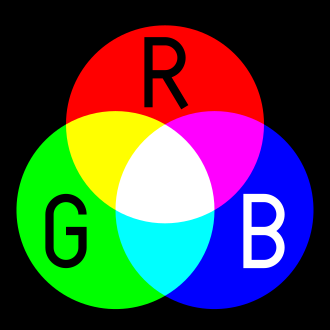
Additive color mixing: combining red and green yields yellow; combining all three primary colors together yields white
Additive color mixing: combining red and green yields yellow; combining all three primary colors together yields white

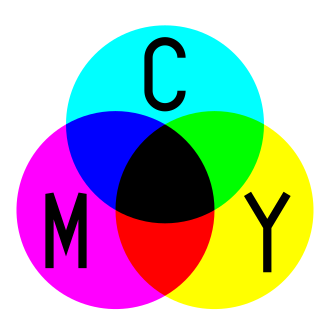
Subtractive color mixing: combining yellow and magenta yields red; combining all three primary colors together yields black

Subtractive color mixing: combining yellow and magenta yields red; combining all three primary colors together yields black

The bright colors of Peacock feathers are caused by structural coloration

The bright colors of Peacock feathers are caused by structural coloration

Reflectance spectrum of a color-optimal surface. There is no known material with these properties, they are, for what we know, only theoretical.[45]

Reflectance spectrum of a color-optimal surface. There is no known material with these properties, they are, for what we know, only theoretical.[45]

MacAdam limits for illuminant CIE F4 in CIE xyY color spaceImage by Adoniscik, licensed under Creative Commons Attribution 3.0

MacAdam limits for illuminant CIE F4 in CIE xyY color space

The upper disk and the lower disk have exactly the same objective color, and are in identical gray surroundings; based on context differences, humans perceive the squares as having different reflectances, and may interpret the colors as different color categories; see checker shadow illusion

The upper disk and the lower disk have exactly the same objective color, and are in identical gray surroundings; based on context differences, humans perceive the squares as having different reflectances, and may interpret the colors as different color categories; see checker shadow illusion

Normalized typical human cone cell responses (S, M, and L types) to monochromatic spectral stimuliImage by Vanessaezekowitz at en.wikipedia / Later version uploaded by BenRG ., licensed under Creative Commons Attribution 3.0

Normalized typical human cone cell responses (S, M, and L types) to monochromatic spectral stimuli

The visual dorsal stream (green) and ventral stream (purple) are shown; the ventral stream is responsible for color perceptionImage by Selket, licensed under Creative Commons Attribution-Share Alike 3.0

The visual dorsal stream (green) and ventral stream (purple) are shown; the ventral stream is responsible for color perception

The CIE 1931 color space xy chromaticity diagram with the visual locus plotted using the CIE (2006) physiologically relevant LMS fundamental color matching functions transformed into the CIE 1931 xy color space and converted into Adobe RGB; the triangle shows the gamut of Adobe RGB, the Planckian locus is shown with color temperatures labeled in Kelvins, the outer curved boundary is the spectral (or monochromatic) locus, with wavelengths shown in nanometers, the colors in this file are being specified using Adobe RGB, areas outside the triangle cannot be accurately rendered since they are outside the gamut of Adobe RGB, therefore they have been interpreted, the colors depicted depend on the gamut and color accuracy of your displayImage by Nick Spiker, licensed under Creative Commons Attribution-Share Alike 4.0

The CIE 1931 color space xy chromaticity diagram with the visual locus plotted using the CIE (2006) physiologically relevant LMS fundamental color matching functions transformed into the CIE 1931 xy color space and converted into Adobe RGB; the triangle shows the gamut of Adobe RGB, the Planckian locus is shown with color temperatures labeled in Kelvins, the outer curved boundary is the spectral (or monochromatic) locus, with wavelengths shown in nanometers, the colors in this file are being specified using Adobe RGB, areas outside the triangle cannot be accurately rendered since they are outside the gamut of Adobe RGB, therefore they have been interpreted, the colors depicted depend on the gamut and color accuracy of your display

Additive color mixing: combining red and green yields yellow; combining all three primary colors together yields white

Additive color mixing: combining red and green yields yellow; combining all three primary colors together yields white

Subtractive color mixing: combining yellow and magenta yields red; combining all three primary colors together yields black

Subtractive color mixing: combining yellow and magenta yields red; combining all three primary colors together yields black

The bright colors of Peacock feathers are caused by structural coloration

The bright colors of Peacock feathers are caused by structural coloration

Reflectance spectrum of a color-optimal surface. There is no known material with these properties, they are, for what we know, only theoretical.[45]

Reflectance spectrum of a color-optimal surface. There is no known material with these properties, they are, for what we know, only theoretical.[45]

MacAdam limits for illuminant CIE F4 in CIE xyY color spaceImage by Adoniscik, licensed under Creative Commons Attribution 3.0

MacAdam limits for illuminant CIE F4 in CIE xyY color space

Color In Nature

Nature is filled with amazing colors! 🌼🌳 Flowers bloom in vibrant colors, like the violet petals of a pansy or the bright orange of a marigold. Animals also have beautiful colors to help them survive; for example, a parrot's bright feathers can sing “Look at me!” while helping it hide from predators. 🦜The changing colors of leaves in autumn make nature even more stunning! 🍂Different seasons bring various colors, from blooming tulips in spring to snow-covered landscapes in winter. Exploring the colorful world around us can spark curiosity and appreciation for nature’s beauty.

Psychology Of Color

Did you know colors can make us feel different emotions? 😊Colors can influence our moods! For example, blue can make us feel calm and relaxed, while red can make us feel excited or even angry! 🥵This is called the psychology of color. Advertisers use this idea to choose the right colors for their logos and ads. For instance, yellow is often used for fast food because it grabs attention! 🍔Understanding color psychology can help us communicate better through art and design, leading to fun and memorable experiences! So, next time you see a color, think about how it makes you feel!

Color In Art And Design

Color is super important in art and design! 🎉Artists choose colors to express feelings and tell stories. For example, Vincent van Gogh used bright yellows and blues in his famous painting "Starry Night." 🎨 Designers use color to create logos, websites, and buildings that grab our attention. 🎡For instance, the red of Coca-Cola's logo is energetic and lively! Choosing the right colors can make artwork more powerful and meaningful. When you create your own art or design, remember that color can help convey emotions and connect with viewers! So, get creative with colors! ✨

Color Wheel And Color Theory

The color wheel is a fantastic tool that shows how colors are related! 🔵⚪️🔴 It's like a circle with all the colors arranged in a special way. When artists use the color wheel, they can create color harmony! 🎶Colors next to each other are called analogous colors, like yellow and green. Complementary colors, like blue and orange, are opposite each other and create a fun contrast! Knowing about these combinations helps artists choose the right colors to make their artwork extra special. 🌟So, if you’re painting, take a peek at the color wheel for inspiration!

The Role Of Color In Branding

Color plays a major role in branding! 🌟Companies carefully choose colors to represent their brand's personality. For example, blue is often used by banks to convey trust, while green is seen in eco-friendly brands to show care for the planet. 🌍The golden arches of McDonald's are instantly recognizable because of their bright yellow color, making people think of happiness and fun! 🎈Understanding the role of color in branding helps us remember products and connect with them better. Next time you see your favorite brand, think about the colors they use and why they chose them!

Primary Colors And Color Models

Primary colors are the building blocks of all other colors! 🎨The three main primary colors are red, blue, and yellow. When you mix them together, you create secondary colors! For example, mixing red and blue gives you purple, while red and yellow make orange. There are also special color models, like RGB (Red, Green, Blue) used in screens, and CMY (Cyan, Magenta, Yellow) for printing. These models help artists and designers know how to create beautiful images and lively graphics. So, the next time you paint, remember how important those primary colors are! ✨

The Science Of Color Perception

Color perception is how we see and understand colors! 👀When light hits an object, it gets split into different colors. This happens because of something called the electromagnetic spectrum. Light waves travel in different lengths, and some waves are visible to our eyes. 🌞The shorter waves create colors like blue and violet, while longer waves create colors like red and orange. Our brains work with our eyes to make sense of these colors. This magical process lets us enjoy bright skies, flowers, and even rainbow patterns on soap bubbles! 🌈

Cultural Interpretations Of Color

Colors can mean different things in different cultures! 🌍For example, in some countries, white symbolizes purity and is worn at weddings, while in others, it might represent mourning. 💔In many Asian cultures, red is a lucky color often used during celebrations, like the Chinese New Year. 🎉Colors can also represent emotions or beliefs, such as green for nature and growth in many places. By learning about these interpretations, we can appreciate how unique different cultures are and how color shapes our world in various ways! 🌈

Technology And Color Representation

Technology helps us see and create colors in exciting ways! 💻Devices like computers and smartphones use pixels made of tiny dots that light up in different colors. The RGB model combines red, green, and blue light to create millions of colors on screens. 🎮Printers use the CMYK model (Cyan, Magenta, Yellow, Black) to produce colorful images on paper. 🎨In video games, color helps bring characters and worlds to life! Understanding how technology represents color allows us to enjoy amazing graphics and visuals in our favorite games and movies. So, let’s appreciate the colors that bring our screens to life!

Color Blindness And Visual Impairment

Color blindness is when people have trouble seeing some colors. 🌈About 1 in 12 boys and 1 in 200 girls experience this condition! This happens because certain cells in their eyes don’t work like everyone else's. Some people might confuse red and green, while others might struggle with blue and yellow. 📉Even with color blindness, many can still see other colors clearly! It’s important to understand that everyone experiences color differently. By being kind and patient, we can make sure everyone enjoys the beauty of color in their unique way! ❤️

Color Quiz

Q1
Question 1 of 10

Learn more about Color

Ready to create?

Make

To create a safe space for kid creators worldwide!

Create

Vibe Coding

Kids GPT

All Tools

Kibu

Resources

Worksheets

SafeTube

Blog

FAQ

Account

Pricing

Log-in

Sign-up

Data Deletion

Company

About

Community Guidelines

Privacy Policy

Terms of Service

2025, URSOR LIMITED. All rights reserved. DIY is in no way affiliated with Minecraft™, Mojang, Microsoft, Roblox™ or YouTube. LEGO® is a trademark of the LEGO® Group which does not sponsor, endorse or authorize this website or event. Made with love in San Francisco.