All Articles

Carl Sagan

Carl Sagan Facts For Kids

Carl Sagan was an influential American astronomer, planetary scientist, and science communicator known for popularizing science through his engaging television series 'Cosmos' and his advocacy for the exploration of space and the search for extraterrestrial life.

🎨 Reading age for 6-8
Background blob
Carl Sagan
Carl Sagan
Facts for Kids!

Do more with AI

Introduction

Carl Sagan was a famous American scientist and a wonderful storyteller! 🌌He was born on November 9, 1934, in Brooklyn, New York. Carl became super curious about space, planets, and stars when he was just a kid. He worked hard and learned so much that he taught the whole world about these amazing things! 📚His books, television shows, and even the popular series called “Cosmos” made science fun and exciting for everyone! He loved to ask big questions like, “Are we alone in the universe?” and wanted everyone to explore the wonders of space! 🌟

Images of Carl Sagan

Sagan (age 16) in the 1951 Rahway High School yearbook.

Sagan (age 16) in the 1951 Rahway High School yearbook.

Sagan in the University of Chicago's 1954 yearbook

Sagan in the University of Chicago's 1954 yearbook

Sagan and the Viking spacecraft

Sagan and the Viking spacecraft

Sagan in Cosmos (1980)Image by PBS, licensed under Public domain in the United States

Sagan in Cosmos (1980)

Carl Sagan popularized the Cosmic Calendar as a method to visualize the chronology of the universe, scaling its current age of 13.8 billion years to a single year to help intuit it for pedagogical purposes.Image by User:Efbrazil, licensed under Creative Commons Attribution-Share Alike 3.0

Carl Sagan popularized the Cosmic Calendar as a method to visualize the chronology of the universe, scaling its current age of 13.8 billion years to a single year to help intuit it for pedagogical purposes.

The Planetary Society members at the organization's founding. Sagan is seated on the right.

The Planetary Society members at the organization's founding. Sagan is seated on the right.

Pale Blue Dot: Earth is a bright pixel when photographed from Voyager 1, 6 billion kilometres (3.7 billion miles) away.[82] Sagan encouraged NASA to generate this image. from Pale Blue Dot (1994)[83] On it, everyone you ever heard of... The aggregate of all our joys and sufferings, thousands of confident religions, ideologies and economic doctrines, every hunter and forager, every hero and coward, every creator and destroyer of civilizations, every king and peasant, every young couple in love, every hopeful child, every mother and father, every inventor and explorer, every teacher of morals, every corrupt politician, every superstar, every supreme leader, every saint and sinner in the history of our species, lived there on a mote of dust, suspended in a sunbeam. ... Think of the rivers of blood spilled by all those generals and emperors so that in glory and triumph they could become the momentary masters of a fraction of a dot. Carl Sagan, Cornell lecture in 1994

Pale Blue Dot: Earth is a bright pixel when photographed from Voyager 1, 6 billion kilometres (3.7 billion miles) away.[82] Sagan encouraged NASA to generate this image. from Pale Blue Dot (1994)[83] On it, everyone you ever heard of... The aggregate of all our joys and sufferings, thousands of confident religions, ideologies and economic doctrines, every hunter and forager, every hero and coward, every creator and destroyer of civilizations, every king and peasant, every young couple in love, every hopeful child, every mother and father, every inventor and explorer, every teacher of morals, every corrupt politician, every superstar, every supreme leader, every saint and sinner in the history of our species, lived there on a mote of dust, suspended in a sunbeam. ... Think of the rivers of blood spilled by all those generals and emperors so that in glory and triumph they could become the momentary masters of a fraction of a dot. Carl Sagan, Cornell lecture in 1994

Sagan admitted that he had overestimated the danger posed by the 1991 Kuwaiti oil fires.
Sagan admitted that he had overestimated the danger posed by the 1991 Kuwaiti oil fires.

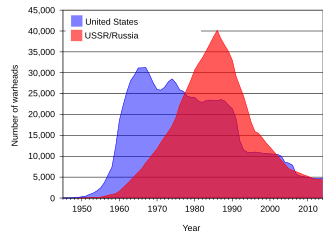
The United States and Soviet Union/Russia nuclear stockpiles, in total number of nuclear bombs/warheads in existence throughout the Cold War and post-Cold War era

The United States and Soviet Union/Russia nuclear stockpiles, in total number of nuclear bombs/warheads in existence throughout the Cold War and post-Cold War era

Sagan (age 16) in the 1951 Rahway High School yearbook.

Sagan (age 16) in the 1951 Rahway High School yearbook.

Sagan in the University of Chicago's 1954 yearbook

Sagan in the University of Chicago's 1954 yearbook

Sagan and the Viking spacecraft

Sagan and the Viking spacecraft

Sagan in Cosmos (1980)Image by PBS, licensed under Public domain in the United States

Sagan in Cosmos (1980)

Carl Sagan popularized the Cosmic Calendar as a method to visualize the chronology of the universe, scaling its current age of 13.8 billion years to a single year to help intuit it for pedagogical purposes.Image by User:Efbrazil, licensed under Creative Commons Attribution-Share Alike 3.0

Carl Sagan popularized the Cosmic Calendar as a method to visualize the chronology of the universe, scaling its current age of 13.8 billion years to a single year to help intuit it for pedagogical purposes.

The Planetary Society members at the organization's founding. Sagan is seated on the right.

The Planetary Society members at the organization's founding. Sagan is seated on the right.

Pale Blue Dot: Earth is a bright pixel when photographed from Voyager 1, 6 billion kilometres (3.7 billion miles) away.[82] Sagan encouraged NASA to generate this image. from Pale Blue Dot (1994)[83] On it, everyone you ever heard of... The aggregate of all our joys and sufferings, thousands of confident religions, ideologies and economic doctrines, every hunter and forager, every hero and coward, every creator and destroyer of civilizations, every king and peasant, every young couple in love, every hopeful child, every mother and father, every inventor and explorer, every teacher of morals, every corrupt politician, every superstar, every supreme leader, every saint and sinner in the history of our species, lived there on a mote of dust, suspended in a sunbeam. ... Think of the rivers of blood spilled by all those generals and emperors so that in glory and triumph they could become the momentary masters of a fraction of a dot. Carl Sagan, Cornell lecture in 1994

Pale Blue Dot: Earth is a bright pixel when photographed from Voyager 1, 6 billion kilometres (3.7 billion miles) away.[82] Sagan encouraged NASA to generate this image. from Pale Blue Dot (1994)[83] On it, everyone you ever heard of... The aggregate of all our joys and sufferings, thousands of confident religions, ideologies and economic doctrines, every hunter and forager, every hero and coward, every creator and destroyer of civilizations, every king and peasant, every young couple in love, every hopeful child, every mother and father, every inventor and explorer, every teacher of morals, every corrupt politician, every superstar, every supreme leader, every saint and sinner in the history of our species, lived there on a mote of dust, suspended in a sunbeam. ... Think of the rivers of blood spilled by all those generals and emperors so that in glory and triumph they could become the momentary masters of a fraction of a dot. Carl Sagan, Cornell lecture in 1994

Sagan admitted that he had overestimated the danger posed by the 1991 Kuwaiti oil fires.

Sagan admitted that he had overestimated the danger posed by the 1991 Kuwaiti oil fires.

The United States and Soviet Union/Russia nuclear stockpiles, in total number of nuclear bombs/warheads in existence throughout the Cold War and post-Cold War era

The United States and Soviet Union/Russia nuclear stockpiles, in total number of nuclear bombs/warheads in existence throughout the Cold War and post-Cold War era

Awards And Honors

Carl Sagan was recognized for his amazing contributions to science and communication! 🎖️ He received the National Medal of Science in 1977, which is a big honor for scientists in the United States. 🥇He was also awarded the John F. Kennedy Astronautics Award! Carl wrote over 20 books, winning many accolades, including the unique honor of having his book “Cosmos” made into a series that changed how people viewed science. He inspired others to look at the stars and wonder about life beyond Earth. 🌌His efforts made him a beloved figure in the world of science!

Legacy And Influence

Carl Sagan left a wonderful legacy that continues to inspire! 🌠He sparked interest in science and space exploration, encouraging generations of scientists, astronauts, and curious minds. Carl's work influenced the way people think about Earth and the universe. His books, like “Pale Blue Dot,” remind us how small our planet is in space. 🌍✨ He often encouraged people to care for our home and respect life. Even today, scientists, writers, and educators are still inspired by Carl's ideas, aiming to make science accessible and exciting for everyone. He will always be remembered!

Philosophy And Advocacy

Carl Sagan wasn’t just a scientist; he was a thinker with strong beliefs! 💭He championed the importance of scientific thinking and skepticism. He urged people to ask questions and seek evidence! He thought everyone should learn about science because it helps us understand the world. His famous quote, "Extraordinary claims require extraordinary evidence," teaches us to think critically. He also advocated for protecting our planet and preventing nuclear war. 🌍⚛️ Carl believed that understanding the universe can unite us, encouraging kindness and cooperation among all people on Earth!

Early Life And Education

Carl Sagan had a fascinating childhood! As a young boy, he spent lots of time reading about dinosaurs and visiting the planetarium in Brooklyn. 🦖✨ He used to ask his mother where the stars came from. Carl went to the University of Chicago and earned a Ph.D. in astronomy! 🎓He studied a lot about planets in our solar system and became very smart. Carl wanted to share his knowledge, so he became a professor and taught students about the universe! His early life showed how curiosity and hard work can lead to amazing discoveries. 🚀

Scientific Contributions

Carl Sagan contributed hugely to our understanding of space! 🌠He studied planets like Mars and Venus and helped scientists learn about their atmospheres and conditions. He also worked on the Mariner, Viking, and Voyager missions that sent spacecraft to explore other planets! 🚀His research also helped us understand what makes Earth special in the vast universe. 🌍Carl was one of the first scientists to talk about how life might exist on other planets. He even suggested sending messages into space! His work inspired many young scientists, opening the doors of the universe for us all!

Cosmos: A Personal Journey

“Cosmos: A Personal Journey” is a TV series that Carl Sagan created in 1980! 📺It was so popular that millions of people watched it! In the series, Carl shared his love for space, explaining the universe, and exploring science in a fun way. 🪐He traveled through time and space using amazing visuals and storytelling. People learned about everything from tiny cells to massive galaxies! 🌌The show made science exciting and showed how everything is connected. Carl wanted everyone to appreciate the beauty and mysteries of the cosmos, and he had a fantastic way of doing it!

Later Works And Publications

In the years after “Cosmos,” Carl Sagan wrote even more captivating books! 📚Some of his famous works include “Pale Blue Dot” and “The Demon-Haunted World.” In “Pale Blue Dot,” he reflects on Earth as a tiny dot in the vast universe, reminding us to take care of it. 🌌His ideas about skepticism and critical thinking in “The Demon-Haunted World” encourage young people to question and explore. Carl continued researching and giving lectures until his passing in 1996. Even after he left us, his writings continue to inspire curiosity about science and the cosmos! ⭐️

Public Perception Of Science

Carl Sagan played a major role in making science popular for everyone! 🌟Before him, many people found science boring. However, he used his charisma and storytelling skills to show how exciting it could be! His TV shows and books made space exploration sound like an adventure! 🌌He encouraged people to think scientifically about things in their lives. Carl wanted science to be for everyone, even those who weren’t scientists! Thanks to him, children and adults became curious about the universe, helping science become a part of everyday conversations and imaginations!

Cultural Impact And Media Appearances

Carl Sagan’s influence reached beyond science! 🌟He appeared on popular shows, like "The Tonight Show," and worked with famous people, bringing science to mainstream culture. His unique style made science approachable! 🌌He even inspired a new series called "Cosmos: A Spacetime Odyssey," hosted by Neil deGrasse Tyson, which celebrated his legacy. His ideas also appeared in music, cartoons, and films. 🛸Carl Sagan showed the world that science can be both exciting and important, making him a beloved figure not just for scientists, but for everyone who looks to the stars! 🌠

Seti And The Search For Extraterrestrial Life

SETI stands for the Search for Extraterrestrial Intelligence, and Carl Sagan was very passionate about it! 🛸He believed that aliens might exist in the universe, just like humans do on Earth. 🌍In the 1970s, he worked on projects to listen for signals from aliens. 📡Carl thought if we could find them, it would change everything we know! He even helped create a message to send into space, hoping someone “out there” would receive it! The search for extraterrestrial life is still important, encouraging scientists to think beyond our planet and seek answers in the cosmos. 🌠

Carl Sagan Quiz

Q1
Question 1 of 10

Learn more about Carl Sagan

Ready to create?

Make

To create a safe space for kid creators worldwide!

Create

Vibe Coding

Kids GPT

All Tools

Kibu

Resources

Worksheets

SafeTube

Blog

FAQ

Account

Pricing

Log-in

Sign-up

Data Deletion

Company

About

Community Guidelines

Privacy Policy

Terms of Service

2025, URSOR LIMITED. All rights reserved. DIY is in no way affiliated with Minecraft™, Mojang, Microsoft, Roblox™ or YouTube. LEGO® is a trademark of the LEGO® Group which does not sponsor, endorse or authorize this website or event. Made with love in San Francisco.