Beringia is the historic land and maritime area that connected Asia and North America, featuring a unique ecosystem during the last Ice Age.

Set reading age
View for Kids
Easy to read and understand
View for Students
Clear, detailed explanations
View for Scholars
Deep dives and big ideas
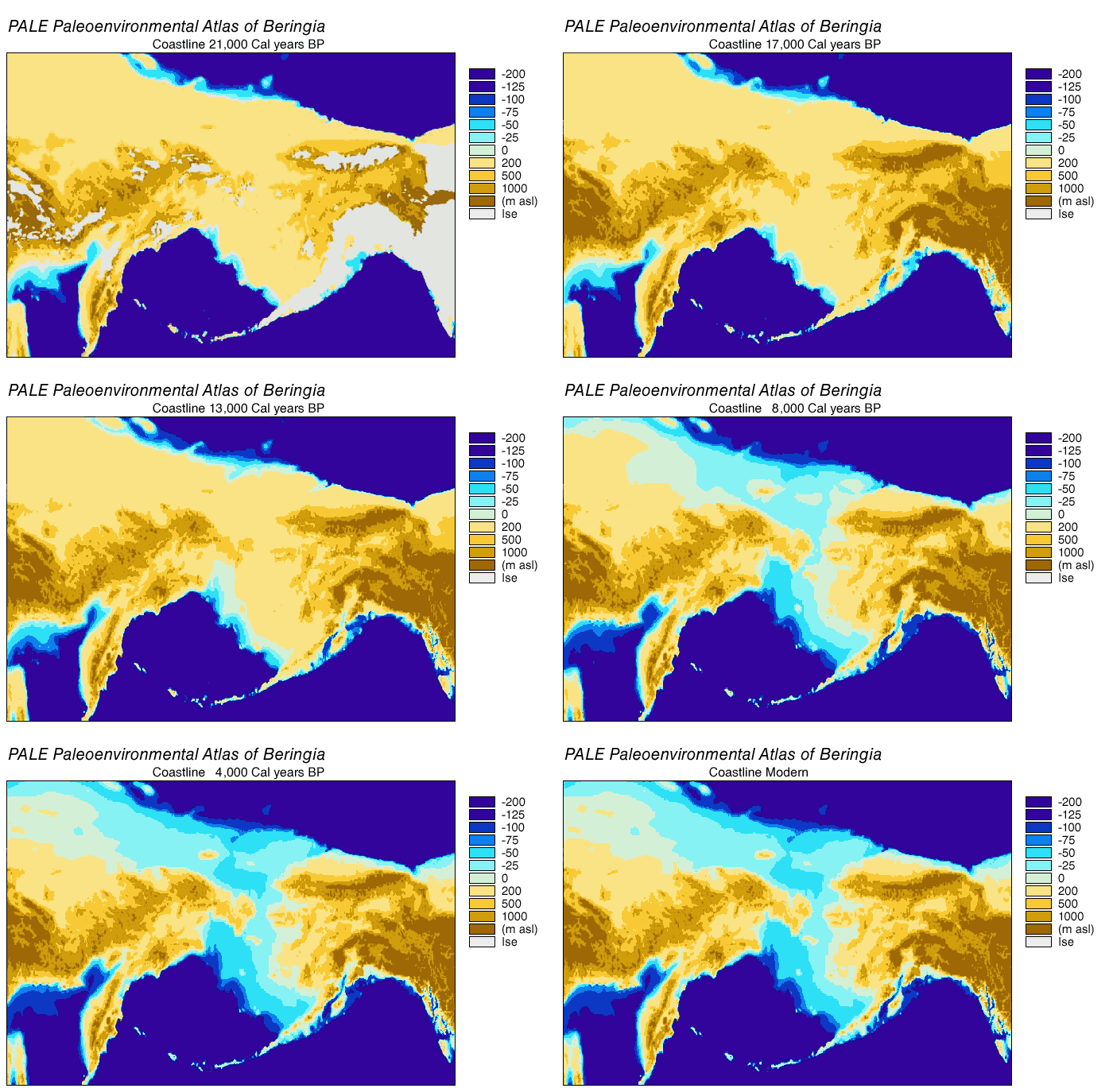
Beringia is a fascinating land area that used to connect Asia and North America! 🌎✨ It is located where the Bering Sea is now, stretching from the Lena River in Russia to the Mackenzie River in Canada. This ancient land bridge was around 1,500 miles wide, and during the last Ice Age, it was dry land instead of being underwater like it is today. Beringia allowed many animals and people to travel between continents, making it a very important place in history! 🐻🌿
Beringia has inspired many stories and movies! 📺Some films featuring Ice Age adventures showcase the giant animals, like mammoths and sabre-toothed cats, that once roamed the land. 🐘Many documentaries teach children about Beringia's role in human migration and how it shaped Native American cultures. Beringia is like a real-life time machine that takes us back to an exciting era of exploration and discovery, capturing everyone's imagination! 🦖📚
Beringia was full of amazing plants and animals! 🌿Some animals, like the mammoth, were massive and had long tusks. Others, like the woolly rhinoceros, were furry and very strong! In addition to these giants, there were smaller animals like foxes, rabbits, and birds. 🌼The plant life included grasses, flowers, and shrubs that provided food. This rich ecosystem was like a giant buffet for the animals, helping them survive cold climates and possibly drawing humans to the area for hunting and gathering. 🍃
Researchers think that humans first came to Beringia around 20,000 years ago! 🧑🤝🧑 Scientists believe these early human explorers crossed the land bridge during the Ice Age. They were called Paleo-Indians and they traveled in small groups, following animals like mammoths for food. They used tools made of stone to hunt and gather, making them very resourceful! Some theories suggest that they stayed in Beringia for thousands of years, adapting to the cold and exploring new areas as the ice melted. 🏹
Beringia was formed millions of years ago during the Ice Age. ❄️ This was a time when large areas of the Earth were covered in ice. The cold weather caused sea levels to drop, revealing the land that connects Russia and Canada. 🌊Scientists believe that Beringia was important for animals like mammoths and woolly rhinoceroses, as it was a habitat filled with grasses and plants. One of the coolest facts is that Beringia might have been home to a special type of ancient dog called the Arcthound! 🐶
The climate in Beringia changed a lot over time! 🌡️ During the Ice Age, it was very cold, with ice and snow covering much of the land. But as the Earth warmed, the ice melted, and the landscape changed dramatically. 🌈This created rivers, lakes, and forests, changing the homes of plants and animals. Some species adapted to the new environments, while others could not and disappeared. These changes were essential to the development of ecosystems in Beringia, proving that nature is always evolving! 🌍
Archaeologists, who are like detectives of the past, have found many interesting things in Beringia! 🔍One amazing find is the remains of prehistoric animals, like the mammoth and bison, which tell us about what lived here long ago. They have discovered ancient tools made from stone, along with cave paintings that show us how early humans lived. 🖌️ Some of the most significant sites are in Alaska, where researchers found traces of these ancient peoples, showing us how they hunted and lived. Every discovery helps us understand more about Beringia! 🗿
Beringia is very important to Native peoples, as it holds a special place in their histories and cultures! 🎨Many Alaska Native tribes believe that their ancestors traveled over Beringia thousands of years ago. They have stories, songs, and legends celebrating their connections to this ancient land. 🪶Some Native groups also see Beringia as a source of identity and pride, connecting them to their heritage and the wildlife that shares their home. It's crucial to keep these stories alive to honor the rich culture of the people who have lived in this area. 📜
Today, Beringia is important for conservation! 🌱Scientists, Native groups, and governments work together to protect this unique area. They are focused on preserving the wildlife and habitats that still exist and raising awareness about climate change's impact. 🦅Many visit Beringia National Park in Alaska to appreciate nature and learn about its history. Conservation efforts include teaching people about ancient cultures and the history of both animals and people, ensuring that Beringia remains a significant part of our planet's story. 🌳🌍
Beringia is not alone; there are other famous land bridges! 🌉For example, the Isthmus of Panama connects North and South America, allowing animals and plants to travel between them. Just like Beringia, these land bridges were created during different climate periods. However, Beringia is unique because it connects two continents that had very different ecosystems. 🦙By studying these bridges, we learn about how animals and humans spread across the world. Each land bridge plays a special role in the story of life on Earth! 🐾


DIY is a creative community where kids draw, build, explore ideas, and share.
No credit card required