All Articles

Alabaster

Alabaster Facts For Kids

Alabaster is a beautiful soft rock made mainly of gypsum, prized for its carvability and used in art and as plaster powder.
๐ŸŽจ Reading age for 6-8
Background blob
Alabaster
Alabaster
Facts for Kids!
Image by 83d40m, licensed under Creative Commons Attribution-Share Alike 3.0

Do more with AI

Introduction

Alabaster is a beautiful mineral that is often soft and easy to carve. It comes in many colors, like white, cream, and even pink! ๐Ÿต๏ธ People use alabaster to make statues, decorations, and even buildings. This special rock is made mostly of a mineral called gypsum. Alabaster can be found in several countries around the world, including Italy, the United States, and Mexico! ๐ŸŒŽIt has been used for thousands of years, especially in ancient Egypt for tombs. Letโ€™s dive deeper into the amazing world of alabaster and learn about its properties and uses! ๐ŸŽ‰

Images of Alabaster

Alabaster artefact: A composite bust of the Emperor Septimius Severus; the head is marble and the bust is alabaster.Image by Unknown artist Unknown artist, licensed under Creative Commons Attribution 2.0

Alabaster artefact: A composite bust of the Emperor Septimius Severus; the head is marble and the bust is alabaster.

Alabaster windows in the Church of Santa Maria la Mayor of Morella, Spain (built 13thโ€“16th centuries)Image by Etan J. Tal, licensed under Creative Commons Attribution-Share Alike 3.0

Alabaster windows in the Church of Santa Maria la Mayor of Morella, Spain (built 13thโ€“16th centuries)

Alabaster workshop in Volterra, ItalyImage by Zyance, licensed under Creative Commons Attribution-Share Alike 2.5

Alabaster workshop in Volterra, Italy

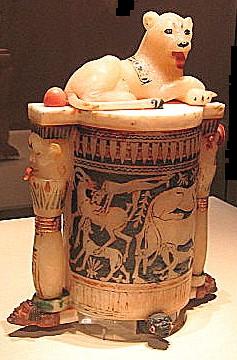
A calcite alabaster perfume jar from the tomb of Tutankhamun, d. 1323 BCImage by Frank Rytell, licensed under Creative Commons Attribution 2.0

A calcite alabaster perfume jar from the tomb of Tutankhamun, d. 1323 BC

Calcite dish from the Ancient Egyptian tomb of "U", Semerkhet

Calcite dish from the Ancient Egyptian tomb of "U", Semerkhet

Wounded lion, detail from the Lion Hunt of Ashurbanipal, 7th century BC, British MuseumImage by Carole Raddato from FRANKFURT, Germany, licensed under Creative Commons Attribution-Share Alike 2.0

Wounded lion, detail from the Lion Hunt of Ashurbanipal, 7th century BC, British Museum

Uplighter lamp, white and brown Italian alabaster, base diameter 13 cm (20th century)

Uplighter lamp, white and brown Italian alabaster, base diameter 13 cm (20th century)

Resurrection of Christ, typical Nottingham alabaster panel from an altarpiece set, 1450โ€“1490, showing remnants of its painted decoration

Resurrection of Christ, typical Nottingham alabaster panel from an altarpiece set, 1450โ€“1490, showing remnants of its painted decoration

Attributed to Willem van den Broecke, Rijksmuseum

Attributed to Willem van den Broecke, Rijksmuseum

Alabaster artefact: A composite bust of the Emperor Septimius Severus; the head is marble and the bust is alabaster.Image by Unknown artist Unknown artist, licensed under Creative Commons Attribution 2.0

Alabaster artefact: A composite bust of the Emperor Septimius Severus; the head is marble and the bust is alabaster.

Alabaster windows in the Church of Santa Maria la Mayor of Morella, Spain (built 13thโ€“16th centuries)Image by Etan J. Tal, licensed under Creative Commons Attribution-Share Alike 3.0

Alabaster windows in the Church of Santa Maria la Mayor of Morella, Spain (built 13thโ€“16th centuries)

Alabaster workshop in Volterra, ItalyImage by Zyance, licensed under Creative Commons Attribution-Share Alike 2.5

Alabaster workshop in Volterra, Italy

A calcite alabaster perfume jar from the tomb of Tutankhamun, d. 1323 BCImage by Frank Rytell, licensed under Creative Commons Attribution 2.0

A calcite alabaster perfume jar from the tomb of Tutankhamun, d. 1323 BC

Calcite dish from the Ancient Egyptian tomb of "U", SemerkhetImage by Osama Shukir Muhammed Amin FRCP(Glasg), licensed under Creative Commons Attribution-Share Alike 4.0

Calcite dish from the Ancient Egyptian tomb of "U", Semerkhet

Wounded lion, detail from the Lion Hunt of Ashurbanipal, 7th century BC, British MuseumImage by Carole Raddato from FRANKFURT, Germany, licensed under Creative Commons Attribution-Share Alike 2.0

Wounded lion, detail from the Lion Hunt of Ashurbanipal, 7th century BC, British Museum

Uplighter lamp, white and brown Italian alabaster, base diameter 13 cm (20th century)

Uplighter lamp, white and brown Italian alabaster, base diameter 13 cm (20th century)

Resurrection of Christ, typical Nottingham alabaster panel from an altarpiece set, 1450โ€“1490, showing remnants of its painted decoration

Resurrection of Christ, typical Nottingham alabaster panel from an altarpiece set, 1450โ€“1490, showing remnants of its painted decoration

Attributed to Willem van den Broecke, Rijksmuseum

Attributed to Willem van den Broecke, Rijksmuseum

Types Of Alabaster

There are mainly two types of alabaster: gypsum alabaster and calcite alabaster. Gypsum alabaster is the most common type, and it is soft and easy to shape. It comes in various colors, making it a favorite for artists! ๐ŸŒˆOn the other hand, calcite alabaster is harder and usually more expensive. It has a different crystal structure. These two types can be found in places like Italy and the United States. By knowing these types, artists can choose which alabaster works best for their creations! ๐Ÿ› ๏ธ

Alabaster Vs. Gypsum

Alabaster and gypsum are closely related, but they are not the same! ๐Ÿ“šBoth are made from calcium sulfate, but their forms differ. Alabaster is a type of gypsum that has a fine texture and can be carved easily. Gypsum usually appears as a powder and is used in drywall for building houses! ๐Ÿ While alabaster is often used for decorative items and sculptures, gypsum is used in construction. So, if you see a beautiful vase made from alabaster, remember it's a soft rock! Knowing the difference helps us appreciate both even more! ๐ŸŽ‰

Formation And Occurrence

Alabaster is formed from a mineral called gypsum, which usually forms in warm, shallow waters where evaporation takes place. ๐ŸŒŠOver millions of years, calcium sulfate crystals grow, creating large chunks of alabaster. You can find it in places like Egypt, Italy, and England. In some regions, like the famous Nottinghamshire in England, great amounts of alabaster are found underground! Miners extract it from the earth and send it to artists and builders. ๐Ÿž๏ธ The formation of alabaster takes a very long time, making it a special treasure from nature! ๐ŸŒ

Historical Uses Of Alabaster

People have used alabaster for thousands of years, particularly in ancient Egypt. ๐ŸŽญThey carved beautiful sarcophagi (coffins) from alabaster for pharaohs and their families! Alabaster was also used in ancient Greece and Rome for making statues and lamps. Some famous works from history made from alabaster include the "Alabaster Sarcophagus of the Pharaoh." ๐Ÿบ Worshippers in temples used alabaster for decorative purposes. Even today, many buildings feature alabaster details, showing how timeless this soft rock is! โณ

Alabaster In Art And Sculpture

Artists love using alabaster for sculptures because itโ€™s easy to carve and looks amazing! ๐ŸŽจMany famous artists, including Michelangelo, have used alabaster for their creations. ๐Ÿ—ฟYou can find alabaster sculptures in museums around the world! The soft texture allows artists to create detailed figures, like animals or people. Alabaster is also used for decorative items like vases and lamps! ๐Ÿ’กThese beautiful pieces can be found in homes or galleries. As light passes through, they create a stunning effect that catches everyoneโ€™s eye! ๐ŸŒŸ

Modern Applications Of Alabaster

Today, alabaster is not just for art! Besides its use in sculptures, it has various applications. ๐Ÿ—๏ธ People use alabaster powder to make plaster for walls, ceilings, and even in crafts! Some designers even use alabaster for lighting fixtures, which looks stunning when lit up! ๐Ÿ’กIn fashion, alabaster is used to make jewelry! The soft colors make unique necklaces and earrings! Alabasterโ€™s beauty continues to inspire and transform our world, making it more vibrant! ๐ŸŒˆSo the next time you see alabaster decor, remember itโ€™s a part of history and creativity, alive today! ๐ŸŽจ

Physical Properties Of Alabaster

Alabaster is known for its smooth feel and beautiful appearance. It is a soft rock, which means you can easily carve it with a knife! This makes it perfect for artists. ๐ŸŽจMost alabaster is white or light-colored, but it can also be transparent like glass! When light shines through alabaster, it creates a lovely glow! ๐Ÿ’กIts hardness is about 2 on the Mohs scale, making it softer than a dogโ€™s claw! Did you know that alabaster is often used for making plaster too? It turns into a powder and becomes super useful for construction. ๐Ÿ—๏ธ

Cultural Significance Of Alabaster

In many cultures, alabaster has deep meanings. In Egypt, it was used to honor gods and decorate temples. ๐Ÿ›๏ธ In art, alabaster is seen as a symbol of purity because of its beautiful, soft colors. In the Middle Ages, it was popular in churches for altars, and sculptures often portrayed biblical themes. People believed that alabaster pieces held spiritual qualities. ๐ŸŒŒToday, it still represents artistic beauty and craftsmanship. When you see alabaster art, you're not just looking at a beautiful objectโ€”you're seeing a piece of history! ๐Ÿ“œ

Mining And Processing Of Alabaster

Mining alabaster is a big job! ๐Ÿž๏ธ Workers go to places where alabaster is found, like caves and quarries. โ›๏ธ They carefully extract the alabaster blocks without breaking them. Once they get the blocks, they are sent to factories where they are cut and shaped into different products. Some blocks are turned into sculptures, while others are made into powder for plaster. ๐Ÿ—๏ธ Skilled workers can create amazing designs, and the leftover pieces can be used for smaller decorations! Alabaster mining is a way to bring natural beauty to our homes and buildings! ๐ŸŒŸ

Alabaster Quiz

Q1
Question 1 of 10

Learn more about Alabaster

Ready to create?

Make

To create a safe space for kid creators worldwide!

Create

Vibe Coding

Kids GPT

All Tools

Kibu

Resources

Worksheets

SafeTube

Blog

FAQ

Account

Pricing

Log-in

Sign-up

Data Deletion

Company

About

Community Guidelines

Privacy Policy

Terms of Service

2025, URSOR LIMITED. All rights reserved. DIY is in no way affiliated with Minecraftโ„ข, Mojang, Microsoft, Robloxโ„ข or YouTube. LEGOยฎ is a trademark of the LEGOยฎ Group which does not sponsor, endorse or authorize this website or event. Made with love in San Francisco.