All Articles

Accordion

Accordion Facts For Kids

The accordion is a box-shaped musical instrument that produces sound by pushing and pulling bellows to force air through free reeds.

🎨 Reading age for 6-8
Background blob
Accordion
Accordion
Facts for Kids!
Image by Necz0r, licensed under Creative Commons Attribution-Share Alike 3.0

Do more with AI

Introduction

The accordion is a fun musical instrument 🎶 that looks like a box with keys and buttons! It's played by pushing and pulling the bellows (the part that makes air flow) while pressing keys or buttons. This creates beautiful sounds. Accordions come in many colors and sizes, making them appealing to all ages! They are used in various music styles around the world, from folk to rock. You can find accordions in places like Europe, the Americas, and even Asia! Learning to play can be exciting and helps children explore music in a fun way. 🎤✨

Images of Accordion

An accordionistImage by Mikhail Kapychka, licensed under Creative Commons Attribution-Share Alike 4.0

An accordionist

Eight-key bisonoric diatonic accordion (c. 1830)Image by Henry Doktorski, licensed under Creative Commons Attribution-Share Alike 3.0

Eight-key bisonoric diatonic accordion (c. 1830)

The first pages in Adolf Müller's accordion book

The first pages in Adolf Müller's accordion book

An audio speaker emitting sound waves, in the Gnome style

An audio speaker emitting sound waves, in the Gnome style

Bellows-driven instruments Piano accordions: 1, 2, 13Diatonic button accordion: 3Chromatic button accordions: 11, 12, 14Digital accordions (V-Accordions, Roland Corporation): 11, 12, 13, 14Bandoneon: 4English concertina: 5Anglo-German concertinas (Anglo concertinas): 6, 7, 8, 9, 10

Bellows-driven instruments Piano accordions: 1, 2, 13Diatonic button accordion: 3Chromatic button accordions: 11, 12, 14Digital accordions (V-Accordions, Roland Corporation): 11, 12, 13, 14Bandoneon: 4English concertina: 5Anglo-German concertinas (Anglo concertinas): 6, 7, 8, 9, 10

Showroom of accordions (Petosa Accordions, Seattle, Washington)Image by Joe Mabel, licensed under Creative Commons Attribution-Share Alike 3.0

Showroom of accordions (Petosa Accordions, Seattle, Washington)

A side view of the pallet mechanism in a piano accordion. As the key is pressed down the pallet is lifted, allowing for air to enter the tone chamber in either direction and excite the reeds; air flow direction depends on the direction of bellows movement. A similar mechanical pallet movement is used in button accordions, as well as for bass mechanisms such as the Stradella bass machine that translates a single button press into multiple pallet openings for the notes of a chord.Image by Necz0r, licensed under Creative Commons Attribution-Share Alike 3.0

A side view of the pallet mechanism in a piano accordion. As the key is pressed down the pallet is lifted, allowing for air to enter the tone chamber in either direction and excite the reeds; air flow direction depends on the direction of bellows movement. A similar mechanical pallet movement is used in button accordions, as well as for bass mechanisms such as the Stradella bass machine that translates a single button press into multiple pallet openings for the notes of a chord.
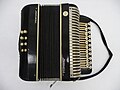
Photos of AccordionImage by Queensland Museum, licensed under Creative Commons Attribution-Share Alike 3.0
Piano accordion; Weltmeister, 48 bass, 3 reed-rowsImage by Arent , Infrogmation, licensed under Creative Commons Attribution-Share Alike 2.5

Piano accordion; Weltmeister, 48 bass, 3 reed-rows

An accordionistImage by Mikhail Kapychka, licensed under Creative Commons Attribution-Share Alike 4.0

An accordionist

Eight-key bisonoric diatonic accordion (c. 1830)Image by Henry Doktorski, licensed under Creative Commons Attribution-Share Alike 3.0

Eight-key bisonoric diatonic accordion (c. 1830)

The first pages in Adolf Müller's accordion book

The first pages in Adolf Müller's accordion book

An audio speaker emitting sound waves, in the Gnome style

An audio speaker emitting sound waves, in the Gnome style

Bellows-driven instruments Piano accordions: 1, 2, 13Diatonic button accordion: 3Chromatic button accordions: 11, 12, 14Digital accordions (V-Accordions, Roland Corporation): 11, 12, 13, 14Bandoneon: 4English concertina: 5Anglo-German concertinas (Anglo concertinas): 6, 7, 8, 9, 10

Bellows-driven instruments Piano accordions: 1, 2, 13Diatonic button accordion: 3Chromatic button accordions: 11, 12, 14Digital accordions (V-Accordions, Roland Corporation): 11, 12, 13, 14Bandoneon: 4English concertina: 5Anglo-German concertinas (Anglo concertinas): 6, 7, 8, 9, 10

Showroom of accordions (Petosa Accordions, Seattle, Washington)Image by Joe Mabel, licensed under Creative Commons Attribution-Share Alike 3.0

Showroom of accordions (Petosa Accordions, Seattle, Washington)

A side view of the pallet mechanism in a piano accordion. As the key is pressed down the pallet is lifted, allowing for air to enter the tone chamber in either direction and excite the reeds; air flow direction depends on the direction of bellows movement. A similar mechanical pallet movement is used in button accordions, as well as for bass mechanisms such as the Stradella bass machine that translates a single button press into multiple pallet openings for the notes of a chord.Image by Necz0r, licensed under Creative Commons Attribution-Share Alike 3.0

A side view of the pallet mechanism in a piano accordion. As the key is pressed down the pallet is lifted, allowing for air to enter the tone chamber in either direction and excite the reeds; air flow direction depends on the direction of bellows movement. A similar mechanical pallet movement is used in button accordions, as well as for bass mechanisms such as the Stradella bass machine that translates a single button press into multiple pallet openings for the notes of a chord.

Photos of AccordionImage by Queensland Museum, licensed under Creative Commons Attribution-Share Alike 3.0
Piano accordion; Weltmeister, 48 bass, 3 reed-rowsImage by Arent , Infrogmation, licensed under Creative Commons Attribution-Share Alike 2.5

Piano accordion; Weltmeister, 48 bass, 3 reed-rows

How Accordions Work

Accordions create music through a fascinating process! 🎵Inside the accordion, there are free reeds that vibrate when you push or pull the bellows. This movement forces air through the reeds, which makes sound. If you press a key or button, it opens a valve, and air flows through that specific reed, creating a note! Each reed makes a different sound, allowing for melodies and harmonies. The more you practice, the better you get at controlling the air and playing the notes. Isn’t that cool? 😊

Types Of Accordions

There are many different types of accordions! The most common types are piano accordions 🎹, which have a keyboard like a piano, and button accordions, which use buttons instead of keys. Another type is the chromatic button accordion, popular in folk music. You can also find diatonic accordions, which play specific notes that fit certain scales. Each accordion has its special purpose and sound! For example, the piano accordion is great for classic music, while the diatonic is amazing for folk dances around the world! 🌎

Famous Accordionists

Throughout history, many famous accordion players have made their mark! One of the most recognized is John Serry Sr., known for his incredible performances in the 20th century 🎶. Another is Myron Floren, who was part of "The Lawrence Welk Show." He amazed audiences with his skills! In modern times, people like Richard Galliano, a French accordionist, have introduced new styles and sounds, combining jazz and classical music. These talented musicians inspire many young players to pick up the accordion and explore their talents! 🌟

Maintenance And Care

Taking care of your accordion is important to keep it sounding great! 🎩First, always store it in a cool, dry place to protect it from moisture. Next, clean it regularly with a soft cloth to remove dust. Be careful with the bellows – they are delicate! To maintain the reeds, avoid spilling liquids on the instrument. It’s also wise to have a professional check it at least once a year. Proper care allows your accordion to last a long time and creates beautiful music. Help your accordion shine! 🌟

Accordion Music Genres

The accordion can play various music styles or genres 🎸! These include folk, classical, jazz, polka, and even rock music! In folk music, you’ll find lively rhythms that make you want to dance. In classical music, the accordion can produce beautiful and emotional melodies. Jazz accordionists often improvise, making each play unique! For those who love fast tunes, polka music is super fun and cheerful! By exploring different genres, you can discover all the wonderful sounds an accordion can make! 🎤

History Of The Accordion

The accordion was invented in the early 19th century, around 1822, by a man named Cyril DEMIAN who lived in Vienna, Austria 🇦🇹. At first, it was called the "hand-harmonica." By the time the 1830s rolled around, it was being played all over Europe! The instrument quickly became popular among folk musicians. In the 1850s, it was brought to America, where it mixed with styles like jazz and polka. With its unique sound, the accordion has been loved by musicians for hundreds of years!

Accordions In Modern Music

Today, the accordion is still a popular instrument in many modern music genres 🎶! Some musicians use it in pop songs and even hip-hop. Artists like Lady Gaga and The Decemberists have included the accordion in their music, creating fresh sounds! It's also found in indie music and world music, helping different cultures connect. Many young people are learning how to play the accordion, bringing it back in style! So, if you hear an accordion in a modern song, remember it's continuing a long tradition of musical creativity! 🌈

Playing Techniques And Styles

When playing the accordion, musicians can use various techniques 🎼 to create different sounds. One popular technique is "bellow shaking," where you shake the bellows to add a fun effect! Another is "chord playing," where you press multiple buttons at once for harmony. Players also use "hand movements" and "foot pedals" to help make the music even richer! Different music styles require various playing techniques, from lively polka to smooth jazz. So, there's a lot to learn, and each player can develop their unique style! 🎷

Accordion In Different Cultures

Accordions are loved in many cultures around the world! In France 🇫🇷, you’ll hear them playing during street festivals, while in Italy 🇮🇹, they are often part of lively folk dances, like the tarantella. In Mexico 🇲🇽, the accordion is essential to a genre called "norteño," making upbeat and catchy music. Each culture adds its flavor, making the accordion a versatile instrument! You can find it in bluegrass music in America and even enjoy the sounds of the accordion in popular Scandinavian folk music 🎻.

Accordion Quiz

Q1
Question 1 of 10

Learn more about Accordion

Ready to create?

Make

To create a safe space for kid creators worldwide!

Create

Vibe Coding

Kids GPT

All Tools

Kibu

Resources

Worksheets

SafeTube

Blog

FAQ

Account

Pricing

Log-in

Sign-up

Data Deletion

Company

About

Community Guidelines

Privacy Policy

Terms of Service

2025, URSOR LIMITED. All rights reserved. DIY is in no way affiliated with Minecraft™, Mojang, Microsoft, Roblox™ or YouTube. LEGO® is a trademark of the LEGO® Group which does not sponsor, endorse or authorize this website or event. Made with love in San Francisco.