All Articles

3d Printing

3d Printing Facts For Kids

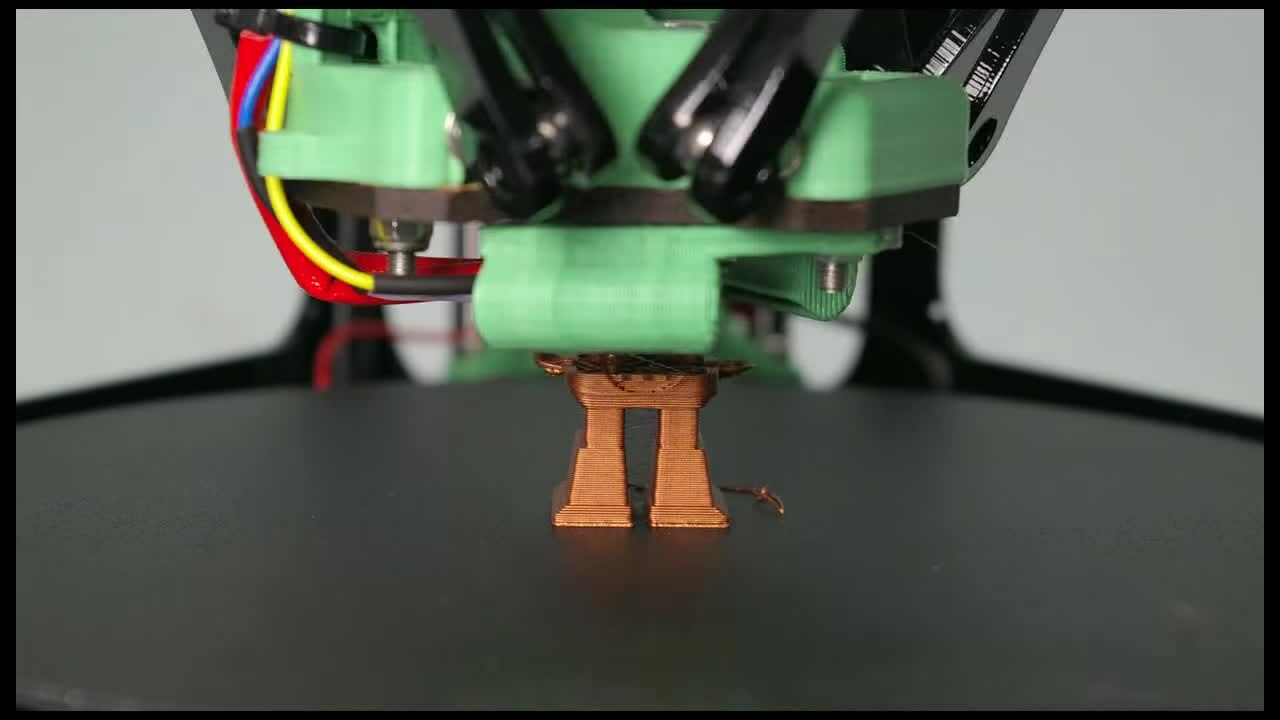
3D printing, or additive manufacturing, is the construction of a three-dimensional object from a CAD model or a digital 3D model.
🎨 Reading age for 6-8
Background blob
3d Printing
3d Printing
Facts for Kids!
Image by RepRapPro, licensed under Creative Commons Attribution 3.0

Do more with AI

Introduction

3D printing is a cool way to make things from a digital design! 🖨️ Instead of just drawing or making something by hand, 3D printing builds objects layer by layer. This means you can create toys, tools, or even food! 🍔The machine reads a special file, often called a CAD model, which tells it what to make. In 1986, a man named Chuck Hull invented 3D printing, and now it helps people everywhere create amazing things. 🌍From homes to healthcare, 3D printing is changing the world! Let’s dive into the fun world of 3D printing and learn more about it!

Images of 3d Printing

Photos of 3d Printing
CAD model used for 3D printingImage by OKFoundryCompany from Richmond, USA, licensed under Creative Commons Attribution 2.0

CAD model used for 3D printing

3D models can be generated from 2D pictures taken at a 3D photo booth.Image by Fred Hsu on en.wikipedia, licensed under Creative Commons Attribution-Share Alike 3.0

3D models can be generated from 2D pictures taken at a 3D photo booth.

Detail of the Stoofbrug [nl] in Amsterdam, the world's first 3D-printed metal bridge[103]Image by IIVQ / Tijmen Stam, licensed under Creative Commons Attribution-Share Alike 4.0

Detail of the Stoofbrug [nl] in Amsterdam, the world's first 3D-printed metal bridge[103]

A multi-material 3DBenchyImage by RepRap.me, licensed under GNU Free Documentation License 1.2

A multi-material 3DBenchy

Schematic representation of the 3D printing technique known as fused filament fabrication; a filament "a)" of plastic material is fed through a heated moving head "b)" that melts and extrudes it depositing it, layer after layer, in the desired shape "c). A moving platform "e)" lowers after each layer is deposited. For this kind of technology, additional vertical support structures "d)" are needed to sustain overhanging parts.

Schematic representation of the 3D printing technique known as fused filament fabrication; a filament "a)" of plastic material is fed through a heated moving head "b)" that melts and extrudes it depositing it, layer after layer, in the desired shape "c). A moving platform "e)" lowers after each layer is deposited. For this kind of technology, additional vertical support structures "d)" are needed to sustain overhanging parts.

Photos of 3d Printing
CAD model used for 3D printingImage by OKFoundryCompany from Richmond, USA, licensed under Creative Commons Attribution 2.0

CAD model used for 3D printing

3D models can be generated from 2D pictures taken at a 3D photo booth.Image by Fred Hsu on en.wikipedia, licensed under Creative Commons Attribution-Share Alike 3.0

3D models can be generated from 2D pictures taken at a 3D photo booth.

Detail of the Stoofbrug [nl] in Amsterdam, the world's first 3D-printed metal bridge[103]Image by IIVQ / Tijmen Stam, licensed under Creative Commons Attribution-Share Alike 4.0

Detail of the Stoofbrug [nl] in Amsterdam, the world's first 3D-printed metal bridge[103]

A multi-material 3DBenchyImage by RepRap.me, licensed under GNU Free Documentation License 1.2

A multi-material 3DBenchy

Schematic representation of the 3D printing technique known as fused filament fabrication; a filament "a)" of plastic material is fed through a heated moving head "b)" that melts and extrudes it depositing it, layer after layer, in the desired shape "c). A moving platform "e)" lowers after each layer is deposited. For this kind of technology, additional vertical support structures "d)" are needed to sustain overhanging parts.Image by Paolo Cignoni, licensed under Creative Commons Attribution-Share Alike 4.0

Schematic representation of the 3D printing technique known as fused filament fabrication; a filament "a)" of plastic material is fed through a heated moving head "b)" that melts and extrudes it depositing it, layer after layer, in the desired shape "c). A moving platform "e)" lowers after each layer is deposited. For this kind of technology, additional vertical support structures "d)" are needed to sustain overhanging parts.

Schematic representation of stereolithography; a light-emitting device a) (laser or DLP) selectively illuminate the transparent bottom c) of a tank b) filled with a liquid photo-polymerizing resin; the solidified resin d) is progressively dragged up by a lifting platform e)Image by Paolo Cignoni, licensed under Creative Commons Attribution-Share Alike 4.0

Schematic representation of stereolithography; a light-emitting device a) (laser or DLP) selectively illuminate the transparent bottom c) of a tank b) filled with a liquid photo-polymerizing resin; the solidified resin d) is progressively dragged up by a lifting platform e)

The Audi RSQ was made with rapid prototyping industrial KUKA robots.Image by Eirik Newth, licensed under Creative Commons Attribution 2.0

The Audi RSQ was made with rapid prototyping industrial KUKA robots.

3D-printed necklace

3D-printed necklace

A 3D-printed jet engine modelImage by CMitchell, licensed under Creative Commons Attribution-Share Alike 4.0

A 3D-printed jet engine model

How 3d Printing Works

3D printing works like building a tower, but with tiny layers! 🏗️ First, a computer creates a digital model of the object. Then, a 3D printer uses a special material, like plastic or metal, and starts laying down one thin layer at a time. The printer carefully follows the instructions from the computer. Once the first layer is done, it adds the second layer on top, and so on, until the object is complete! 🚀This can take from a few hours to a couple of days, depending on how big the object is. Finally, you have a unique creation!

History Of 3d Printing

3D printing began in 1981 when an engineer named Hideo Kodama invented a way to create 3D objects using a special light! 💡However, it was Chuck Hull in 1986 who made the first real 3D printer. He named it “stereolithography.” In the 1990s, more companies started using this technology. For example, Stratasys and 3D Systems began to make 3D printers available to the public. By the 2000s, 3D printing became even more popular! 🎉Today, many schools and businesses use it to create everything from fun projects to important medical devices.

3d Printing In Education

Schools are starting to embrace 3D printing! 🎓Teachers use 3D printers to help students learn in hands-on ways. For instance, kids can design and print models of planets for science projects! 🌎Creating prototypes teaches problem-solving and creativity. Many schools have tech clubs or classes focused on 3D printing, allowing students to explore their imaginations. You can even create things like chess pieces or mini monuments! With this technology, students learn skills that can help them in future careers, especially in engineering or design!

Applications Of 3d Printing

3D printing is used in many exciting areas! 🎨In medicine, it helps create custom prosthetics and even 3D-printed organs for transplants. In construction, they can print whole houses! 🏠Artists use 3D printed parts in their sculptures, while scientists use the technology to make models of molecules. Schools use 3D printers to help students learn by creating projects. ✏️ Lastly, the auto industry uses them to create parts for cars! The possibilities are limitless, as 3D printing keeps changing how we create and innovate!

Future Trends In 3d Printing

The future of 3D printing is super exciting! 🚀Researchers are discovering new materials, such as ones that can heal themselves or even live cells! This means we might print organs that can be used for transplants one day. In construction, whole buildings might be 3D printed using eco-friendly materials, reducing waste. 🌍Additionally, advancements in speed and size will allow printers to create larger objects even faster! Imagine a 3D printer making a personalized bicycle just for you! 🚲The technology is evolving quickly, and incredible possibilities await!

Materials Used In 3d Printing

3D printing uses various materials, and each has its own special qualities! 🧱One common material is PLA, a biodegradable plastic made from corn, which is friendly to the environment. Another popular material is ABS, stronger but not biodegradable. Sometimes, printers use special materials like metals, ceramics, or even chocolate! 🍫These materials are melted or shaped in different ways to create objects. With so many options, 3D printing can make products like jewelry, toys, or prosthetics! It’s fun to see what these materials can turn into!

Impact Of 3d Printing On Industry

3D printing is changing industries all around the world! 🌏In manufacturing, it lets companies make products more quickly, reducing costs and time. The fashion industry is also jumping on board, creating unique clothing and accessories. 👗Even aerospace companies like Boeing are using 3D printing for lighter, more efficient airplane parts! Meanwhile, medical companies can make customized tools and implants, saving lives every day! 🏥By improving production and creating new items, 3D printing impacts how we live, shop, and even heal!

Types Of 3d Printing Technologies

There are several types of 3D printing technologies! The most famous ones are FDM, SLA, and SLS. 🤖FDM stands for Fused Deposition Modeling, where melted plastic is layered to create an object. SLA, or Stereolithography, uses light to harden liquid resin, making very detailed models. SLS, or Selective Laser Sintering, uses a laser to fuse powder materials together. ✨Each type of 3D printing has its own strengths and is used for different projects. In fact, some printers can even print food or living tissue! 🍰🩺

Benefits And Limitations Of 3d Printing

3D printing has many benefits! 🌟It allows for fast design changes, easy customization, and less waste since it only uses the materials needed to make the object. It can also make unique items that are hard to find in stores! However, there are limitations. Some 3D printed items may not be as strong as traditionally made ones. Plus, some materials can be expensive! 💰Additionally, 3D printing can take a long time for big objects. Balancing the pros and cons helps determine when and how to use this amazing technology!

Environmental Considerations In 3d Printing

3D printing can be eco-friendly, but it also has challenges! 🌱Some materials, like PLA, are made from plants and are safer for our planet. However, many traditional plastics used in 3D printing take a long time to decompose. Reducing waste is essential, and companies are working on recycling materials for 3D printing. ♻️ Additionally, energy consumption during printing is a concern. Finding clean energy and eco-friendly materials can help protect our earth. Balancing creativity and sustainability makes sure that 3D printing is better for our world! 🌍

3d Printing Quiz

Q1
Question 1 of 10

Learn more about 3d Printing

Ready to create?

Make

To create a safe space for kid creators worldwide!

Create

Vibe Coding

Kids GPT

All Tools

Kibu

Learn

Worksheets

Courses

Skills

Resources

SafeTube

Blog

FAQ

Pricing

Account

Log-in

Sign-up

Data Deletion

Company

About

Community Guidelines

Privacy Policy

Terms of Service

2025, URSOR LIMITED. All rights reserved. DIY is in no way affiliated with Minecraft™, Mojang, Microsoft, Roblox™ or YouTube. LEGO® is a trademark of the LEGO® Group which does not sponsor, endorse or authorize this website or event. Made with love in San Francisco.