All Articles

Évariste Galois

Évariste Galois Facts For Kids

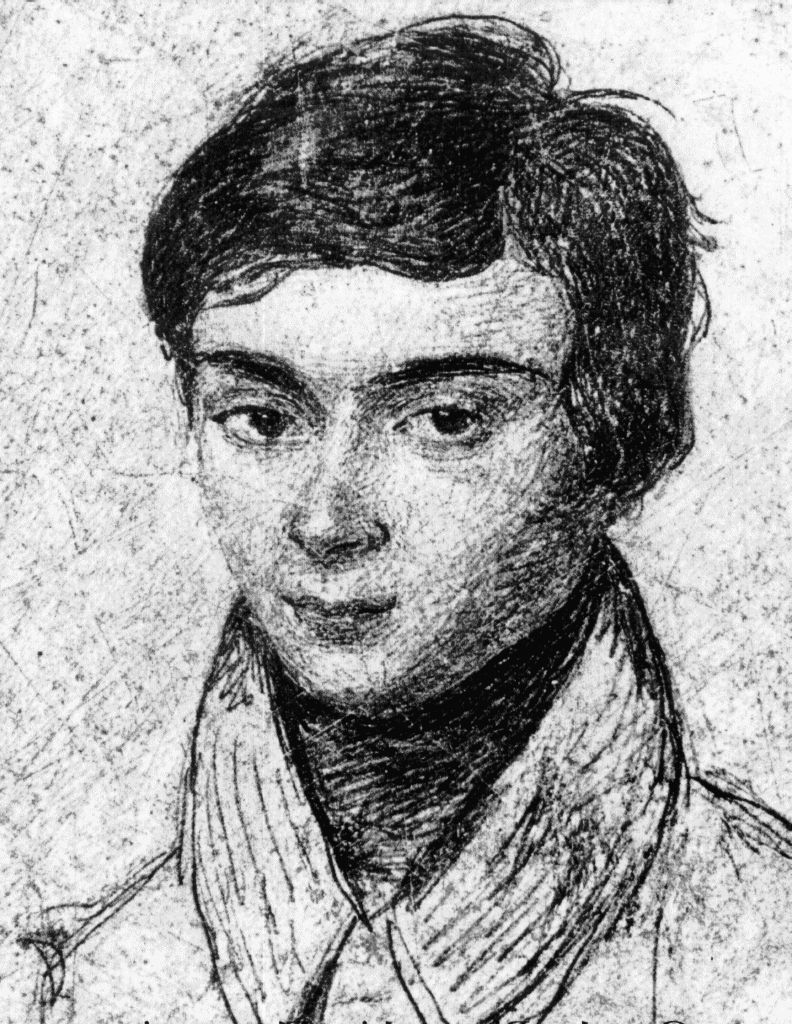
Évariste Galois was a pioneering French mathematician whose groundbreaking work laid the foundations for modern algebra and Galois theory.
🎨 Reading age for 6-8
Background blob
Évariste Galois
Facts for Kids!

Do more with AI

Introduction

Évariste Galois was a French mathematician who was born on October 25, 1811, in Bourg-la-Reine, a town near Paris, France. He is famous for his work in algebra, especially for developing a new area called Galois Theory. This theory helps us understand when we can solve equations and how certain types of equations behave. Sadly, Galois died young at just 20 years old, but his ideas changed mathematics forever. His birthday is celebrated by many mathematicians, and his story inspires students to explore the wonders of math! 🎉

Images of Évariste Galois

His very signature.

His very signature.

The Cour d'honneur of the Lycée Louis-le-Grand, which Galois attended as a boy.Image by No machine-readable author provided. Kajimoto~commonswiki assumed (based on copyright claims)., licensed under Creative Commons Attribution 2.5

The Cour d'honneur of the Lycée Louis-le-Grand, which Galois attended as a boy.

Augustin-Louis Cauchy reviewed Galois's early mathematical papers.

Augustin-Louis Cauchy reviewed Galois's early mathematical papers.

Battle for the Town Hall by Jean-Victor Schnetz. Galois, as a staunch republican, would have wanted to participate in the July Revolution of 1830 but was prevented by the director of the École Normale.

Battle for the Town Hall by Jean-Victor Schnetz. Galois, as a staunch republican, would have wanted to participate in the July Revolution of 1830 but was prevented by the director of the École Normale.

Siméon Denis Poisson reviewed Galois's paper on equation theory and declared it "incomprehensible".

Siméon Denis Poisson reviewed Galois's paper on equation theory and declared it "incomprehensible".

The Galois memorial in the cemetery of Bourg-la-Reine. Évariste Galois was buried in a common grave and the exact location is unknown.Image by Beachboy68, licensed under Creative Commons Attribution-Share Alike 3.0

The Galois memorial in the cemetery of Bourg-la-Reine. Évariste Galois was buried in a common grave and the exact location is unknown.

The final page of Galois's mathematical testament, in his own hand. The phrase "to decipher all this mess" ("déchiffrer tout ce gâchis") is on the second to the last line.

The final page of Galois's mathematical testament, in his own hand. The phrase "to decipher all this mess" ("déchiffrer tout ce gâchis") is on the second to the last line.

His very signature.

His very signature.

The Cour d'honneur of the Lycée Louis-le-Grand, which Galois attended as a boy.Image by No machine-readable author provided. Kajimoto~commonswiki assumed (based on copyright claims)., licensed under Creative Commons Attribution 2.5

The Cour d'honneur of the Lycée Louis-le-Grand, which Galois attended as a boy.

Augustin-Louis Cauchy reviewed Galois's early mathematical papers.

Augustin-Louis Cauchy reviewed Galois's early mathematical papers.

Battle for the Town Hall by Jean-Victor Schnetz. Galois, as a staunch republican, would have wanted to participate in the July Revolution of 1830 but was prevented by the director of the École Normale.

Battle for the Town Hall by Jean-Victor Schnetz. Galois, as a staunch republican, would have wanted to participate in the July Revolution of 1830 but was prevented by the director of the École Normale.

Siméon Denis Poisson reviewed Galois's paper on equation theory and declared it "incomprehensible".

Siméon Denis Poisson reviewed Galois's paper on equation theory and declared it "incomprehensible".

The Galois memorial in the cemetery of Bourg-la-Reine. Évariste Galois was buried in a common grave and the exact location is unknown.Image by Beachboy68, licensed under Creative Commons Attribution-Share Alike 3.0

The Galois memorial in the cemetery of Bourg-la-Reine. Évariste Galois was buried in a common grave and the exact location is unknown.

The final page of Galois's mathematical testament, in his own hand. The phrase "to decipher all this mess" ("déchiffrer tout ce gâchis") is on the second to the last line.

The final page of Galois's mathematical testament, in his own hand. The phrase "to decipher all this mess" ("déchiffrer tout ce gâchis") is on the second to the last line.

His very signature.

His very signature.

The Cour d'honneur of the Lycée Louis-le-Grand, which Galois attended as a boy.Image by No machine-readable author provided. Kajimoto~commonswiki assumed (based on copyright claims)., licensed under Creative Commons Attribution 2.5

The Cour d'honneur of the Lycée Louis-le-Grand, which Galois attended as a boy.

Augustin-Louis Cauchy reviewed Galois's early mathematical papers.

Augustin-Louis Cauchy reviewed Galois's early mathematical papers.

Battle for the Town Hall by Jean-Victor Schnetz. Galois, as a staunch republican, would have wanted to participate in the July Revolution of 1830 but was prevented by the director of the École Normale.

Battle for the Town Hall by Jean-Victor Schnetz. Galois, as a staunch republican, would have wanted to participate in the July Revolution of 1830 but was prevented by the director of the École Normale.

Siméon Denis Poisson reviewed Galois's paper on equation theory and declared it "incomprehensible".

Siméon Denis Poisson reviewed Galois's paper on equation theory and declared it "incomprehensible".

The Galois memorial in the cemetery of Bourg-la-Reine. Évariste Galois was buried in a common grave and the exact location is unknown.Image by Beachboy68, licensed under Creative Commons Attribution-Share Alike 3.0

The Galois memorial in the cemetery of Bourg-la-Reine. Évariste Galois was buried in a common grave and the exact location is unknown.

The final page of Galois's mathematical testament, in his own hand. The phrase "to decipher all this mess" ("déchiffrer tout ce gâchis") is on the second to the last line.

The final page of Galois's mathematical testament, in his own hand. The phrase "to decipher all this mess" ("déchiffrer tout ce gâchis") is on the second to the last line.

His very signature.

His very signature.

The Cour d'honneur of the Lycée Louis-le-Grand, which Galois attended as a boy.Image by No machine-readable author provided. Kajimoto~commonswiki assumed (based on copyright claims)., licensed under Creative Commons Attribution 2.5

The Cour d'honneur of the Lycée Louis-le-Grand, which Galois attended as a boy.

Augustin-Louis Cauchy reviewed Galois's early mathematical papers.

Augustin-Louis Cauchy reviewed Galois's early mathematical papers.

Battle for the Town Hall by Jean-Victor Schnetz. Galois, as a staunch republican, would have wanted to participate in the July Revolution of 1830 but was prevented by the director of the École Normale.

Battle for the Town Hall by Jean-Victor Schnetz. Galois, as a staunch republican, would have wanted to participate in the July Revolution of 1830 but was prevented by the director of the École Normale.

Siméon Denis Poisson reviewed Galois's paper on equation theory and declared it "incomprehensible".

Siméon Denis Poisson reviewed Galois's paper on equation theory and declared it "incomprehensible".

The Galois memorial in the cemetery of Bourg-la-Reine. Évariste Galois was buried in a common grave and the exact location is unknown.Image by Beachboy68, licensed under Creative Commons Attribution-Share Alike 3.0

The Galois memorial in the cemetery of Bourg-la-Reine. Évariste Galois was buried in a common grave and the exact location is unknown.

The final page of Galois's mathematical testament, in his own hand. The phrase "to decipher all this mess" ("déchiffrer tout ce gâchis") is on the second to the last line.

The final page of Galois's mathematical testament, in his own hand. The phrase "to decipher all this mess" ("déchiffrer tout ce gâchis") is on the second to the last line.

Galois Theory

Galois Theory is a fascinating way to understand equations and their solutions! It helps mathematicians figure out which equations can have solutions expressed using basic operations like addition, subtraction, multiplication, and division. Galois showed that if the roots of these equations have certain symmetries, then they can be solved! For example, the equation \(x^5 - x - 1 = 0\) is one Galois proved cannot be solved with square roots or cube roots! His theory linked group theory, which studies symmetry, with polynomial equations. 🎶🔒

Personal Life

Galois had a challenging personal life. He was passionate about mathematics but faced many obstacles, including political unrest in France. He was also very passionate about politics and was involved in revolutionary activities. Tragically, he had a tumultuous love life and wrote letters to women expressing his feelings. Galois’ life was filled with adventures and struggles, but his love for math always shined bright. Even as a young man, he believed deeply in making the world a better place through both politics and his work in mathematics. 💕🔍

Legacy And Recognition

Even though Galois died young, his legacy lives on in the world of mathematics! His work was not fully appreciated until years later, but today he is considered one of the greatest mathematicians. Schools and universities all over the world teach Galois Theory, and many famous mathematicians have built upon his ideas. You will find references to Galois in math books and during mathematics competitions! His story reminds us that great ideas can come from young minds. 🌍📖

Early Life And Education

Évariste Galois grew up in a very smart family! His father was a school teacher and his mother was a homemaker. He started school at a young age and was very good at math, excelling in his studies. Galois attended a prestigious school called Lycée Louis-le-Grand in Paris, where he learned advanced math. Unfortunately, he struggled with traditional teaching methods and faced challenges, including getting kicked out of school for his rebellious spirit! 📚But this didn’t stop him from pursuing his love for mathematics.

Revolutionary Influences

Galois was influenced by many great mathematicians, including Carl Friedrich Gauss and Joseph-Louis Lagrange. These mathematicians helped shape the world of algebra. At only 17, Galois was introduced to new ideas about equations that would later inspire his own groundbreaking work. Through studying their ideas and asking questions, he started forming his own theories. Galois was also inspired by his experiences during the political chaos in France, which pushed him to think outside the box. ✊⚡ This led him to develop his revolutionary concepts in math!

Mathematical Contributions

Galois' main contribution to mathematics was Galois Theory. He studied what are called polynomial equations, which look like this: x² + x + 1 = 0. He discovered rules about which equations could be solved using simple methods and which couldn't. His findings showed that some equations had symmetries that helped predict their solutions! Galois wrote down his ideas in letters and notes that amazed other mathematicians when they were finally published many years later. This work laid the foundation for modern algebra! 🧮✨

Impact On Modern Mathematics

Galois' contributions have a massive impact on modern mathematics! Today, algebra and its applications in computer science, cryptography, and engineering are built upon his theories. Galois Theory helps us understand how to solve complex problems and equations. Mathematicians use his methods to explore fields like symmetry, coding theory, and the foundations of mathematics. His brilliant insights inspire young mathematicians everywhere, showing that curiosity and creativity can lead to amazing discoveries! Keep thinking like Galois, and who knows what you'll achieve! 🚀🔬

Death And Posthumous Influence

Évariste Galois died on May 31, 1832, in a duel at just 20 years old. His life was cut short, but he left an incredible impact on mathematics. After his death, his work became influential in many fields, such as abstract algebra and number theory. Mathematicians began to recognize the importance of his theories, and his ideas became foundational over time. Today, Galois is celebrated every year, with discussions and events focused on his contributions! His story shows that even short lives can lead to big changes! 🌟😢

Did you know?

🔍 Évariste Galois was a French mathematician known for his work in abstract algebra.

📚 He developed Galois theory, which links field theory and group theory.

🕰️ Galois died at the young age of 20 in a duel, leaving behind significant mathematical contributions.

✍️ His most famous papers were submitted on the night before his death.

🏫 Galois's work laid the groundwork for the modern understanding of polynomial equations.

👨‍🏫 He was largely unrecognized during his lifetime and gained fame posthumously.

📅 Galois's theories were first comprehensively understood and published by later mathematicians like Joseph-Louis Lagrange.

💔 His personal life was tumultuous, involving political activism in revolutionary France.

🧮 Galois's ideas were foundational in proving the impossibility of solving general polynomial equations of degree five or higher using radicals.

🔗 The Galois connection is a critical concept in modern mathematics, affecting various fields such as number theory and cryptography.

Évariste Galois Quiz

Q1
Question 1 of 10

Learn more about Évariste Galois

Ready to create?

Make

To create a safe space for kid creators worldwide!

Create

Vibe Coding

Kids GPT

All Tools

Kibu

Resources

Worksheets

SafeTube

Blog

FAQ

Account

Pricing

Log-in

Sign-up

Data Deletion

Company

About

Community Guidelines

Privacy Policy

Terms of Service

2025, URSOR LIMITED. All rights reserved. DIY is in no way affiliated with Minecraft™, Mojang, Microsoft, Roblox™ or YouTube. LEGO® is a trademark of the LEGO® Group which does not sponsor, endorse or authorize this website or event. Made with love in San Francisco.