Create a Warrior Cats Game
Create a warrior cats game by imagining clan cats, forest adventures, and exciting choices, then build it step by step with guided creative coding. Kids can turn a favourite story idea into an interactive project that they can test, improve, and share safely.
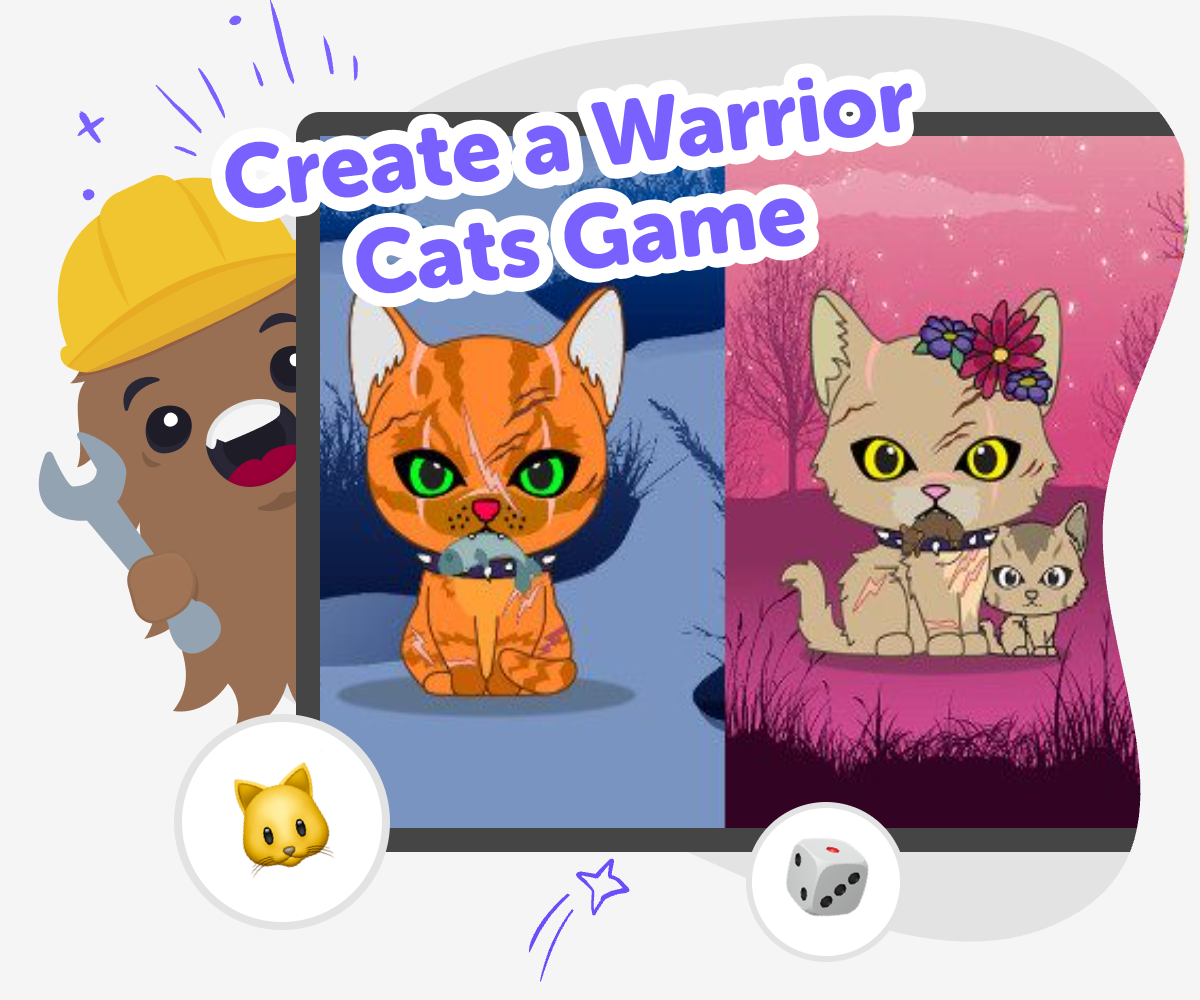
About this tutorial
A create a warrior cats game project helps kids turn forest clans, brave cats, and big choices into an interactive adventure they can play. It matters because kids learn how ideas become games, how choices change a story, and how to keep improving something they make.
This kind of project gives kids a clear way to practice creative thinking, planning, and problem-solving. They can begin with a small idea, test it, and build confidence as their game grows.
Vibe Coding gives kids a safe, guided place to shape their game one step at a time. They can describe the cats, the setting, and the rules, then test their ideas, change what does not work, and build confidence through creative coding.
The focus stays on making and learning, so kids stay in control of the story while the tool helps them experiment and grow their project.
Step by step
- 1
Imagine your clan
Pick the kind of cats, forest, and adventure you want in your game. Decide what makes your clan special, like a name, a home, and a mission.
- 2
Plan the choices
Think about what the player can do, such as explore, train, gather, or solve a problem. Add a few simple endings so the story feels like a real game.
- 3
Build and test
Use guided coding help to turn your idea into a playable project. Try it out, notice what feels confusing, and change the parts that need work.
- 4
Make the most of replaying
Try a new path Play your game again and choose different actions to see how the story changes. This helps you find places where the adventure can be more surprising or clearer.
Improve one part Change one character, scene, or rule at a time so you can tell what got better. Small changes make it easier to learn from each test.
Check the fun Ask whether the choices feel exciting, fair, and easy to understand. If something slows the game down, simplify it and test again.
Share your best version Keep the version you like most and save the rest for later experiments. That way you can keep building with confidence and come back to new ideas anytime.
What makes a Warrior Cats game fun?
A good Warrior Cats game gives players a world to explore and choices that matter. Kids often enjoy games like this because they can imagine clan life, make brave decisions, and see how those decisions change what happens next. The fun comes from mixing story and play, not just from winning or losing. When a game has characters, goals, and a setting that feels alive, it becomes easier to care about the adventure. Kids can also add challenges like finding herbs, protecting a camp, or helping another cat, which makes the game feel active and personal. The best games are simple enough to understand but rich enough to invite more than one playthrough.
How can kids turn the story into a game?
Kids can start with one idea, like a young cat trying to earn trust in a clan, and build from there. First they choose the setting, then they decide what the player can do, and after that they add rules for how the game changes. A story becomes a game when the player can make choices, solve problems, and see different outcomes. That means kids do not need a huge world right away. They can begin with a small scene, test it, and add more when they are ready. This kind of project helps kids think like designers, because they learn to connect story ideas with actions, feedback, and clear game goals.
Is this a good project for beginner coders?
Yes. A Warrior Cats game can be a friendly project for beginner coders because it can start small. Kids do not need to build everything at once. They can make one choice, one scene, or one character action, then improve it as they learn. That keeps the project manageable and helps them practice coding confidence. Beginner projects are often best when they focus on one clear idea instead of too many features. With guided support, kids can experiment safely, notice what works, and fix problems without feeling stuck. Over time, they learn that games are built through testing and revision, which is one of the most important parts of creative technology.
How does making one help kids grow as creators?
When kids create a game like this, they practice more than coding. They also plan, problem-solve, revise, and think about how another person will play their project. Those skills are useful in art, writing, science, and everyday challenges. A game about clan cats can also encourage children to make careful choices about story, tone, and rules, which builds creative confidence. The project becomes a place to try ideas, make mistakes, and improve them without pressure. That is why building games is powerful: kids learn that good work usually grows through testing and changes, not by getting everything right the first time. A small game can lead to bigger skills and stronger imagination.
Need help?
What is a Warrior Cats game?
A Warrior Cats game is an interactive story or adventure inspired by clan cats, forest settings, and the choices characters make during their journey. It can be simple, like choosing paths and solving small challenges, or more complex with quests, character goals, and different endings.
Can kids make their own Warrior Cats game?
Yes, kids can make their own version by starting with a small idea, such as one clan, one hero cat, and one adventure. They do not need to build a huge game at once. A simple project is a great place to begin and grow from.
Do I need advanced coding skills to start?
No. A beginner can start with basic choices, scenes, and simple rules. The goal is to learn by making, testing, and improving. Guided tools like Vibe Coding can help kids move step by step without expecting them to know everything first.
What should a first version include?
A first version can include a cat character, a clan name, one place to explore, and a few choices that change the story. It is better to make a small playable game first than to wait until everything is perfect. Kids can add more later.
How do kids keep the game safe and age-appropriate?
Kids should focus on adventure, teamwork, mystery, and problem-solving rather than anything too intense. It helps to keep the language clear, the challenges fair, and the story kind. Parents and educators can also help review the project before it is shared.
How can a game like this teach coding confidence?
It teaches confidence because kids see that their idea can become something real. They learn to test a version, notice what needs fixing, and make changes on purpose. That process shows them that coding is something they can learn through practice.
Can the game have different endings?
Yes. Different endings are a fun part of this kind of game because they make choices feel important. Kids can create endings based on how the player helps the clan, solves a problem, or chooses a path. Even a few endings can make the game feel richer.
What is the best way to improve the game?
The best way is to test one part at a time. Kids can play the game, spot anything confusing, and change only that piece before testing again. Small updates make it easier to learn what helped, and they keep the project from feeling overwhelming.