Build a Whopper Clicker Game

Build a whopper clicker game by creating a playful tap-to-earn game where kids design the idea, shape the rules, and improve it through testing. This kid-friendly project helps young makers explore simple game design, creative coding, and problem-solving while they build something interactive they can call their own.
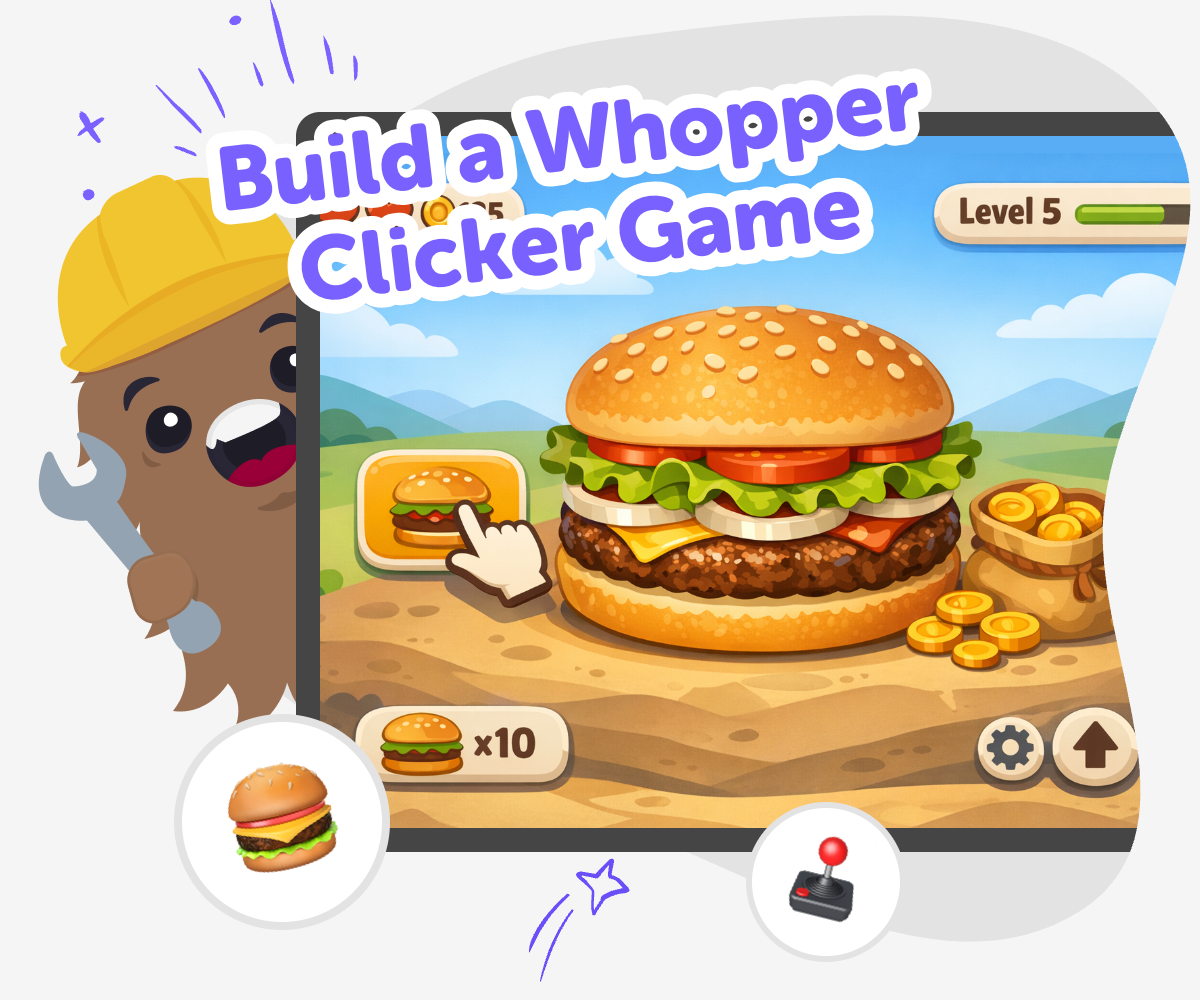
Build a Whopper Clicker Game hero

Make a Clicker Game

A build a whopper clicker game project helps kids turn a simple tap idea into something they can play, test, and improve. It matters because clicker games teach how rules, rewards, and small actions work together to make a game feel fun and easy to follow. Kids can start with one clear action and then notice how each change affects the score, the pace, and the feel of the game. That kind of making builds confidence because every new test gives them something real to learn from.

Vibe Coding supports this topic by helping kids shape their game idea step by step, instead of trying to figure everything out at once. It gives guided help while kids make choices, try ideas, and keep changing the game until it feels right. The tool keeps the process safe and creative by encouraging simple builds, clear feedback, and thoughtful testing. Kids stay focused on making something their own, while adults can trust that the project stays practical, age-appropriate, and learning-focused.

How to build it

Step 1 - Choose the game idea

Start with a simple clicker concept: what gets tapped, what points mean, and what makes the game feel fun.

Step 2 - Build the first version

Set up a button, a score, and one clear reward so the game has something kids can click right away.

Step 3 - Add upgrades and goals

Create small changes that make the game grow, such as new points, a faster score, or a goal to reach.

Step 4 - Make the most of testing

Try a remix Change one game rule, sound, or color so the clicker feels fresh while staying easy to understand. Check the flow Tap through the game again and notice any confusing parts, slow moments, or places where the score does not feel balanced. Share kindly Show the game to a friend or family member and ask what feels fun, clear, or worth improving next. Keep improving Save the version you like best, test new ideas, and keep adjusting the game until it feels smooth, playful, and yours.

What is a clicker game?

A clicker game is a game where players tap, click, or press something to make a score go up. The fun comes from watching small actions add up over time. Kids often like clicker games because they are easy to start but still leave room for clever ideas, such as upgrades, surprises, and goals. When you build a whopper clicker game, you are not just making a button that counts. You are learning how game rules work, how players stay interested, and how a simple loop can become an actual game. That makes clicker games a friendly place to practice game design, even for beginners who are just getting started with coding and creative technology.

Why do kids learn from making one?

When kids build a clicker game, they practice more than typing code. They learn how to test an idea, notice what works, and improve something little by little. That is an important maker skill because real projects usually need more than one try. A game may need a clearer button, a faster reward, or a better way to show points. By changing one thing at a time, kids start to see cause and effect. They also build confidence because they can make choices and watch the game respond. That feeling of control helps coding feel less mysterious and more like a creative tool. A whopper clicker game is a simple way to learn that making, testing, and improving are all part of the process.

How does safety fit into game making?

Safety matters when kids make games because the best projects are fun, age-appropriate, and easy to understand. A clicker game can be playful without needing scary images, rude jokes, or complicated choices. Kids can focus on clear goals, friendly colors, and simple actions that keep the game welcoming. That helps young makers stay in a creative space where they can experiment without pressure. It also gives parents and educators confidence that the project supports learning instead of creating confusion. With guided tools like Vibe Coding, kids get help shaping their ideas into something they can manage step by step. That makes the process calm, practical, and suitable for independent creativity with support nearby.

What can kids change to make it their own?

Kids can personalize a clicker game in many small ways. They can choose what gets clicked, what the points look like, how fast the score grows, and what happens after a milestone. They can also change the theme so the game feels like their own idea, whether it is silly, sporty, space-themed, or all about a favorite snack joke. These choices matter because personal details turn a basic template into a real creative project. Making choices also helps kids build problem-solving skills, since they need to decide what feels fun and what might need another test. When kids keep tweaking their game, they learn that creativity is not only about starting something. It is also about improving it until it feels right.

Frequently Asked Questions

What is a whopper clicker game?

Is making a clicker game good for beginners?

What do kids need before they start?

How does a clicker game teach coding?

Can kids change the game idea while making it?

Why do games need testing?

Is this kind of project safe for kids?

Can Vibe Coding help kids build it step by step?

Why 500,000 families trust DIY

User Avatar

Martin

Dad to 2 DIYers

My son loves DIY! He always finds fun projects to do, and we enjoy making things together. It’s a great way to learn, create, and have fun at the same time!

User Avatar

Pearl

DIYer from USA

DIY is such a great app with really sweet people and moderators who always make sure this app is super safe. You can learn to create things or learn drawing techniques - honestly there is so much to do.

User Avatar

Elaine W.

Middle school teacher

I love logging onto DIY every day - not just for projects but to also look at the comments my kids share about each other's work. It's a brilliant way to foster healthy support systems!

User Avatar

Jenn L.

Mom to 3 DIYers

We absolutely love the DIY platform and its endless river of creative adventures and projects! We always have the best time together participating, learning and creating!

Ready to create?

Make

To create a safe space for kid creators worldwide!

Create

Vibe Coding

Kids GPT

All Tools

Kibu

Resources

Worksheets

SafeTube

Blog

FAQ

Account

Pricing

Log-in

Sign-up

Data Deletion

Company

About

Community Guidelines

Privacy Policy

Terms of Service

2025, URSOR LIMITED. All rights reserved. DIY is in no way affiliated with Minecraft™, Mojang, Microsoft, Roblox™ or YouTube. LEGO® is a trademark of the LEGO® Group which does not sponsor, endorse or authorize this website or event. Made with love in San Francisco.