Build a Skibidi Toilet Game
Build a skibidi toilet game with playful, guided coding so kids can turn a silly idea into a real interactive project. Make, test, and improve a game step by step while building creativity, confidence, and problem-solving skills.
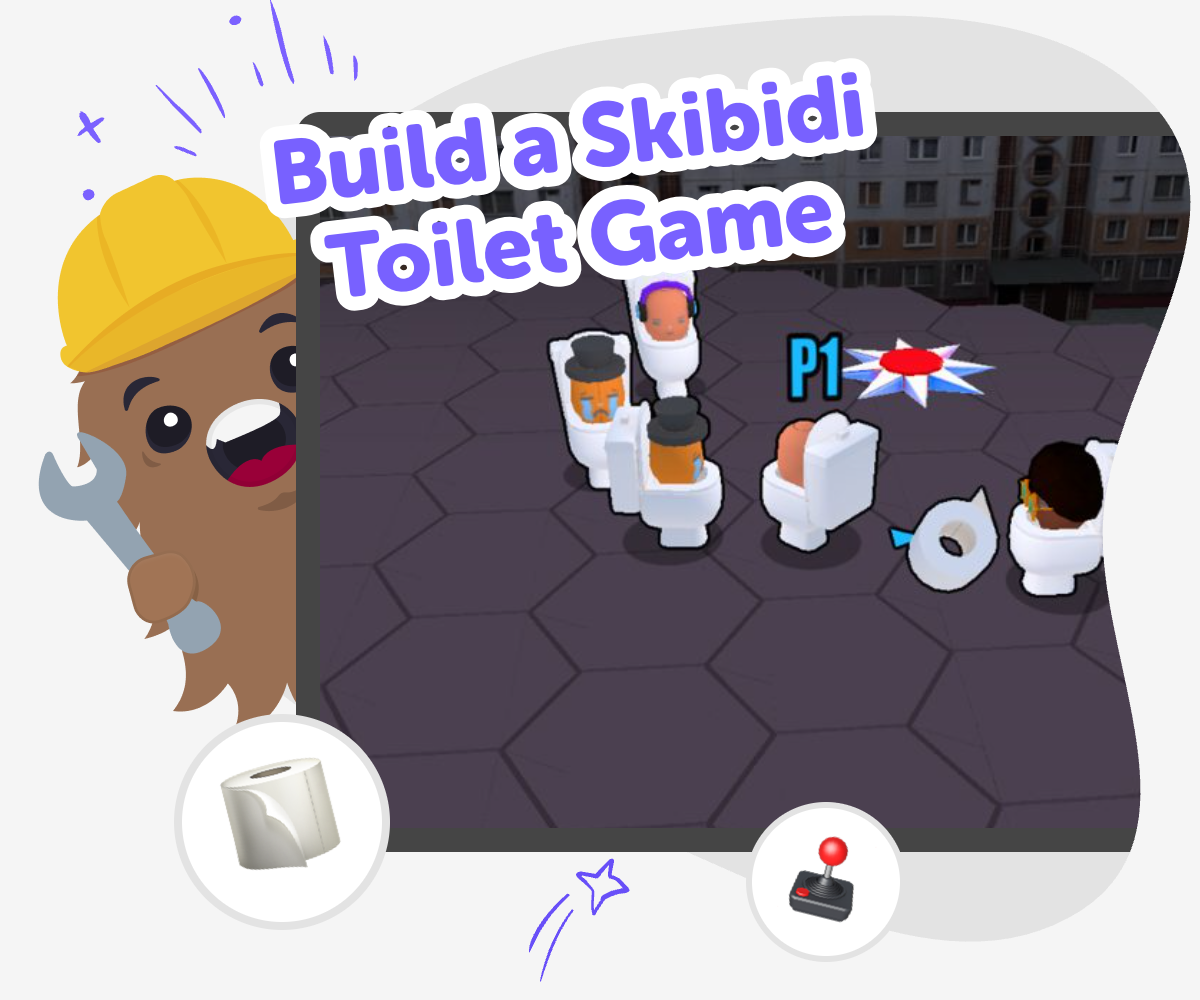
About this tutorial
A build a skibidi toilet game is a playful coding project where kids turn a funny idea into something interactive. It matters because making a game helps kids practice planning, problem-solving, and creativity while learning how small choices can change how a game feels and plays.
Kids can start with one simple idea, then add characters, rules, movement, and challenges one step at a time. That makes the project easier to understand and more fun to improve as they go.
Vibe Coding supports this kind of project by giving kids a guided place to shape their game, test it, and make changes as they learn. It keeps the process hands-on and creative, so kids can explore safely and build confidence without needing to know everything at once.
The goal is not instant perfection. It is to help kids try ideas, notice what works, and keep making the game better in a way that feels playful and achievable.
Step by step
- 1
Choose your game idea
Pick the kind of game you want to build, like a chase game, a jump game, or a score game with a funny toilet character.
- 2
Create the main parts
Add the player, the challenge, and any obstacles or helpers so the game has clear things to interact with.
- 3
Set simple game rules
Decide how the player moves, what counts as a win, and what happens when the player gets caught or finishes a round.
- 4
Make the most of testing
Try a first version Play the game yourself and notice what happens from start to finish. Look for parts that feel confusing, slow, or too easy.
Fix one thing at a time Change a single rule, speed, or obstacle, then test again. Small edits make it easier to see what helped.
Check what feels fun Keep the parts that make the game surprising, playful, or clear. If something does not work well, simplify it before adding more.
Try a new version Save your favourite build, then remix it with a new challenge or character idea. Each round of testing can make the game smoother and more fun.
What makes a silly game idea work?
A silly game idea works best when it still has clear rules. In a build a skibidi toilet game, the joke or theme can be playful, but players still need to understand what to do, how to move, and how to win. That balance is what turns a funny idea into a real game instead of just a scene on a screen. Kids learn that even a wild idea becomes stronger when it has structure. This is a useful creative skill because it shows that imagination and planning can work together. When kids make choices about speed, obstacles, points, or levels, they are learning how game design works in a simple, hands-on way. The fun comes from testing whether the idea feels exciting to play, not just exciting to imagine.
Why do kids learn by changing one thing at a time?
Changing one thing at a time helps kids understand cause and effect. If a game feels too fast, too slow, too easy, or too crowded, it can be hard to tell what needs fixing when many changes happen at once. Small edits make learning clearer. Kids can try one new character, one new rule, or one new obstacle, then test again and see what changed. This is a big part of making any game, app, or digital project. It builds patience and confidence because kids see that improvement is normal and useful. A build a skibidi toilet game can be a funny starting point, but the real learning comes from the process of testing, noticing, and adjusting until the game feels better for the player. That is how creative technology becomes a skill instead of just a one-time idea.
How can a game stay fun and kid-friendly?
A game stays kid-friendly when it focuses on playful challenge, clear goals, and respectful humour. The best projects are the ones that make kids laugh or stay curious without being mean, scary, or confusing. In a build a skibidi toilet game, kids can keep the tone light by using simple characters, bright visuals, and easy-to-follow actions. They can also make sure the game is fair by giving players a clear way to try again, learn the controls, and improve. This matters because kids are not just making something funny; they are also learning how to create digital experiences that other people can enjoy. Safe, creative design helps kids think about how their choices affect others, which is an important part of making online projects responsibly.
What does guided coding help kids practice?
Guided coding helps kids practice more than typing code. It helps them think through ideas, predict what might happen, and fix problems when a project does not work the first time. That is why a build a skibidi toilet game can be a useful starter project: it gives kids a clear idea they care about, then lets them work through the steps of making it real. With guided support, kids can focus on building confidence instead of getting stuck. They learn how to describe what they want, make a first version, test it, and improve it. Over time, that process supports problem-solving and creative technology skills. Kids begin to see that making digital things is something they can do, not something that only experts can do.
Need help?
What is a build a skibidi toilet game?
It is a playful game project where kids turn a silly idea into an interactive game with rules, movement, and goals. The focus is on making something fun to play and improving it step by step.
What kind of game can I make?
Kids can make a chase game, a dodge game, a score game, or another simple style that fits their idea. The best choice is the one that feels easy to understand and fun to test.
Do I need to know coding already?
No. Kids can start with a simple idea and learn as they build. Guided tools can help them explore the project one step at a time.
Why should kids start with a funny idea?
Funny ideas can make it easier to get started because they are memorable and exciting. A playful theme can help kids stay interested while they learn how the game works.
Can kids make their own characters?
Yes. Kids can design their own characters, obstacles, and helpers to match the game they imagine. That is part of what makes the project feel personal.
How do you make the game better after testing?
Play it, notice what feels confusing or not fun, and change one thing at a time. Small changes make it easier to see what helps the game improve.
Is this kind of project safe for kids?
It can be, when the game stays age-appropriate, friendly, and guided by clear choices. Kids should focus on creative play, simple rules, and respectful humour.
What can kids learn from making this game?
Kids can build coding confidence, problem-solving skills, and the habit of improving their work. They also learn how ideas become real projects through testing and revision.