Build a Dress Up Game
Build a dress up game by mixing characters, outfits, and simple choices into a playful interactive project. Kids can explore style, story, and game design while practicing creativity, problem-solving, and confidence through hands-on making.
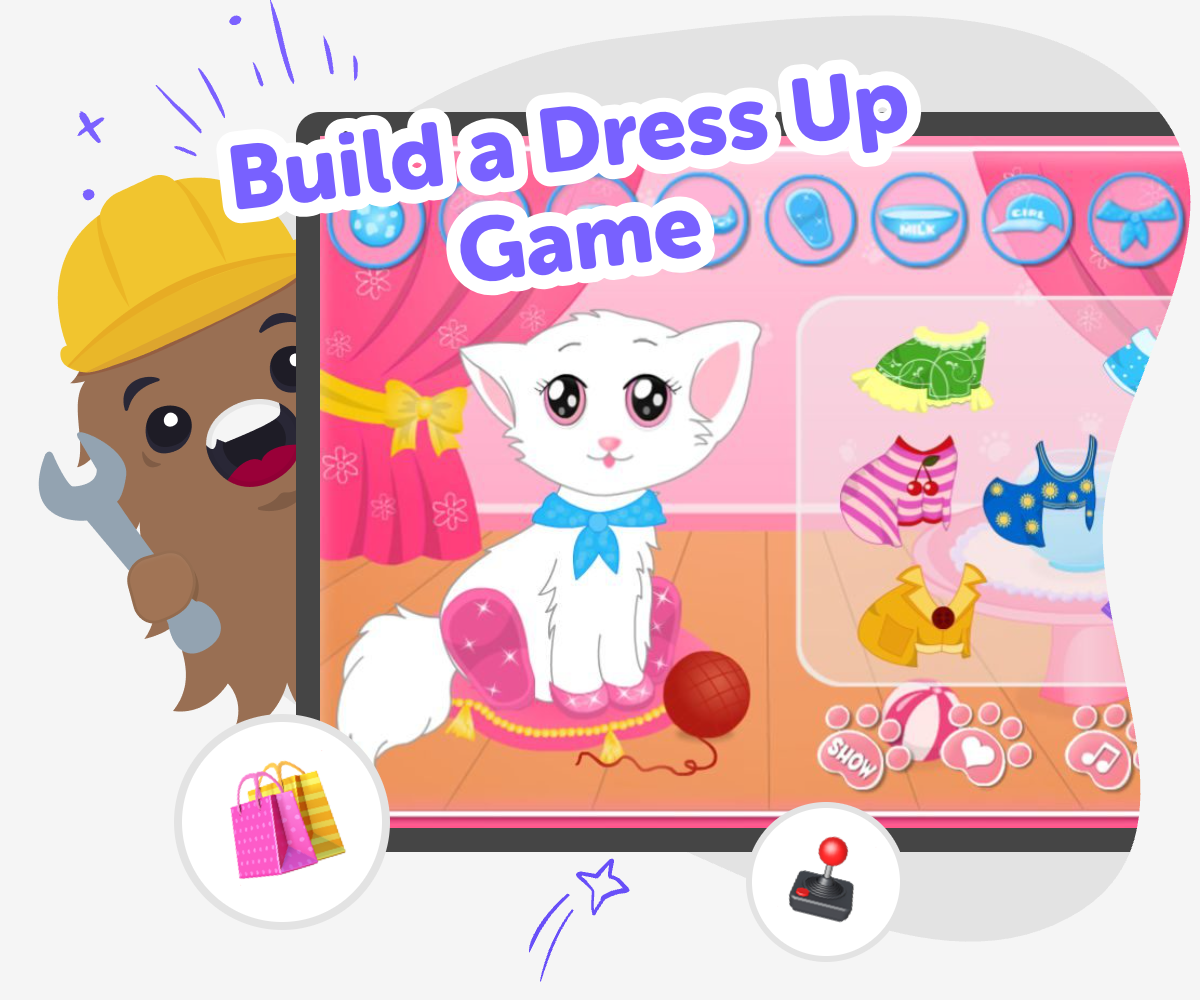
About this tutorial
Build a dress up game to turn style choices into a playful interactive project. Kids can mix characters, outfits, and themes while learning how small design decisions change the way a game feels.
This kind of project matters because it helps kids think creatively, make choices with purpose, and notice how simple rules can shape play. It also gives them a low-pressure way to practice problem-solving while making something they can share.
Vibe Coding helps kids explore a dress up game by letting them describe what they want to make, then build, test, and improve it step by step. That guided process keeps the project hands-on and gives kids room to experiment safely without expecting perfect results right away.
As they keep working, kids can try new outfit ideas, adjust the flow, and make the game clearer and more fun. The tool supports creativity and confidence by helping them learn through making instead of just reading about coding.
Step by step
- 1
Choose the style
Pick the kind of dress up game you want to make, such as a character creator, a fashion challenge, or a themed costume scene.
- 2
Set the outfit pieces
Add the clothing, hair, shoes, and accessories you want players to mix and match in the game.
- 3
Build the choices
Create simple buttons or taps so players can change items, switch looks, and try new outfit combinations.
- 4
Make the most of testing
Try a remix Change one outfit piece, colour, or background to see how it changes the game.
Check the play flow Tap through every choice in order and fix anything that feels confusing or slow.
See what feels fun Notice which outfits are most exciting to mix and which parts need more options.
Keep improving Save your best version, test new ideas, and make the dress up game more playful each time you return.
Why do kids like dress up games?
Dress up games are popular because they let kids make fast creative choices and see the results right away. A player can change a hat, switch colours, or try a new style without needing special materials or a big plan. That makes the activity feel welcoming, because every choice is part of the fun. For many kids, dress up games are also a way to explore identity, imagination, and storytelling. A royal outfit can suggest a castle adventure, while a space costume can turn the game into a future world. The joy comes from testing ideas and discovering combinations that feel surprising, stylish, or silly. When kids build their own version, they also learn that creative projects can grow through many small changes instead of one perfect first try.
What can a dress up game teach?
A dress up game can teach much more than style. Kids practice decision-making when they choose which items to add, and they practice problem-solving when they decide how the game should work. If a button is hard to understand or an outfit looks too crowded, they have to think about how to improve it. That kind of thinking builds coding confidence because it shows that making software is a series of small steps, not a mystery. Dress up games also encourage iteration, which means trying something, noticing what happens, and changing it again. Kids learn that a first version is just the beginning. They can keep experimenting until the game feels clear, fun, and easy to play. Those habits are useful in coding, art, and everyday creative work.
How do you keep it kid-friendly?
A kid-friendly dress up game should be simple, clear, and safe to explore. That means using easy words, large buttons, and choices that are fun without being overwhelming. It also helps to make the project age-appropriate, with outfits, characters, and themes that feel welcoming for younger players. Kids should be able to understand what each choice does and how to try something new. If a game is too busy, part of the learning gets lost, so a clean design matters. Building with guided support can help kids focus on making instead of getting stuck on technical details. With a tool like Vibe Coding, kids can experiment in a creative coding space where they stay in control of the idea and keep shaping it as they learn.
What makes a dress up game replayable?
Replayable dress up games give players plenty of ways to make new combinations. A good project might include several outfit categories, different backgrounds, and a few style themes so every round feels different. Kids can add special touches like seasonal looks, funny accessories, or challenge mode ideas that ask players to create a certain kind of outfit. Replay value also grows when the game lets kids keep improving it over time. They might add new items after the first test, change how the choices are arranged, or make the character screen easier to use. This is where creative coding becomes especially useful, because the game can grow along with the maker. Instead of finishing once and stopping, kids can treat the project like a living idea they can return to, test, and make better.
Need help?
What is a dress up game?
A dress up game is an interactive project where players choose outfits, accessories, and styles for a character. Kids can make it simple or detailed, depending on the kind of play they want to create.
Can kids make their own dress up game?
Yes. Kids can make a dress up game by choosing the character, adding outfit options, and building simple ways for players to switch looks. Guided tools can help them test and improve it step by step.
What age is best for making a dress up game?
Younger kids can start with very simple choices, while older kids can add more features and style options. The best age is the one that matches the child’s confidence and the amount of help they have.
Do dress up games have to be about fashion?
No. They can be about costumes, jobs, fantasy characters, seasons, animals, or any theme a kid enjoys. The clothing is just one part of the story they want to create.
How can a dress up game help with learning?
It helps kids practice making decisions, testing ideas, and solving problems when something does not work the way they expected. It also supports creativity because kids get to design something interactive from scratch.
What should a simple first version include?
A simple first version can have one character, a few clothing choices, and an easy way to change items. Starting small makes it easier to play, test, and improve later.
Can a dress up game be safe for younger kids?
Yes. A safe version uses age-appropriate pictures, simple controls, and clear choices. Kids should be able to understand what each button does and feel comfortable exploring the game.
How can Vibe Coding help with a dress up game?
Vibe Coding gives kids a guided creative space to build, test, and improve their dress up game as they go. It supports experimentation without pretending the project is finished in one step.