Tie a turk's head knot
Learn to tie a Turk's head knot using rope or cord, following step by step loops to create a woven knot to wear or display.
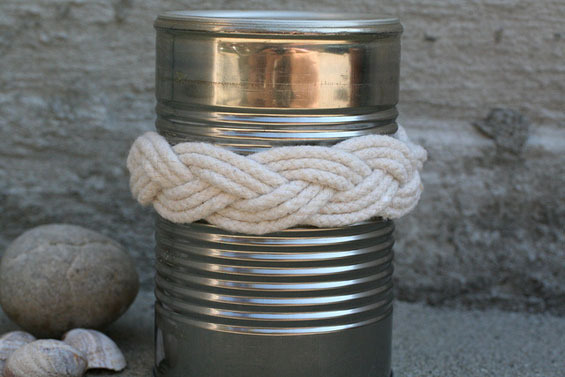
About this activity
Learn to tie a Turk's head knot using rope or cord, following step by step loops to create a woven knot to wear or display.
What you need
Step by step
- 1
Step 1
Cut about 1 meter (3 feet) of cord with scissors.
- 2
Step 2
Tape one short tail of the cord to the marker so the end does not move.
- 3
Step 3
Wrap the cord around the marker three times so the loops sit side by side.
- 4
Step 4
Slide the three loops together so they touch and form three parallel strands.
- 5
Step 5
Take the free working end and weave it around the loops by going over the first strand then under the next then over the third and keep repeating this over‑under pattern until you return to the place you started.
- 6
Step 6
Follow the first woven strand with the working end by laying it side by side along the same path to create three layered leads.
- 7
Step 7
Push the strands gently so the woven shape becomes a neat flat round knot on the marker.
- 8
Step 8
Carefully slide the finished woven knot off the marker while holding the strands so the shape stays intact.
- 9
Step 9
Tighten the Turk’s head by pulling each of the three main strands a little at a time to even the weave.
- 10
Step 10
Tuck the two loose tail ends into the gaps of the weave so they are hidden.
- 11
Step 11
Secure the tucked ends with a small piece of tape so they do not slip out.
- 12
Step 12
If you want to wear it as a bracelet tie the two tail ends together with a square knot and tighten to fit your wrist.
- 13
Step 13
Take a photo and share your finished Turk’s head knot on DIY.org
Fun facts
How do you tie a Turk's head knot step by step?
Start with a long, flexible cord and make a bight to form a simple loop. Wrap the working end around the loop two or three times to create parallel strands. Follow one strand with the working end, weaving under and over existing strands in the same path until you complete the circle. Gently tighten bit by bit, shaping the woven braid into a round knot. Practice on a larger cord first and have an adult help with tightening and finishing.
What materials do I need to tie a Turk's head knot?
You’ll need a length of flexible cord or paracord (about 3–5 mm for kids), scissors, and tape to temporarily secure ends. A fid or blunt knitting needle helps tuck strands neatly. A marker can mark the starting point. For synthetic cord, an adult can seal ends with a lighter. Optional items: a small ring or bead to attach the finished knot as a bracelet or keychain, and a printed diagram or video for step-by-step reference.
What ages is learning a Turk's head knot suitable for?
This activity suits children about 7 and up with close adult supervision; ages 10+ can usually follow the pattern more independently. Younger children (4–6) may enjoy helping with wrapping on pre-made loops but lack the fine motor skill for weaving. Always supervise scissors, fids, and any heat used to seal synthetic cord. Break the project into short steps for beginners and offer larger, softer cord to make handling easier and less frustrating.
What safety tips and fun variations are there for a Turk's head knot?
Safety first: supervise scissors and lighters, use blunt tools for tucking, and avoid small parts for young children to prevent choking. Work with thicker cord to reduce finger strain and tighten gradually. Variations include 3-lead or 4-lead patterns, making a flat mat, bracelet, or key fob, and using multicolored cords for striped effects. Add beads or attach the knot to a ring to display it. Always check wearable pieces for secure ends before letting a child wear them.
Watch & Learn
Need help?
What can I use instead of the marker or the specific cord if I don't have them?
Use a toilet-paper roll or small wooden dowel in place of the marker and substitute a 3–5 mm paracord, shoelace, or yarn cut to about 1 meter while still using tape to secure the short tail as in step 2.
My loops keep slipping while I weave — how can I stop that and keep the shape neat?
Follow step 2 and tape the short tail to the marker, add a small piece of tape to anchor the three loops after step 4, hold the first woven strand with a finger while following it in step 6, and then tighten evenly by pulling each of the three main strands a little at a time as in step 10.
How can I adapt this Turk's head knot activity for younger or older children?
For younger kids use thicker cord or a wider marker/cardboard tube and pre‑wrap the three loops (steps 1–4) to simplify weaving, while older kids can try thinner cord, more wraps, or omit tape to practice tension control and tightening (steps 3, 6, 10).
How can we personalize or extend the finished Turk's head knot?
Personalize it by weaving with two different colored cords or sliding beads onto the cord before step 5, tuck and secure the tail ends as in steps 12–13, finish it into a bracelet with a square knot to fit your wrist (step 14), and then take a photo to share on DIY.org (step 15).