Tap dance
Learn basic tap dance steps and rhythms, practice clear heel and toe sounds, and create short routines to music to build timing and confidence.


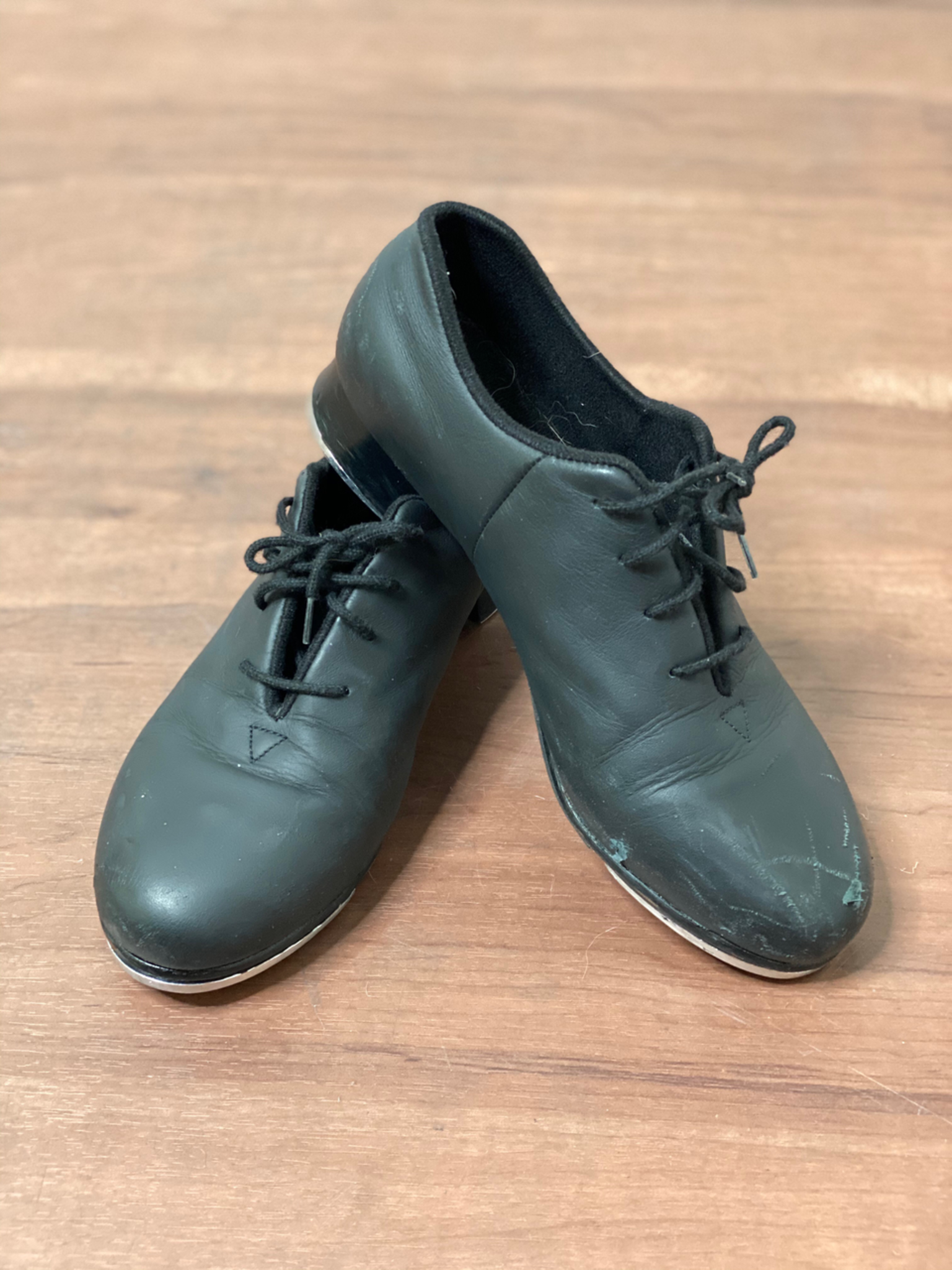

Step-by-step guide to tap dance
Beginner Tap Dance Lesson | BASIC WARM UP STEPS | Learn to tap dance!
Step 1
Put on your shoes and stand with your feet hip-width apart facing your dance space.
Step 2
Place a strip of masking tape on the floor and stand behind it to mark where you will tap.
Step 3
Lift one heel and tap it down five times to hear clear heel sounds.
Step 4
Lift the ball of the same foot and tap the toe down five times to hear clear toe sounds.
Step 5
Slowly alternate heel then toe on the same foot for eight steady counts to practice timing.
Step 6
Hold the chair for balance and repeat the alternating heel-toe pattern using both feet for eight counts.
Step 7
Turn on your music or metronome and try to match your heel-and-toe taps to the beat for 16 counts.
Step 8
Choose four simple moves and arrange them into an eight-count phrase to make a short routine.
Step 9
Practice your eight-count phrase until you can perform it smoothly three times in a row.
Step 10
Perform your finished tap routine to music and share your creation on DIY.org.
Help!?
What can I use instead of masking tape or a metronome if I don't have them?
If you don't have masking tape, mark the spot with painter's tape, a folded towel, or a piece of chalk, and if you don't have a metronome use a phone metronome app, a music track with a steady beat, or someone clapping to match the counts.
My taps don't make clear sounds or I can't balance—what should I try?
If you can't hear clear heel or toe sounds during the 'lift one heel and tap it down five times' or 'lift the ball...tap the toe down five times' steps, switch to hard-soled shoes, practice on wood or tile instead of carpet, press the heel/toe down more firmly, and hold the chair for balance while you repeat the pattern.
How can I adapt this tap routine for different ages or ability levels?
For toddlers simplify by doing seated or chair-supported heel taps for four counts, for younger children (5–7) reduce alternating heel-toe to four steady counts and build a four-count phrase, and for older kids follow all steps including matching the 16-count beat and composing an eight-count phrase.
How can we make the routine more creative or challenging after finishing the steps?
To extend the activity, increase metronome tempo or add syncopated taps between heel and toe during the 16-count music section, swap shoes for metal taps or different soles for varied sound, and personalize your eight-count phrase with costumes or props before recording to share on DIY.org.
Watch videos on how to tap dance
Learn a simple tap-dance move
4 Videos
Learn a simple tap-dance move
LEARN TO TAP DANCE | "Sing, Sing, Sing" | BEGINNER TAP DANCE TUTORIAL | Step-by-Step Instruction!
LEARN TO TAP DANCE 🎩 "Puttin' On the Ritz" 🎩 BEGINNER TAP DANCE TUTORIAL 🎩 Step-by-Step Instruction!
LEARN TO TAP DANCE | "In the Mood" | BEGINNER TAP DANCE TUTORIAL | Step-by-Step Instruction!
Facts about dance and rhythm for kids
🕺 Tap dance grew from a mix of African rhythmic footwork and Irish step dancing — a true cultural fusion born in the U.S.
👞 Tap shoes have metal plates called "taps" on the heel and toe that make crisp, percussive sounds.
🥁 Tap dancers act like human percussionists, using heel and toe combos to create syncopation and complex rhythms.
🎭 Tap became a staple of vaudeville and Hollywood musicals, helping shape Broadway choreography and film dance scenes.
👣 Bill "Bojangles" Robinson was one of the first tappers to bring the style to mainstream audiences and inspired many modern dancers.
How do I teach my child basic tap dance steps and rhythms?
What materials or equipment do I need for beginner tap dance at home?
What ages is tap dance suitable for and how should I adapt lessons?
What are the benefits of tap dance for children?
