Solve a Skewb
Learn to solve a Skewb puzzle by practicing simple algorithms, turning techniques, and pattern recognition to complete all six colored faces.


Step-by-step guide to solve a Skewb puzzle
How to solve the skewb Ultimate | For beginners
Step 1
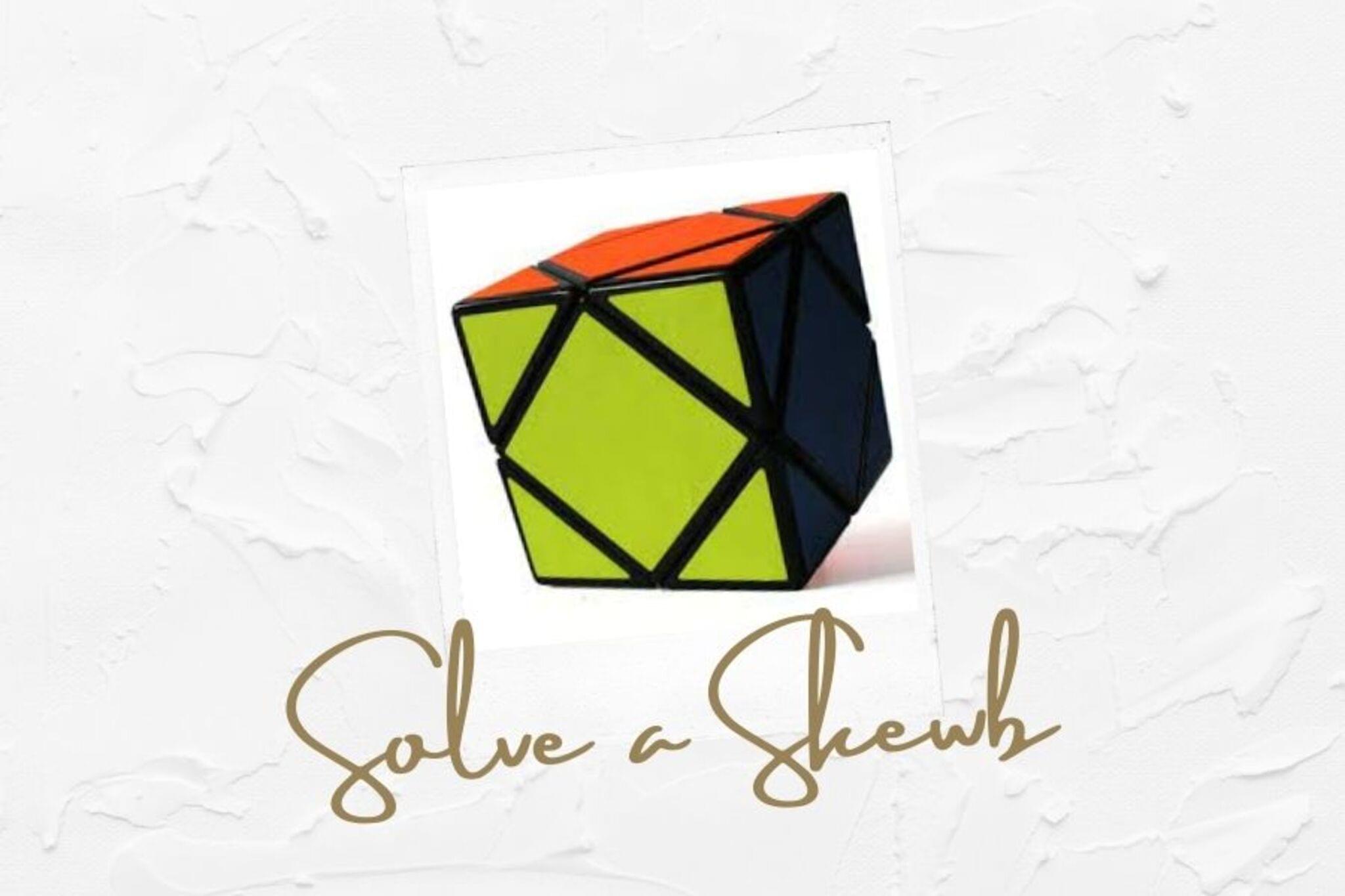
Pick up the Skewb and look closely to find the six center pieces and the corner pieces so you know what a solved face looks like.
Step 2
Scramble the Skewb by twisting random corners for at least twenty moves so it is mixed up.
Step 3
Place the Skewb on the table and practice smooth 120-degree corner twists on different corners five times to get comfortable with turning technique.
Step 4
Choose one color to solve first and turn the Skewb so that color’s center piece is on the top.
Step 5
Twist corner pieces one at a time until the entire top face shows only your chosen color.
Step 6
Ask an adult or look up “Skewb beginner algorithms” and write down two short move sequences on your paper to use for swapping and rotating corners.
Step 7
Practice the first algorithm slowly three times in a row while watching which corner pieces move.
Step 8
Apply the first algorithm repeatedly as needed to position the remaining corner pieces so side centers begin to match edge colors.
Step 9
Practice the second algorithm slowly three times while watching how corner orientations change.
Step 10
Use the second algorithm as needed to rotate misaligned corners until all faces are almost solved.
Step 11
Make any final small twists using the two algorithms or smooth corner turns to get all six faces fully solved.
Step 12
Share your finished Skewb solve on DIY.org.
Help!?
What can we use if we don’t have a Skewb or paper to write the beginner algorithms?
If you don't have a Skewb, use a 3x3 Rubik's Cube to practice the 'smooth 120-degree corner twists' technique and, if you can't find paper, type or record your two short move sequences in a phone note when you 'write down two short move sequences on your paper'.
What should we do if corners are hard to twist or the Skewb feels too tight during practice?
If corners are hard to twist during the 'practice smooth 120-degree corner twists' step, slightly loosen the center screws, add a small drop of silicone lubricant to the mechanism, and practice slow 120° turns until movement is smooth.
How can we change the activity for younger or older kids?
For younger children, simplify the steps by focusing only on identifying the six center pieces and getting the top face one color from 'twist corner pieces one at a time', while older kids can write and memorize the two algorithms from 'ask an adult or look up Skewb beginner algorithms' and time solves to improve speed.
How can we extend or personalize the Skewb activity after solving and sharing on DIY.org?
To extend the activity, customize the Skewb with sticker colors, create your own two short algorithms on paper to solve specific corner swaps and rotations, and challenge yourself to reduce the number of moves or record a how-to video to post on DIY.org.
Watch videos on how to solve a Skewb puzzle
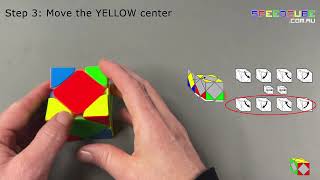
How to solve a Skewb | Easy to follow beginners Tutorial
4 Videos
How to solve a Skewb | Easy to follow beginners Tutorial
![How to Solve the Skewb [Beginner Method] (v2)](https://img.youtube.com/vi/I6132yshkeU/mqdefault.jpg)
How to Solve the Skewb [Beginner Method] (v2)

How To Solve A Skewb | Cubeorithms
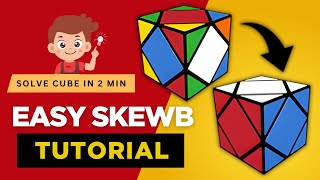
How to Solve the Skewb Cube Easy Step by Step Tutorial🔥
Facts about twisty puzzles
🧩 The Skewb is a corner-turning twisty puzzle — its cuts go through the corners instead of the faces, which makes it feel different from a Rubik's Cube.
🔢 The Skewb has about 3,149,280 possible positions — many, but much fewer than a 3×3 Rubik's Cube, so patterns show up faster!
🎯 You can solve a Skewb with only a handful of simple algorithms, so kids can memorize moves and see progress quickly.
⏱️ Skewb is an official event in speedcubing competitions — expert solvers can finish it in just a couple of seconds.
🌀 Because it turns around corner axes, the Skewb can make surprising-looking scrambles while still keeping big color blocks intact — great for pattern practice.
How do you teach a child to solve a Skewb puzzle?
What materials do I need to practice a Skewb?
What ages is learning to solve a Skewb suitable for?
What are the benefits of learning to solve a Skewb?
