Show Us Paper Art Unique to your Country
Create a paper craft inspired by traditional art from your country using cutting, folding, and decorating, then explain its cultural story and meaning.




Step-by-step guide to Show Us Paper Art Unique to your Country
At Home Art Lesson-Paper Weaving for kids
Step 1
Pick one traditional art pattern or motif from your country to base your paper craft on.
Step 2
Gather all the materials from the list and set them on a clear workspace.
Step 3
Make a small pencil sketch of the design on plain paper to plan shapes and colors.
Step 4
Choose which colored paper you will use for the main shape and fold it if you want a symmetrical cut-out.
Step 5
Use your pencil and ruler to lightly trace the design onto the folded or flat colored paper.
Step 6
Carefully cut along your traced lines to make the paper shapes you planned.
Step 7
Unfold any folded pieces and press them flat so the pattern is easy to see.
Step 8
Arrange the cut pieces on a plain paper background and glue them in place to build your craft.
Step 9
Decorate the craft using colouring materials and decorations to match traditional colors and details.
Step 10
Write a short explanation on a separate paper that tells the cultural story and meaning behind your design.
Step 11
Share a photo of your finished paper art and your written explanation on DIY.org.
Help!?
I don't have colored craft paper or specialty decorations—what can I use instead?
Use plain printer paper or magazine pages for the main colored paper, tissue or gift wrap for accents, and household items like foil, buttons, or old costume jewelry in place of specialty decorations when you get to the 'Choose which colored paper' and 'Decorate the craft' steps.
My folded paper tore while cutting or the shapes look uneven—how can I fix that?
To avoid tears and uneven edges during the 'trace the design' and 'cut along your traced lines' steps, use sharp scissors or a craft knife on a cutting mat, make small controlled cuts around curves, and press unfolded pieces flat before arranging.
How can I adapt this activity for different age groups?
For younger children, simplify by providing pre-drawn templates and pre-cut shapes for the 'Make a small pencil sketch' and 'cut' steps and let them focus on arranging and decorating, while older kids can research traditional motifs, execute more intricate folded cuts, add layered elements, and write a longer cultural explanation to accompany the piece.
What are simple ways to extend or personalize the finished paper art?
Add depth by layering extra cut pieces before gluing to the 'plain paper background,' incorporate fabric scraps or metallic pens when you 'Decorate the craft,' or create a photo series of different motifs with their written explanations to share on DIY.org.
Watch videos on how to Show Us Paper Art Unique to your Country
Easy Paper Craft Ideas for Home | How to Make Art and Craft with Paper at Home Without Glue
4 Videos

Easy Paper Craft Ideas for Home | How to Make Art and Craft with Paper at Home Without Glue

How to do Paper Marbling | Simple Kids Art Idea
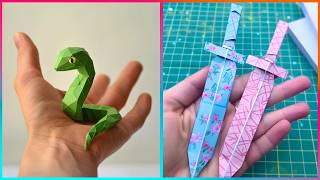
Easy Paper Crafts Anyone Can Do ▶ 2

Easy Paper Mosaic Art Project for Kids
Facts about traditional paper crafts and cultural heritage
🦢 In Japan, folding 1,000 origami cranes (senbazuru) is a traditional wish-making practice and a symbol of peace.
✂️ Chinese paper cutting has been practiced for over 1,500 years and was often used to decorate windows and celebrate festivals.
🎊 Papel picado is made by cutting stacked tissue paper with chisels or punches to create colorful banners for Mexican holidays.
🌸 Wycinanki is Polish folk paper-cutting known for its symmetrical roosters and floral motifs used to brighten homes.
📐 Modern papercraft ranges from tiny paper toys to complex pop-up books and full-scale architectural paper models.
How do I create a paper craft inspired by traditional art from my country?
What materials do I need for the Show Us Paper Art activity?
What ages is this paper art activity suitable for?
What are the benefits of making paper art inspired by my country's traditional art?
