Share Your Pronouns
Make and decorate pronoun name tags, practice introducing yourself and using respectful pronouns in sentences, and share them with classmates.


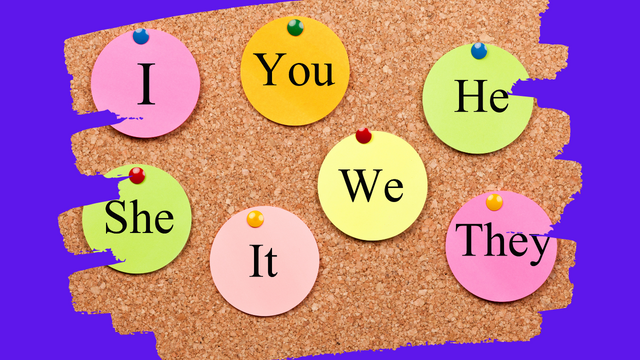

Step-by-step guide to Share Your Pronouns
Step 1
Gather all the materials from the list and put them on a clear workspace.
Step 2
Fold the paper or use a blank name tag and cut it to a size that fits on your chest.
Step 3
Decide which name and which pronouns you want to put on the tag.
Step 4
Write your name in big bold letters on the tag using a marker.
Step 5
Write your pronouns clearly under your name so others can read them easily.
Step 6
Decorate the tag with colours and stickers to show your personality.
Step 7
Cover the tag with clear tape or a laminating sheet to protect your artwork.
Step 8
Use a hole punch and string or attach a safety pin so you can wear the tag.
Step 9
Put the name tag on so you can practice wearing it.
Step 10
Say out loud three times "Hi, my name is ___ and my pronouns are ___" to practice your introduction.
Step 11
Bring your finished name tag to class.
Step 12
Show your name tag to a classmate and listen when they share their name and pronouns.
Step 13
Share your finished name tag and what you learned about pronouns on DIY.org.
Help!?
What can I use instead of a laminating sheet, hole punch, or safety pin if I don't have them?
If you don't have a laminating sheet, protect the tag by covering it with clear packing tape or slipping it into a clear plastic sleeve, and if you lack a hole punch or safety pin attach the tag with a stapler, clip, or tie yarn through a punched hole instead.
My marker keeps smudging or the hole rips the paper — how can I fix these problems?
To prevent smudging when you write your name and pronouns, test and use a permanent or fine-tip marker and let the ink dry before covering with clear tape, and to stop the hole from ripping reinforce the spot with a small piece of tape before using the hole punch.
How can I change this activity for younger children or older kids?
For preschoolers use pre-cut tags, stickers, and adult help for scissors, hole punch, and safety pin, while older kids can cut their own tag, add detailed decorations, write a short pronoun explanation, practice their full introduction aloud, and post it on DIY.org.
How can we make the name tags more creative or long-lasting?
Make the tag more personal and durable by decorating with waterproof markers and stickers, covering with clear tape or laminating, adding a short pronoun definition or QR code under your name, and photographing the finished tag to share on DIY.org.
Watch videos on how to Share Your Pronouns
Pronouns for Kids
4 Videos
Pronouns for Kids
Grammar Fun: All About Pronouns For Kids #grammar #learnenglish

Learn Pronouns in an Easy way to explain Pronouns to Beginners | Pronouns with pictures
Pronouns for Kids | Easy English Grammar Lesson
Facts about pronouns and respectful introductions
🏷️ Name tags and pronoun stickers help people learn names faster and make new classrooms feel friendlier.
🌈 Sharing pronouns is a simple way to show respect — many people use she/he/they, and some use neopronouns like ze/zir.
🕰️ The singular "they" has been used in English for centuries and appears in works by well-known authors.
🗣️ Practicing sentences with pronouns (for example, "Alex left their book") makes correct use feel natural.
🤝 When classmates share pronouns, it creates a more welcoming space and helps reduce accidental mistakes.
How do you do the "Share Your Pronouns" activity with a class?
What materials do I need for a "Share Your Pronouns" activity?
What ages is the "Share Your Pronouns" activity suitable for?
What are the benefits of doing a "Share Your Pronouns" activity with kids?
