Record Your Own Rap
Write a short rap, create a simple beat using household items or a kid friendly app, practice rhythm and record your rap performance.


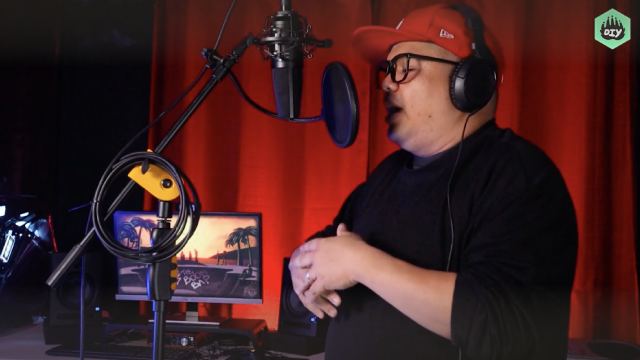
Step-by-step guide to Record Your Own Rap
Step 1
Gather the Materials Needed from the list.
Step 2
Pick a fun topic for your rap like your pet favorite game or outer space.
Step 3
Write down ten words about your topic on the paper.
Step 4
Choose four words from your list that rhyme or sound good together.
Step 5
Write a short rap of eight to twelve lines using your rhyming words.
Step 6
Decide if you will make the beat with household items or with the kid-friendly beat app.
Step 7
Make a steady four-count looped beat using your chosen method.
Step 8
Clap the beat slowly once to feel the rhythm.
Step 9
Practice rapping your rap aloud with the beat three times.
Step 10
Record one rehearsal take of your rap with the beat.
Step 11
Play back your rehearsal once to listen carefully.
Step 12
Choose one thing to change and practice that part once.
Step 13
Record your final rap performance with the beat.
Step 14
Share your finished rap on DIY.org.
Help!?
What can we use if we don't have the kid-friendly beat app or fancy recording gear?
Use a smartphone's free voice‑recorder or a tablet with GarageBand and make the beat from household items like pots and spoons as described in 'Decide if you will make the beat with household items or with the kid-friendly beat app' and 'Record your final rap performance with the beat'.
My looped four-count beat keeps drifting—how can we fix it?
Use a metronome app or count aloud and 'Clap the beat slowly once to feel the rhythm' before you 'Make a steady four-count looped beat' and practice the beat while speaking the lines until the timing stays consistent, then record another rehearsal take.
How should we adapt this activity for younger children or older kids?
For younger kids shorten the task to a 4-line rap and use simple household beats with adult help for 'Write a short rap of eight to twelve lines' and 'Practice rapping your rap aloud with the beat three times', while older kids can add a chorus, multi-track layers, or spend more time editing their rehearsal and final recordings before 'Share your finished rap on DIY.org'.
What are easy ways to improve or personalize our rap before sharing it?
Add sound effects from household items or the beat app, wear a costume or add simple choreography while you 'Record your final rap performance with the beat', or invite a friend to trade verses to make the final track more unique before you 'Share your finished rap on DIY.org'.
Watch videos on how to Record Your Own Rap
Let's create a kid's song with AI - A step by step guide
4 Videos

Let's create a kid's song with AI - A step by step guide
How To Record Rap Song Like Pro (STEP BY STEP) - FL Studio With Kurfaat
How To Make Hip hop Music in BandLab | Start To Finish | For Beginners
How To Record Hip Hop Rap Song (Step By Step) - FL Studio With Kurfaat
Facts about music and songwriting for kids
🎤 Rapper's Delight (1979) by the Sugarhill Gang helped bring rap into mainstream radio and was one of the first big recorded rap hits.
🥁 You can build a catchy beat using household items—pots, cups, and claps—to make clear kick, snare, and hi-hat sounds.
📱 Kid-friendly apps like GarageBand let you layer beats, add loops, and record vocals right on a phone or tablet.
⏱️ A common rap verse is 16 bars; at about 90–100 BPM that usually lasts around 30–45 seconds, great for short practice takes.
🧠 Writing and performing rap can boost vocabulary, rhythm, and memory—teachers often use hip-hop to help kids learn language.
How do we record our own rap at home?
What materials do I need to record a rap with my child?
What ages is recording your own rap suitable for?
What are the benefits and safety tips for this rap activity?
