Practice Uppercase Alphabets: H-P
Practice writing uppercase letters H through P using tracing, freehand, and flashcard activities to improve letter formation, spacing, and handwriting confidence.


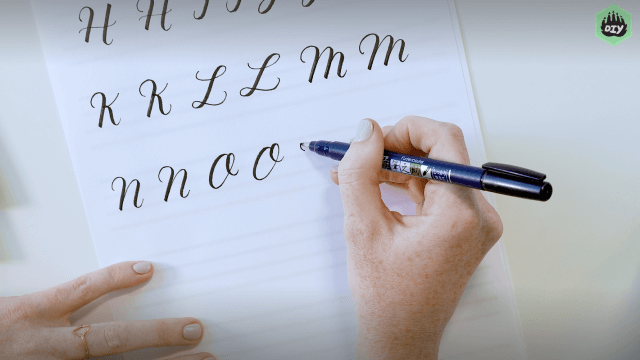

Step-by-step guide to practice uppercase letters H-P
Step 1
Find a flat workspace and put your paper pencils eraser ruler and colouring materials where you can reach them.
Step 2
On one sheet use your pencil and ruler to draw large light guide lines or boxes that will hold the uppercase letters H through P.
Step 3
Lightly draw dotted versions of the uppercase letters H I J K L M N O P across the top row of your sheet for tracing.
Step 4
Trace over each dotted letter H through P two times using slow steady pencil strokes to copy the shapes exactly.
Step 5
On the next row write each uppercase letter H through P freehand three times without tracing using the guide lines to keep the size even.
Step 6
Erase any extra pencil marks and try writing each letter H through P one more time neatly on a fresh part of the paper.
Step 7
Cut index cards and write one uppercase letter H through P on each card using big clear strokes so each card shows a single letter.
Step 8
Decorate each flashcard with different colours or little pictures so each letter card looks fun and easy to spot.
Step 9
Mix the flashcards face down and flip one card at a time then say the letter out loud and write it once on a blank sheet.
Step 10
Share your finished practice sheets and decorated flashcards on DIY.org
Help!?
What can I use instead of index cards or a ruler if I don't have them at home?
If you don't have index cards use cut rectangles from cereal boxes or sturdy scrap paper for the 'Cut index cards and write one uppercase letter H through P on each card' step, and use the straight edge of a book or the edge of a cereal box in place of a ruler when drawing guide lines.
My child is smudging letters or the dotted guides when erasing—how can we avoid that?
To stop smudging when you 'Erase any extra pencil marks,' draw the dotted letters and guide lines lightly with a hard pencil (HB) and erase gently in small strokes with a clean eraser after completing each tracing pass.
How do I adapt this activity for a 3-year-old versus an 8-year-old?
For a 3-year-old make much larger guide boxes and let them trace each dotted letter once with crayons as in the 'Trace over each dotted letter' step, while an 8-year-old can skip some dotted guides and write H–P freehand five times or add lowercase practice on the next row as an extra challenge.
What are simple ways to extend or personalize the letter practice once the flashcards are made?
Enhance the activity by decorating and laminating the flashcards as suggested in 'Decorate each flashcard,' then play a flipped-card game where the child 'Mix the flashcards face down and flip one card at a time then say the letter out loud and write it once on a blank sheet' to reinforce recall and handwriting.
Watch videos on how to practice uppercase letters H-P
Learn and Write Uppercase Letters| Phonics & Colors| Learning With Ms Houston| Kid Songs
4 Videos
Learn and Write Uppercase Letters| Phonics & Colors| Learning With Ms Houston| Kid Songs

Uppercase Letters - Learn the Alphabet | Grammar for Kids | Kids Academy
How to Write English Alphabet Uppercase Letters with Letter Sounds | Handwriting and Phonics
Text and Capital Letters A to Z 🔤 | Lesson Thirteen - Phonics Made Easy | Alphablocks
Facts about handwriting and letter formation
✍️ Tracing letters helps build the fine motor skills and muscle memory children need for neater handwriting.
🔤 Uppercase H through P covers nine letters (H, I, J, K, L, M, N, O, P) — a nice chunk to master in one go!
🧠 Practicing letter formation connects visual shapes with motor patterns and language centers in the brain.
🎯 Flashcards boost quick recognition: short, repeated reviews help letters become automatic.
📚 Many modern fonts and printed letterforms are inspired by historical handwriting styles, so practicing handwriting links to typography!
How do I help my child practice uppercase letters H through P?
What materials do I need to practice uppercase H–P at home?
What ages are appropriate for practicing uppercase alphabets H through P?
What are the benefits of practicing uppercase letters H through P?
