Practice letters with Upward Loop shape - b, f, h, k, l
Practice writing the upward-loop letters b, f, h, k, and l using guided strokes, tracing, and repetition to improve neatness and control.


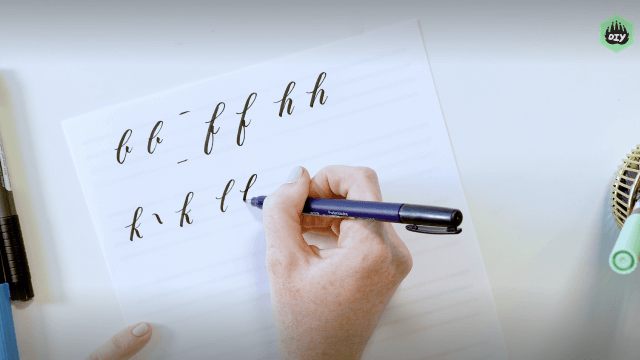

Step-by-step guide to practice letters with upward loop shape - b, f, h, k, l
Step 1
Gather your materials.
Step 2
Put the materials on a clean table within reach.
Step 3
Sit with feet flat and your back straight.
Step 4
Hold the pencil with a tripod grip (thumb and first two fingers).
Step 5
Place the lined paper and tracing sheet so the lines run left to right.
Step 6
Warm up by drawing five small upward loops on the scrap paper.
Step 7
Look at the tracing model that shows the upward-loop starting stroke.
Step 8
Trace five dotted lowercase b's on the tracing sheet.
Step 9
Trace five dotted lowercase f's on the tracing sheet.
Step 10
Trace five dotted lowercase h's on the tracing sheet.
Step 11
Trace five dotted lowercase k's on the tracing sheet.
Step 12
Trace five dotted lowercase l's on the tracing sheet.
Step 13
Write each letter b f h k l five times on the lined paper without tracing, keeping the loop the same size and starting at the baseline.
Step 14
Choose your three neatest letters and circle them.
Step 15
Share your finished practice sheet on DIY.org.
Help!?
What can we use if we don't have a tracing sheet or lined paper?
If you don't have a tracing sheet, print or hand-draw dotted b, f, h, k, l models on plain paper and use a ruled notebook or draw parallel lines with a ruler to mimic the lined paper, then place the tracing model over it to trace.
My child's loops keep starting above the baseline or are inconsistent in size—how can we fix that?
To fix inconsistent loop size or starting position, have them warm up by drawing five small upward loops on the scrap paper, lightly pencil in a baseline on the lined paper, and remind them to start each upward-loop stroke at that baseline while using the tripod grip.
How can we adapt this activity for younger or older children?
For preschoolers, use a thicker pencil or marker and finger-trace the dotted b f h k l on the tracing sheet with hand-over-hand support for the tripod grip, while older children can write each letter ten times and practice writing simple words containing b, f, h, k, l on the lined paper.
How can we extend or personalize the practice after circling the three neatest letters?
After circling your three neatest letters, personalize the sheet by coloring each chosen letter, writing a word that uses that letter on the lined paper, and photographing the finished practice sheet to share on DIY.org.
Watch videos on how to practice letters with upward loop shape - b, f, h, k, l
Learning How to Write the English Alphabet Uppercase and Lowercase Letters
4 Videos

Learning How to Write the English Alphabet Uppercase and Lowercase Letters
Endless Learning Academy - Handwriting Practice #1 - Uppercase Letters | Originator Games
Lowercase Alphabet Letters with Phonics | Learn with Shapes: Circle, Triangle, Rectangle & More!
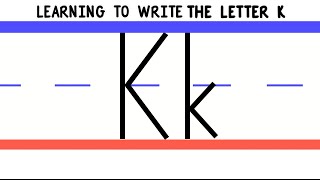
Write the Letter K - ABC Writing for Kids - Alphabet Handwriting by 123ABCtv
Facts about handwriting and letter formation for kids
✍️ Writing by hand lights up brain areas involved in thinking and memory more than typing alone.
🖋️ Upward-loop letters like b, f, h, k, and l use a lifting-and-looping motion that helps handwriting flow smoothly.
🧠 Regular pen-and-paper practice builds fine motor control and hand–eye coordination children use for drawing and sports.
⏱️ Short daily practice sessions (even 5–10 minutes) help form muscle memory so letters become neater and quicker.
🎯 Tracing guided strokes trains consistent loops, size, and spacing—key ingredients for legible, confident handwriting.
How do I teach my child to write upward-loop letters like b, f, h, k, and l?
What materials do I need to practice upward-loop letters at home?
What ages is practicing upward-loop letters suitable for?
What are the benefits of practicing upward-loop letters?
