Paint flowers with oil pastels and watercolors
Paint bright flower scenes using oil pastels and watercolor washes, exploring resist techniques, blending colors, layering petals, and practicing brush control and color mixing.


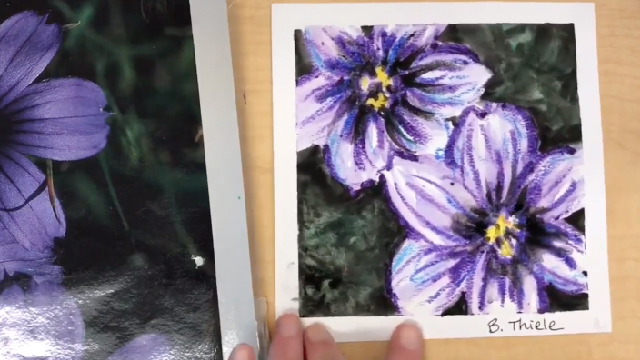

Step-by-step guide to paint flowers with oil pastels and watercolors
Step 1
Tape the edges of your watercolor paper to the table so the paper stays flat while you paint.
Step 2
Lightly sketch a few big flowers and leaves with your pencil leaving space between each flower.
Step 3
Trace bold outlines of each flower and stem using oil pastels so the shapes are strong.
Step 4
Fill in each petal and leaf with oil pastel color using firmer pressure to create bright waxy areas.
Step 5
Gently blend two pastel colors on a petal with your finger or a scrap piece of paper to make a smooth color change.
Step 6
Mix a watery watercolor color on your palette by adding a little water to two paints to practice making new shades.
Step 7
Paint a light watercolor wash around the flowers with broad strokes so the oil pastel areas resist the paint.
Step 8
Let the watercolor wash dry completely before you add more layers or details.
Step 9
Add extra oil pastel lines and highlights on petals and centers to make the flowers pop and add texture.
Step 10
Share your finished flower scene on DIY.org
Help!?
What can we use instead of watercolor paper, tape, or oil pastels if we don't have them?
If you don't have watercolor paper, use heavyweight mixed-media or thick Bristol, replace tape with masking or painter's tape, and if oil pastels are unavailable try wax crayons but expect a weaker wax resist when you 'Paint a light watercolor wash around the flowers'.
My watercolor wash is bleeding or not resisting the waxy lines—what should I do?
Press firmer when you 'Fill in each petal and leaf with oil pastel' to build thicker waxy areas, mix less water when you 'Mix a watery watercolor color on your palette', and always 'Let the watercolor wash dry completely' before adding more layers or details.
How can I adapt this activity for different ages?
For preschoolers, pre-sketch big simple flowers on taped watercolor paper and let them color and finger-blend the oil pastels, while older kids can draw detailed blooms, practice 'Gently blend two pastel colors', layer additional watercolor washes, and 'Add extra oil pastel lines and highlights' for texture.
How can we extend or personalize the finished flower scene?
After the wash dries, personalize by adding collage centers from tissue paper or seed beads, use metallic oil pastels to 'Add extra oil pastel lines and highlights', or cut the piece into cards and 'Share your finished flower scene on DIY.org'.
Watch videos on how to paint flowers with oil pastels and watercolors
Oil Pastel Spring Scenery Painting for beginners | Oil Pastel Drawing Cherry Blossom
4 Videos

Oil Pastel Spring Scenery Painting for beginners | Oil Pastel Drawing Cherry Blossom
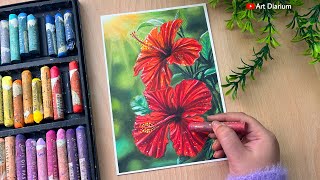
Hibiscus Flower Drawing with Oil Pastels | Simple Step-by-Step Guide
Art Tips - 5 Tips For Using Oil Pastels
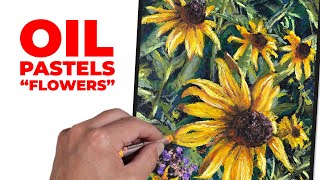
Drawing Flowers with Oil Pastel
Facts about mixed-media painting for kids
🎨 Oil pastels were developed in the 1920s (Sennelier made them for artists like Picasso) and give bright, buttery strokes that don't need solvents.
💧 Watercolor paint uses a water-soluble binder (like gum arabic), so thin washes can be layered, lifted, and reactivated with water.
🕯️ Wax and oil from oil pastels repel water, so pastel lines stay bright when you apply a watercolor wash—a simple resist trick.
🌈 Mixing two primary colors (red + yellow, red + blue, blue + yellow) creates the main secondary colors—great for blending petals.
🐝 Some flowers have ultraviolet patterns visible to pollinators; using high-contrast markings can make painted flowers feel more 'alive.'
How do you paint flowers with oil pastels and watercolors?
What materials do I need to paint flowers with oil pastels and watercolors?
What ages is this oil pastel and watercolor flower activity suitable for?
What are the benefits of painting flowers with resist techniques using oil pastels and watercolors?
