Make Your Own Clothing Tags
Design and create personalized clothing tags using cardstock, markers, hole punch, and string; practice measuring, decorating, and labeling garments for identification.



Step-by-step guide to Make Your Own Clothing Tags
Step 1
Gather all Materials Needed and find a clean flat workspace to work on.
Step 2
Use a pencil and ruler to draw a rectangle 6 cm long and 3 cm tall on the cardstock for each tag.
Step 3
Cut out each drawn rectangle carefully with scissors.
Step 4
Use the hole punch to make a hole about 1 cm from the top center of each tag.
Step 5
Decorate the front of each tag with markers using colors and drawings you like.
Step 6
Write your name and any contact info neatly on the back of the tag with a marker.
Step 7
Use the ruler to measure and mark a 15 cm length of string.
Step 8
Cut the string at the mark with scissors.
Step 9
Thread the string through the hole and tie a secure knot to make a loop.
Step 10
Attach the tag to the garment by looping the string through the clothing label or strap.
Step 11
Share your finished clothing tags on DIY.org.
Help!?
What can we use instead of cardstock or a hole punch if we don't have them?
Use sturdy cereal box cardboard cut to 6 cm by 3 cm with scissors as a cardstock substitute, and make the hole about 1 cm from the top center using a thick needle or the tip of a sharpened pencil with adult help.
My hole keeps tearing when I tie the string — how can I fix it?
Reinforce the top center by placing a small piece of clear tape or a round sticker over the area before punching so the cardstock won't tear when you thread the 15 cm string and tie a knot.
How can I adapt this activity for younger or older children?
For younger kids have an adult pre-measure and pre-cut the 6 cm x 3 cm rectangles and pre-punch holes and use thicker yarn and washable markers, while older kids can precisely draw with ruler and pencil, use fine-tip markers or stickers, and add clear tape lamination before sharing on DIY.org.
How can we make the tags more special or longer-lasting?
Personalize each tag by adding a small photo or decorative sticker to the front, write contact info neatly on the back as instructed, and cover the tag with clear packing tape or a laminate sheet before threading the 15 cm string and tying the loop.
Watch videos on how to Make Your Own Clothing Tags
How to Make Clothing Labels
4 Videos
How to Make Clothing Labels
DIY CLOTHES TAGS USING CRICUT DESIGN FOR BEGINNERS
Clothing Labels DIY- Cheap and easy way to make your own clothing labels
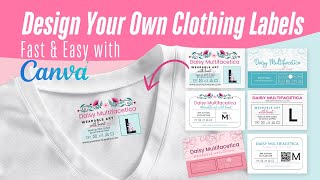
How to Design Custom T-Shirt Labels with Canva | Easy DIY Clothing Tags
Facts about textile crafts for kids
🏷️ Hang tags (paper tags attached to clothes) tell shoppers quick info like brand, size, and price — tiny storytellers!
✂️ Cardstock is thicker than regular paper (often 200–350 gsm), so it makes sturdy, long-lasting clothing tags.
📏 A popular tag size is about 2 × 3 inches (5 × 7.5 cm) — small to hang, big enough for a name and decoration.
🖊️ Permanent markers or pigmented pens hold up much better than pencil or washable ink for writing names on tags.
👕 Labeling clothing helps reduce lost items at school and camps — labeled clothes are much more likely to be returned.
How do I make personalized clothing tags with my child?
What materials do I need to make clothing tags?
What ages is this clothing tag activity suitable for?
What are the benefits of making clothing tags (and safety tips)?
